
 In the course of my MBA studies, professional career, life as a priest, and all the points in between, I have witnessed and participated in conversations gone wrong. “What we have here is a failure to communicate” (Captain, in Cool Hand Luke). I have studied instantiated and uninstantiated communications, message and meta message theory, and a whole host of topics whose names have been lost in the course of time. It seems as though communications is a mathematical stew of thousands of variables and a limited number of equations… translated: there is no one solution. At best you can hope to reach an optimal answer given a particular starting point – it won’t be perfect, but it will hopefully work. Continue reading
Conversations gone wrong
1
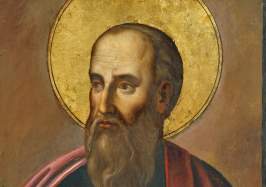 One of our Bible study folks asked about the reference in The Letter to the Galatians to St. Paul’s time in Arabia. I had always wanted to post something on the topic – and now I have an immediate request to do so. The problem is that we don’t really know a lot of biographical information about St. Paul – at least not in the sense of modern biographies.
 Over the last few weeks, we described Francis of Assisi in the role in which he is most popularly recognizable: the lover of nature and animals. Interestingly, this role is not original in the Christian tradition. In a valuable book reviewing the nature stories of Franciscan literature, Edward Armstrong shows that many of Francis’ attitudes have precedents in biblical, early Christian, and medieval ideas about nature. One group of scholars place Francis in the tradition of hermits who retired to wilderness and befriended animals. Others associate him with a theological trend, unfortunately not dominant, which affirms creation as containing intrinsic value. Most see the stories about Francis as having precedents in the already-known lives of saints, although they may have been true of Francis as well.
  I have been thinking about moments of my first weeks in Kanya. In many ways it was an ongoing torrent of new and different. Some of the moments were “what was that?” Some were well outside my experience and were simply part of learning to enjoy another culture. Part learning that you and Toto are not in Kansas anymore.
 Last week I read that Oxford University’s Jenner Institute had completed Phase II trials for a malaria vaccine that demonstrated a 77% efficacy. Malaria affects 500 million people on the globe; annual deaths due to malaria are as high as 1 million per year. Most are among young children. Previous attempts to develop a vaccine have been hindered by the complexity of the malaria parasite—any of several species in the genus Plasmodium—which invades host cells and whose genome contains thousands of genes.
 Like all experiences, mission has its own stages and cycles, its liminal moments when we are truly betwixt and between worlds, between what we think and how we see the world. Perhaps there are no more potent moments of being “between” than in the beginning of mission, the first moments away from all you knew (or thought you knew), people you cared for and held dear, and all that gave sure anchor to the way in which you engaged the world.

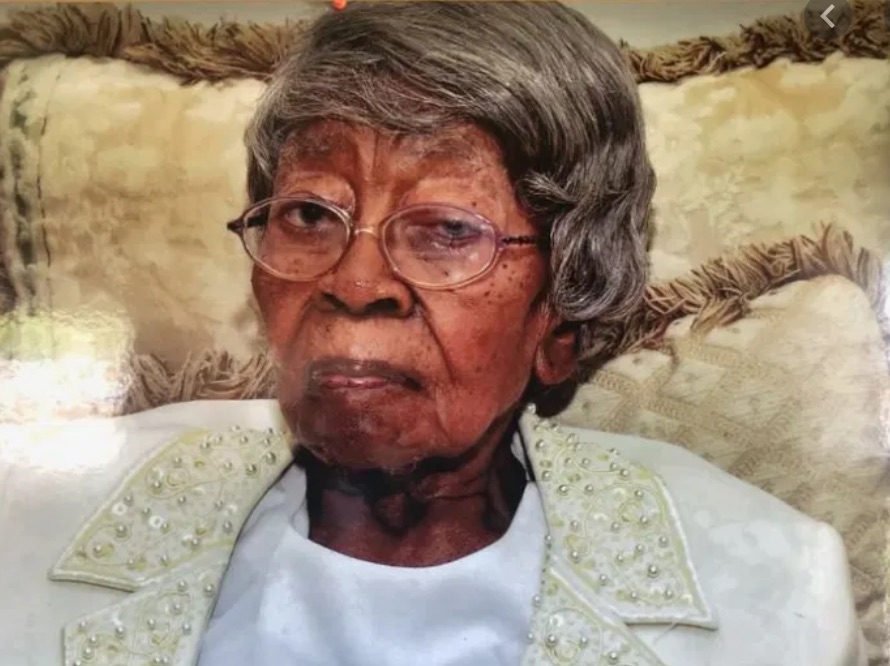 The name “Hester Ford” probably does not ring a bell. She died mid-April (2021) in Charlotte, NC. Theodore Roosevelt was President of the United States when she was born in 1906 (might have been 1905; the records are unclear). The covid-19 pandemic was not her first. She lived through the 1918 influenza pandemic. She lived through two world wars, saw aviation go from marvel to the everyday, witnessed the age of radio then television and then the internet. She witnessed lynchings and Jim Crow. As a black women she knew prejudice and intolerance, but saw the Civil Rights movement begin to make some inroads. She lived long enough to see 21 Presidents – she marveled and was joyous when a Black man was elected President of the United States – something she never expected.
 friarmusings