Connecting the dots

he_qi_road_to_emmaus

Road to Emmaus by He Qi

The daily Mass readings for the Wednesday in the Octave of Easter includes the well-known account of two travelers on the road to Emmaus. Earlier this week I included a commentary on the passage. This morning in Mass I offered a few thoughts on the passage.

It seems to me that we all have plans. It is my experience that those plans never unfold quite as we had planned.  Some are side-tracked, some laid aside for other plans, others fall away forgotten or unused, and some are part of disappointment, discouragement, or a life slipping off the rails. Continue reading

The Gospel of Luke – The Road to Emmaus


In Luke’ narrative there is no account of the Resurrection; there in only the empty tomb – which is not the source of faith for people in Luke’s rendering of the gospel. Rather, in Luke’s gospel it is the empty tomb and the encounter with the person of the Risen Jesus.

The empty tomb is what Jesus had said would happen “on the third day.”  The event of its discovery points back to Jesus’ word.  A word mostly fully realized later in the ‘breaking of the bread.”

Luke 24:13 Now that very day two of them were going to a village seven miles from Jerusalem called Emmaus,14 and they were conversing about all the things that had occurred.15 And it happened that while they were conversing and debating, Jesus himself drew near and walked with them,16 but their eyes were prevented from recognizing him.17 He asked them, “What are you discussing as you walk along?” They stopped, looking downcast.18 One of them, named Cleopas, said to him in reply, “Are you the only visitor to Jerusalem who does not know of the things that have taken place there in these days?”19 And he replied to them, “What sort of things?” They said to him, “The things that happened to Jesus the Nazarene, who was a prophet mighty in deed and word before God and all the people,20 how our chief priests and rulers both handed him over to a sentence of death and crucified him.21 But we were hoping that he would be the one to redeem Israel; and besides all this, it is now the third day since this took place. Continue reading

A clear test….

Folks who read blogs don’t always know too much about the person whose writings they have taken the time to read.  You can always find out a little something on an “About” page. Here is mine. I am a Franciscan friar and an ordained Catholic priest.  It is who I am.

Speaking at the Chrism Mass on Holy Thursday at St. Peter’s Basilica yesterday, Pope Francis gave “a clear test” of the meaning of ordained priesthood.

A good priest can be recognized by the way his people are anointed. This is a clear test. When our people are anointed with the oil of gladness, it is obvious: for example, when they leave Mass looking as if they have heard good news. Our people like to hear the Gospel preached with “unction”, they like it when the Gospel we preach touches their daily lives, when it runs down like the oil of Aaron to the edges of reality, when it brings light to moments of extreme darkness, to the “outskirts” where people of faith are most exposed to the onslaught of those who want to tear down their faith. People thank us because they feel that we have prayed over the realities of their everyday lives, their troubles, their joys, their burdens and their hopes. And when they feel that the fragrance of the Anointed One, of Christ, has come to them through us, they feel encouraged to entrust to us everything they want to bring before the Lord: “Pray for me, Father, because I have this problem”, “Bless me”, “Pray for me” – these words are the sign that the anointing has flowed down to the edges of the robe, for it has turned into prayer. The prayers of the people of God. When we have this relationship with God and with his people, and grace passes through us, then we are priests….

Pray for me that I may be a priest who strives to daily pass this “clear test.”

Pope Francis – honeymoon, challenges, and legends

While we are still in the early days of the papacy of Pope Francis, the reports, accounts, stories and insights continue to pour into the “newsverse.”  I thought it might be helpful to have a summary of some of the ones I have seen that I think are helpful.

There are lots of others posts available out there – one only needs to query.  And while 88% of American Catholics are currently happy to extremely happy with his election, that still leaves 12% who are not – and some of their blogs are scathing. But I will leave you to find them

And for the history of Jorge Mario Bergoglio in graphic form, you can look here.


Lifting the Shadow of Scandal

When I was a missionary is Kenya there was a story told to me about the 1920s and big game hunting in Trans-Mara and the coastal regions.  The gist of the story is that the “great white hunters” had to be reminded – even if they had made the perfect killing shot on a charging rhinoceros, they had to move out of the way.  Even though the animal was technically dead, that message had not gotten to the rest of the beast.  And it was the momentum of the rest of the beast that could still run you over.

That story came to mind reading Ross Douthat – a NY Times columnist – as he paints a sober picture of the institutional (and sometimes insider) momentum that will drag at the edges of any reform movement or efforts on the part of Pope Francis. Lifting the Shadow of Scandal – NYTimes.com.

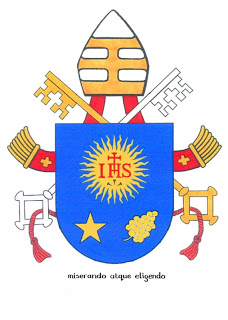
Pope Francis: Papal Coat of Arms

Pope Francis’ Coat of Arms

PopeFrancisCoatArmsPope Francis’ papal coat of arms are the same that he used as bishop. The shield has a bright blue background, at the center top of which is a yellow radiant sun with the IHS christogram representing Jesus (it is also the Jesuit logo). The IHS monogram, as well as a cross that pierces the “H”, are in red with three black nails directly under them. Under that, to the left, is a star representing Mary, Mother of Christ and the Church. To the right of the star is a spikenard flower representing Joseph, Patron of the Universal Church. With these symbols the Pope demonstrates his love for the Holy Family. Continue reading

Pope Francis and the Spirit of LaVerna

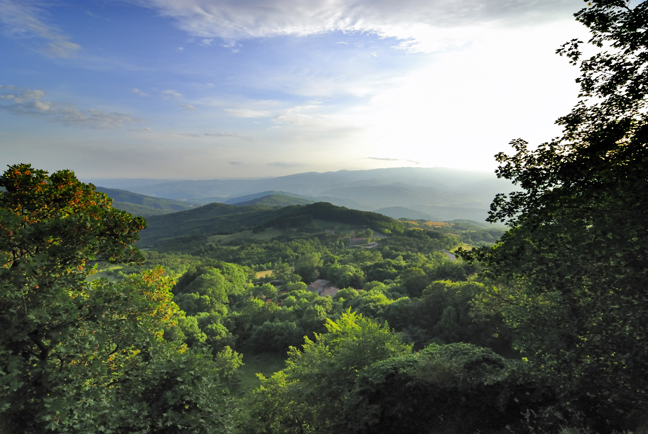
On May 8, 1213, St. Francis of Assisi was given a mountain.  Count Orlando of Chiusi gave La Verna to Francis and his friar brothers as a retreat especially for prayer and contemplation.  Five year later in 1218 Count Orlando built the friars the chapel Santa Maria degli Angeli (St Mary of the Angels).

LaVerna

In September of 1993, Pope John Paul II went to La Verna for prayer, contemplation and to meet with the bishops of Tuscany.  During lunch while John Paul II was speaking with the friar brothers and bishops, he said here at both La Verna and Assisi, Franciscanism was born and in a certain way Christianity too by rediscovering the simplicity and fervor of the beginnings.

Sunday, May 17, 2013, the the Archpriest of St. Peter’s Basilica, Cardinal Angelo Comastri, in greeting Pope Francis at the beginning of the celebration of Mass at St. Anna’s Parish, recalled the words of John Paul II – and said that is what is happening with his election.  In the taking of the name “Francis” we all reminded of the need to rediscover Christianity by rediscovering the simplicity and fervor of our faith.

There is a moment when Francis of Assisi called together his friar brothers – men who had already accomplished so much.  He told them: “Up to now we have done nothing…. Let us begin again and do what is ours to do.

May we be blessed to do what is ours to do – as we pray for Pope Francis to do what is his.

“See, I am doing something new” – Pope Francis

from time to time, I am asked to publish one of my homilies…… from the Fifth Sunday in Lent

Eight years ago when Pope Benedict inherited the chair of Peter, the sense was that the cardinals had voted to continue the papacy of John Paul II.  Continuity was the catch phrase. It what make the verse from Isaiah stand out: “Remember not the events of the past, the things of long ago consider not; see, I am doing something new!” (Isaiah 43:18) Continue reading

Jesuit and Franciscan

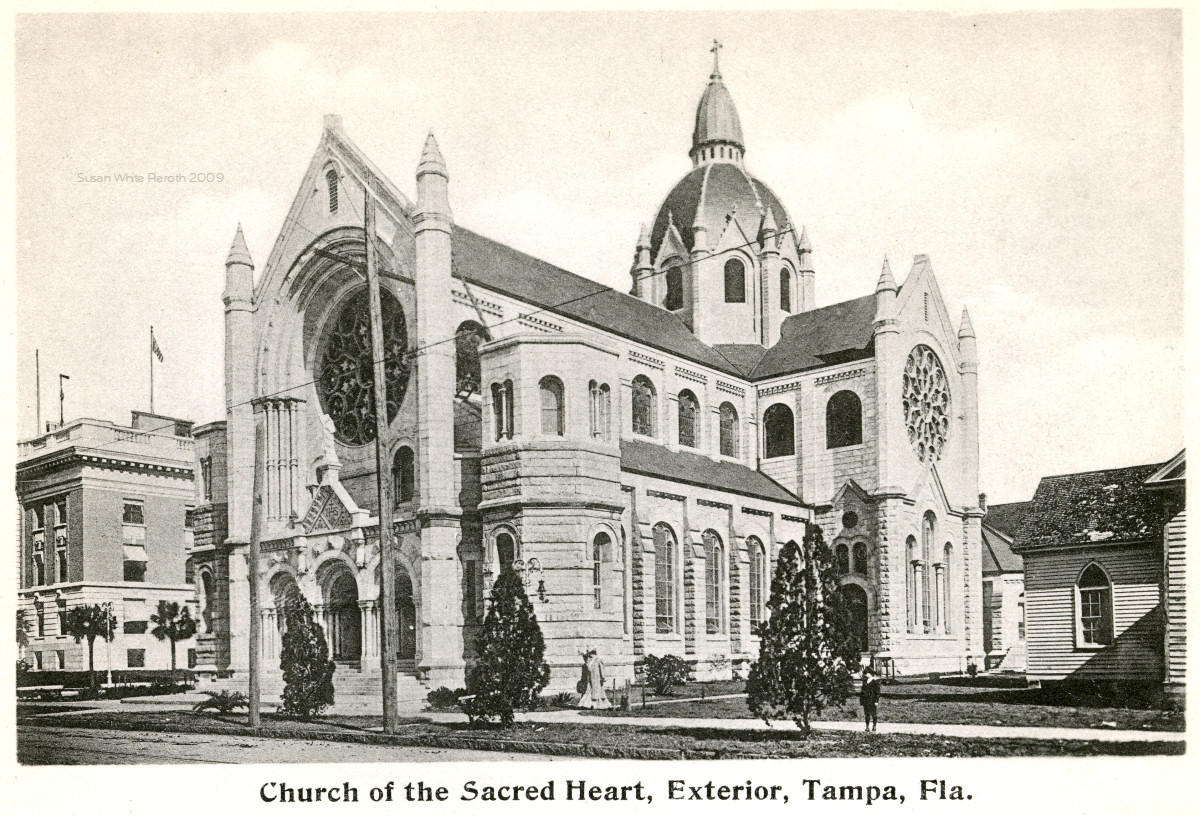
SH historicSacred Heart parish here in Tampa has an unusual history.  It was established in 1860 (modern by world standards, ancient by West Central Florida standards) with diocesan priests, but was lead by the Jesuits of the New Orleans province from 1888 until 2005. Their missionary, church planting, and pastoral work was pretty amazing. In 2005 they withdrew from the parish and pastoral leadership of the parish passed to the Franciscan friars of Holy Name Province who remain to this day.

As a parishioner pointed out, are we perhaps the only parish who has a statue/altar for St. SH modernIgnatius of Loyola and St. Francis of Assisi – as well as the tradition of both august religious orders?  Fun to ponder – but in any case we are proud of our Jesuit roots (Ad Majorem Dei Gloriam – For the greater glory of God) and our Franciscan heritage (Deus Meus et Omnia – My God and my all)