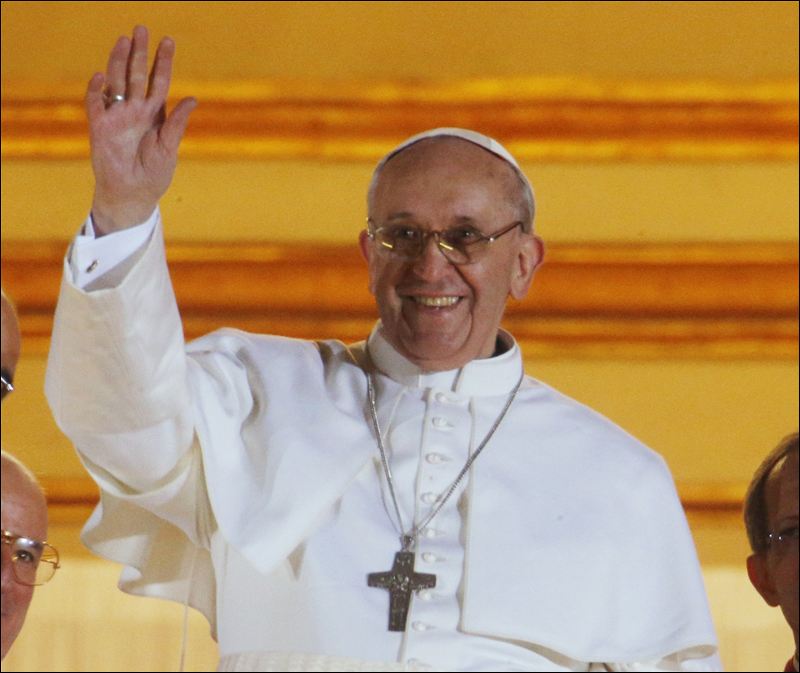
A Jesuit with a Franciscan Name….

Pope Francis

Where were you when the white smoke billowed from the Vatican?  I was on my way back to the parish when my cell phone kept rapidly beeping as one text after another poured in.  Back in the parish office, I learned the Jesuit Cardinal Jorge Mario Bergoglio of Argentina had been elected and taken the name Francis – I assumed it was for St. Francis Xavier the great Jesuit missionary and that new evangelization would be the focus of his pontificate.  A good choice and a great aim.

Continue reading

The Work of the Church

My Franciscan brother, Fr. Dan Horan OFM, had a nice insight this morning over at his blog DatingGod. In short, while the world has focused on the resignation of Pope Benedict XVI, the gathering of cardinals, the pomp and circumstance of the electoral process, and all thing papabili, the work of the Church continues.

While the spectacle of papal elections, with the pomp and circumstance of crimson cassocks and Latin chant captures the imagination of many the world over, the work of the church doesn’t end (nor begin, for that matter) with these attention-grabbing events.

The work of the church is in the parish, the ministry center, the homeless shelter, the Catholic Charities office, the Franciscan missions in Peru, the classrooms of Jesuit schools, the hospices of the Sisters of Charity, and so on. The life of the church is found not in the grand processions of cardinal electors or the daily routines of the Roman dicasteries, but in the experience of the Body of Christ, which is the People of God, living a life of faith, striving to follow the Gospel, and caring about how to be a good and holy person — every day, here and now.

Journalists, columnists, pundits, and the like will get their fair share of news and “exciting events” over the next few days, but when the TV cameras and reporters vacate St. Peter’s Square, the nuns who care for Rome’s homeless population and the doctors who work in the Catholic hospitals of that city will continue the mission of the evangelica vita.

Forming a moral conscience

There is a current NY Times article about the “Vatican” and “bishops” being out of touch with the people of the United States.  My Franciscan brother, Fr. Dan Horan, OFM, has an insightful article over at his blog about what he finds truly significant about the poll.  Take a read. Interestingly, he touches on two points that are always close to my thoughts: (a) people and the formation of a moral conscience, and (b) US Catholics are really a very small percent of the whole-wide Catholic Church. Continue reading

When the pope resigns…. did you know?

This is the current insignia/logo of the Vatican during the papacy of Benedict XVI. The symbolism shows the “keys of the kingdom” (Matthew 16:18) and the papal tiara indicating that there is a pope in office. But what happens at the sede vacante on Feb 28th when Pope Benedict resigns and the chair of Peter is vacant?

Continue reading

We are only instruments in the Lord’s hand…

“There are times when the burden of need and our own limitations might tempt us to become discouraged. But precisely then we are helped by the knowledge that, in the end, we are only instruments in the Lord’s hands; and this knowledge frees us from the presumption of thinking that we alone are personally responsible for building a better world. In all humility we will do what we can, and in all humility we will entrust the rest to the Lord. It is God who governs the world, not we. We offer him our service only to the extent that we can, and for as long as he grants us the strength….”

–Pope Benedict XVI
Encyclical Letter Deus Caritas Est (35)
25 December 2006

Resigning Popes – who was the last one?

My friar brother, Fr. Dan Horan OFM, has an interesting article over at America Magazine.  It asks the question “Who was the last pope to resign? Was it Celestine V or Gregory XII? | America Magazine.  Hopefully it makes you curious about church history

Lent 101

A Word from Fr. George…
Lent is a time to reflect upon our life with God, and as the Orthodox theologian, Alexander Schmemann, notes all reflections should lead us to the Eucharist.  As you consider some of the “Lent 101” links provided below, take a moment and consider how your Lenten journey will lead you to a more full, complete, and holy encounter with Jesus in the Eucharist.

And if you would like – read some more musings on Lent, “So…what are you giving up for Lent?” here.

Need to Brush Up on Lenten Traditions?
There are many traditions and observances we as Catholics celebrate during the season of Lent. Over time, we may start to think of them as routine. But every one of them has developed into a tradition with the intent to deepen your reflection upon the Lenten journey. If you need to brush up on why we keep certain rituals or practices, please see the links below for more information.

History of Lent
What are the three pillars of Lent?
When does Lent begin, and when does it end?
When do I fast, and when do I abstain?
Is Lent really 40 days? Or is it longer?

Ash Wednesday
This Wednesday, February 13th, is Ash Wednesday. Why do we celebrate Ash Wednesday? Find out more.

What are the Stations of the Cross? And why do we pray them? Learn more.