John Allen, longtime Vatican reporter: “The real winner of the 2013 conclave was St Francis of Assisi:” http://ow.ly/j0HbM We live in hope!
St Francis of Assisi and the 2013 Conclave
Reply

John Allen, longtime Vatican reporter: “The real winner of the 2013 conclave was St Francis of Assisi:” http://ow.ly/j0HbM We live in hope!
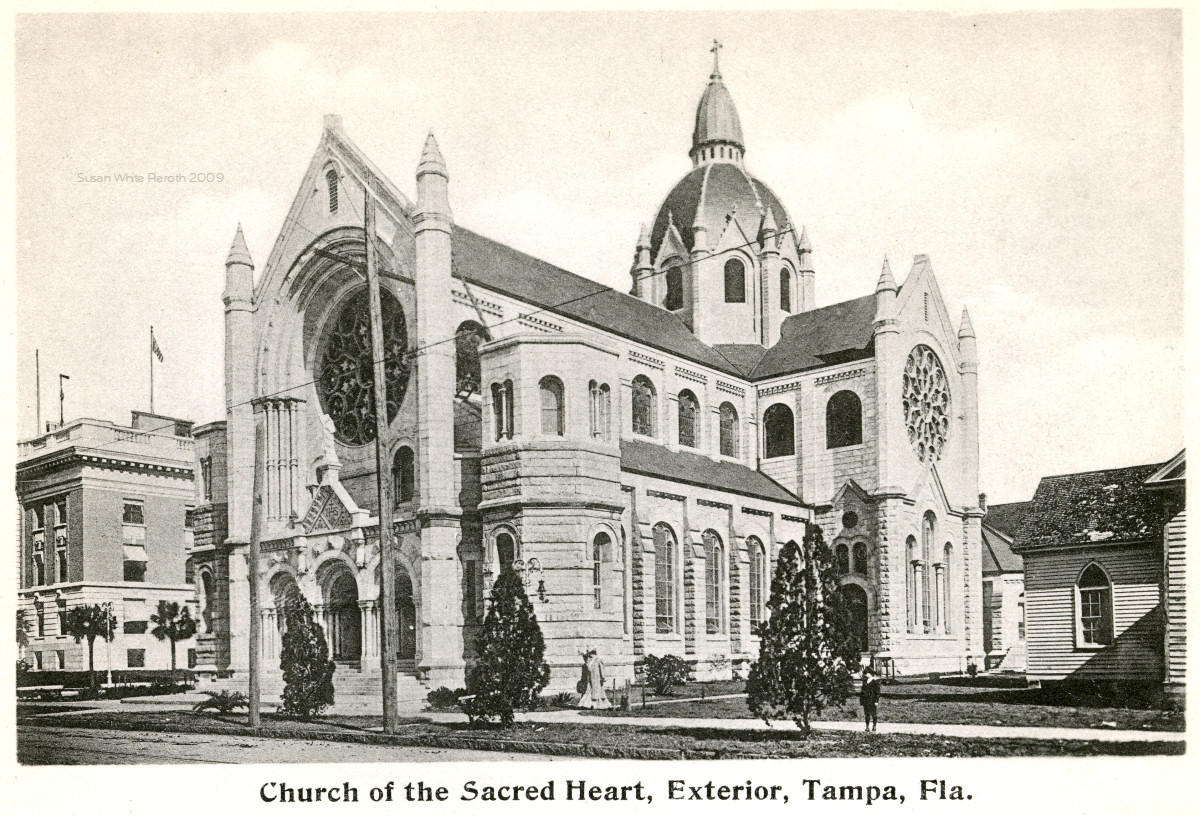 Sacred Heart parish here in Tampa has an unusual history. It was established in 1860 (modern by world standards, ancient by West Central Florida standards) with diocesan priests, but was lead by the Jesuits of the New Orleans province from 1888 until 2005. Their missionary, church planting, and pastoral work was pretty amazing. In 2005 they withdrew from the parish and pastoral leadership of the parish passed to the Franciscan friars of Holy Name Province who remain to this day.
As a parishioner pointed out, are we perhaps the only parish who has a statue/altar for St.  Ignatius of Loyola and St. Francis of Assisi – as well as the tradition of both august religious orders? Fun to ponder – but in any case we are proud of our Jesuit roots (Ad Majorem Dei Gloriam – For the greater glory of God) and our Franciscan heritage (Deus Meus et Omnia – My God and my all)
Pope Francis
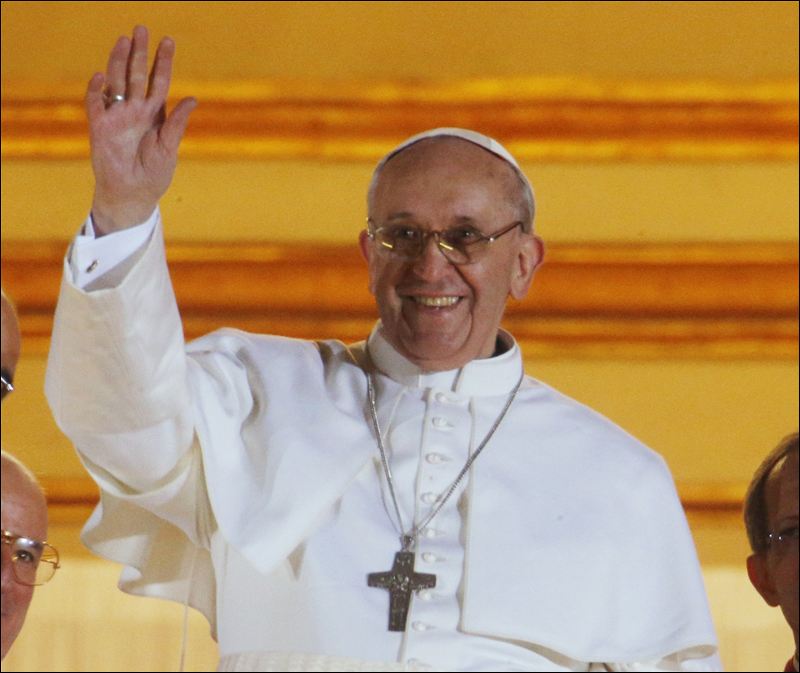
One of the great things about social media and its use by Cardinals, Bishops, and people from Rome these days, is that we have the chance to become “eye-witnesses” to the first hours and days of Pope Francis. I have seen some wonderful snippets of tweets, blogs, etc. that give me great hope about the possibilities of the man who would walk in the shoes of Peter: holiness in humility.
Bishop Robert Lynch of St. Pete diocese (the first blogging bishop) has a great article which encapsulates many of the stories from the first 24 hours. It is a great read by another church man who strives for holiness in humility.
Where were you when the white smoke billowed from the Vatican? I was on my way back to the parish when my cell phone kept rapidly beeping as one text after another poured in. Back in the parish office, I learned the Jesuit Cardinal Jorge Mario Bergoglio of Argentina had been elected and taken the name Francis – I assumed it was for St. Francis Xavier the great Jesuit missionary and that new evangelization would be the focus of his pontificate. A good choice and a great aim.
 St. Francis of Assisi is the patron saint of Italy, merchants, stowaways, ecology, but most famously, of animals. If one searches the internet, you can easily find all kinds of pious, ecologically insightful, and often amazingly-modern sounding quotes from St. Francis. And they are inevitably without a citation from one of Francis’ writings or at least a later Franciscan source writing about Francis. As I noted in the beginning of this series, Francis has always been reinvented and marketed as needed. Perhaps the one book most responsible for casting Francis as the lover of animals and nature is a collection of stories – many miraculous and all very saintly – that first appeared in 1390 in Tuscany: the Fioretti (The Little Flowers). But can we say about St. Francis, the patron saint of animals? Continue reading
 By the spring of 1213, four years after the founding of the “order,” Francis’ reputation had risen to the attention of the Italian aristocracy – not just in Assisi but throughout central Italy. The order was beginning to attract men from the higher social classes. Sons of merchants like Francis, sons of the landed wealthy, sons of ruling households, men with established careers in law, music and the arts, and also ordained priests. They joined the already formed group of men from middle and lower backgrounds in muddling through what it meant to follow Christ in the manner of Francis. G.K. Chesterton’s later definition of the Catholic Church – “here comes everybody” – was being lived out in Francis’ day. Continue reading
 Over the last several weeks we have been considering what awaited the men who came to join Francis of Assisi and this growing fraternity of believers seeking to follow Christ more fully in the world. We had mentioned there were no rules, regulations, or even a formation program; there was only Francis and the other brothers. But what drew the men to want to “come and see?” Undoubtedly, as today, a complex of reasons, but key among those reasons was Francis of Assisi’s reputation for holiness and miracles. Continue reading

St. Clare of Assisi
In the last several articles we have described the brothers who gathered around Francis and committed themselves to his way of following Christ. Two of the earliest arrivals were Leo and Rufino. The first became Francis’ chaplain and confessor, as Leo was an ordained priest already. Rufino, a lifelong confidant and wisdom figure for Francis, was also the first cousin of an aristocratic woman of Assisi, the niece of Monaldo, lord of Coriano. Clare di Favarone di Offredicio was a woman from the very class of landed aristocrats that the young Francis had imitated and longed to join socially. Continue reading

The church’s liturgical calendar marks today as commemorating “St. Paul Miki and Companions.” Paul Miki, a native Japanese convert to Catholicism and a member of the Society of Jesus, was among twenty-six religious and lay missionaries who were sentenced to death by the Emperor of Japan. Miki and two Jesuits were martyred on February 5, 1597, but they were not the only ones martyred that day. There were twenty-three others, all of whom were Franciscans – some members of the First Order (Franciscan friars) and others members of the Third Order (Secular Franciscans). Several of the Franciscans were later canonized as saints: Peter Baptist, Martin of the Ascension, Francis Blanco, Philip of Jesus, Gonsalvo Garzia, and Francis of St. Michael.
“St. Paul Miki and Companions.” Too often we never ask about or remember the “companions.” In this commemoration, the seventeen lay people who gave their lives for Christ and their trust in Him.
So, yes the Jesuits and Franciscans celebrate their brethren, but even more importantly let us give thanks for the lay women and men whose work on behalf of others – schools, and hospitals, and activities in support of the poor and hungry. All were active doing what was theirs to do.
Francis and Lady Poverty
Many people have a very romantic idea of Franciscan life and the vow of poverty. What I can tell you is that the meaning and the manner of living poverty has vexed Franciscans since the beginning with very little about it being terribly romantic. Most of the descriptions and stories of the life of early poverty were written years after St. Francis’ death, when the manner of living the vow – in conjunction with the vow obedience – was a divisive issue among the brothers. In one of the more notable descriptions from the Sacrum Commercium, an anonymous text from a latter period, the author tries to give his or her insight into St Francis: “While they were hastening to the heights with easy steps, behold Lady Poverty, standing on the top of the mountain. Seeing them climb with such strength, almost flying, she was quite astonished. ‘It is a long time since I saw and watched people so free of all burdens.’ And so Lady Poverty greeted them with rich blessings. ‘Tell me brothers, what is the reason for your coming here and why do you come so quickly from the valley of sorrows to the mountain of light?’ They answered: ‘We wish to become servants of the Lord of hosts because He is the King of glory. So, kneeling at your feet, we humbly beg you to agree to live with us and be our way to the King of glory, as you were the way when the dawn from on high came to visit those who sit in darkness and in the shadow of death.'” Continue reading

