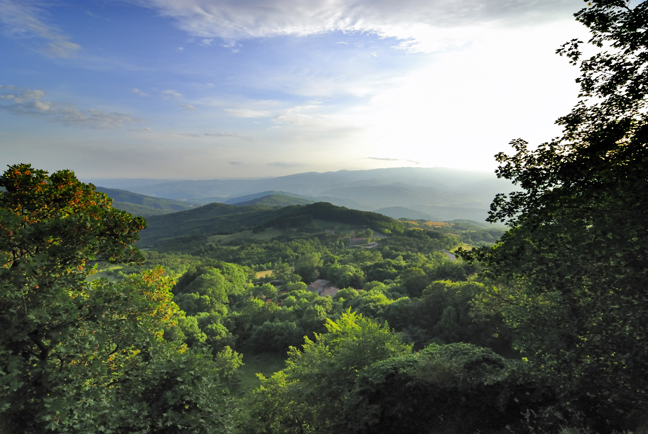
On May 8, 1213, St. Francis of Assisi was given a mountain. Count Orlando of Chiusi gave La Verna to Francis and his friar brothers as a retreat especially for prayer and contemplation. Five year later in 1218 Count Orlando built the friars the chapel Santa Maria degli Angeli (St Mary of the Angels).

In September of 1993, Pope John Paul II went to La Verna for prayer, contemplation and to meet with the bishops of Tuscany. During lunch while John Paul II was speaking with the friar brothers and bishops, he said here at both La Verna and Assisi, Franciscanism was born and in a certain way Christianity too by rediscovering the simplicity and fervor of the beginnings.
Sunday, May 17, 2013, the the Archpriest of St. Peter’s Basilica, Cardinal Angelo Comastri, in greeting Pope Francis at the beginning of the celebration of Mass at St. Anna’s Parish, recalled the words of John Paul II – and said that is what is happening with his election. In the taking of the name “Francis” we all reminded of the need to rediscover Christianity by rediscovering the simplicity and fervor of our faith.
There is a moment when Francis of Assisi called together his friar brothers – men who had already accomplished so much. He told them: “Up to now we have done nothing…. Let us begin again and do what is ours to do.”
May we be blessed to do what is ours to do – as we pray for Pope Francis to do what is his.

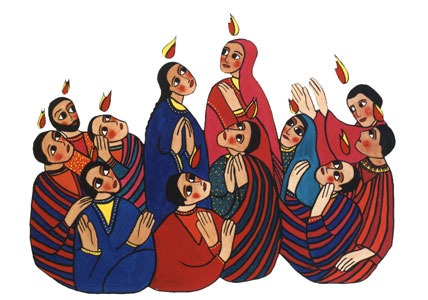 The description of the first Pentecost in the Acts of the Apostles tells us that when devout Jews from many different nations heard the Spirit-inspired proclamation of the gospel by the disciples, “each one heard them speaking in his own language.” The outpouring of the Spirit of God united this very diverse group of people in a powerful moment of God’s self-revelation. Such is the power of Spirit.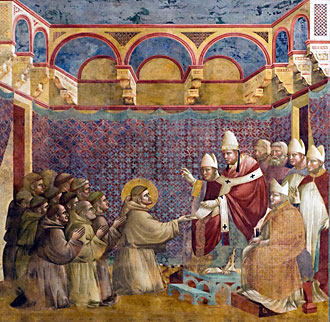

 Over the last few weeks, we described Francis of Assisi in the role in which he is most popularly recognizable: the lover of nature and animals. Interestingly, this role is not original in the Christian tradition. In a valuable book reviewing the nature stories of Franciscan literature, Edward Armstrong shows that many of Francis’ attitudes have precedents in biblical, early Christian, and medieval ideas about nature. One group of scholars place Francis in the tradition of hermits who retired to wilderness and befriended animals. Others associate him with a theological trend, unfortunately not dominant, which affirms creation as containing intrinsic value. Most see the stories about Francis as having precedents in the already-known lives of saints, although they may have been true of Francis as well.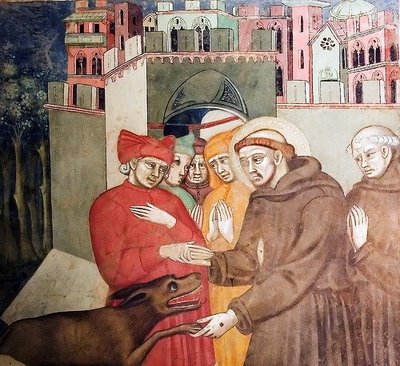
 People are surprised to learn that the Early Rule of the friars instructed the brothers not to own pets – as well they were not to ride horses. These rules are only partly about poverty; they encouraged friars not to treat animals as objects or possessions. And, in the case of horseback riding, his rule distanced the friars from the proud world of chivalry. Later in his life when sickness compelled him to ride, Francis always preferred a donkey.
