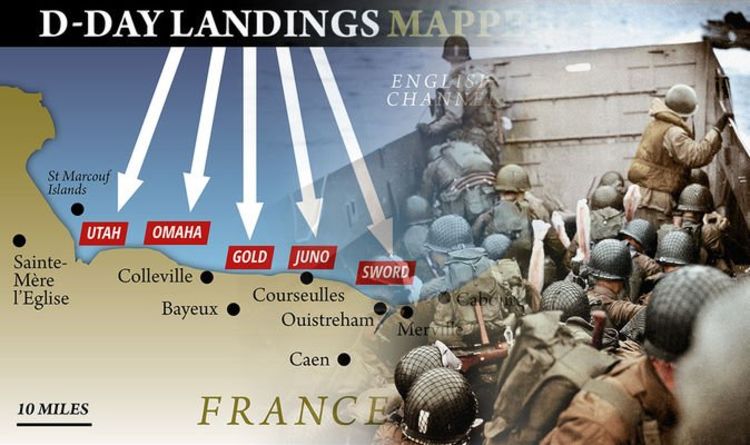
In June 1944, war raged across the globe. Allied forces from the United States, Britain, Canada, Australia, New Zealand, India, and many other Commonwealth countries opened another front on the War against Nazi Germany. Allied forces had already recaptured Saharan Africa, Sicily, and liberated Rome on June 4, 1944. Meanwhile in the Pacific, allied forces were already underway for an amphibious landing in the Mariana Islands of Saipan and Guam to begin June 13th. In midst of all this came the most remembered of the days in this single month of June 1944. Today we remember the Allied landings on the beaches of France.
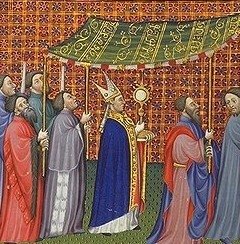 This weekend the Church celebrates the Solemnity of the Body and Blood of Christ, a feast perhaps better known by the Latin Corpus Christi. At its core, the solemnity is a celebration of the Tradition and belief in the Eucharist as the Real Presence of the Body and Blood of Jesus Christ. Many folks wonder why this celebration is not integral with Holy Thursday. It was, mixed in with other themes, e.g., institution of the priesthood. And, all this occurs in the shadow of Good Friday. The placement of the celebration was not one that necessarily lends itself to a joyful celebration.


 On All Saints Day we celebrate, remember, and honor all the saints, known and unknown. Back in the earliest days of the Church, we did not so much think of “saints” but rather martyrs were especially esteemed. It was very much a local event, as the local church celebrated the anniversary of a martyr’s death on the anniversary date and in the place of martyrdom. By the 4th century the list of martyrs had grown considerably with some martyrs being celebrated more universally. The Church was caught between its desire to remember and celebrate the martyr’s witness and death, an ever expanding geography, and the practical matter of finding days to set aside to celebrate. Very soon there was a movement to find a common day to celebrate martyrs that were important to the Church while leaving the local communities to set aside days for martyrs that loomed larger in local memory.
 In today’s
 Someone once describe a blog as the digital platform that ensures no thought ever goes unpublished. I think there is a large measure of truth in that definition. The previous post, “