

The Solemnity of the Most Sacred Heart of Jesus is a celebration that falls 19 days after Pentecost, on a Friday. The liturgical feast was first celebrated in Rennes, France. The liturgy was approved by the local bishop at the behest of St. John Eudes, who celebrated the Mass at the major seminary in Rennes on August 31, 1670. You’ll notice that the first celebration was not situated in the days following Pentecost. St. John Eudes composed a Mass and a set of prayers for outside the Mass (referred to as an “Office”) that were quickly adopted in other places in France. Continue reading
 This coming Sunday’s
  This coming Sunday’s
  The
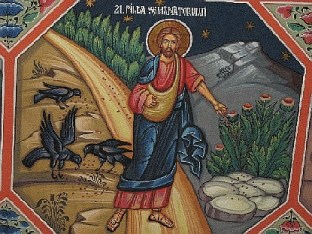
The  Mark alone records this parable: He said, “This is how it is with the kingdom of God; it is as if a man were to scatter seed on the land and would sleep and rise night and day and the seed would sprout and grow, he knows not how. Of its own accord the land yields fruit, first the blade, then the ear, then the full grain in the ear. And when the grain is ripe, he wields the sickle at once, for the harvest has come.” (Mark 4:26-29)
 Salt is important. It has its own Wiki page and even has a history book (Mark Kurlansky:
  The
The  This coming Sunday the Church returns to “Ordinary Time” – not ordinary as regular and everyday, but from the Latin meaning to count. We celebrate the
 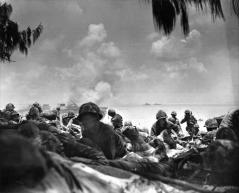 At the end of the movie “Tora! Tora! Tora” (1970 film about the Dec 7, 1941 Japanese attack on Pearl Harbor), Admiral Isoroku Yamamato comments, “I fear all we have done is to awaken a sleeping giant and fill him with a terrible resolve.” It is a great line, prescient in nature, but… Although the quotation may well have encapsulated many of his real feelings about the attack, there is no printed evidence to prove Yamamoto made this statement or wrote it down. William Safire traces its origins to the phrase dubiously attributed to Napoleon, “China is a sickly, sleeping giant. But when she awakes the world will tremble”. But the metaphor of the awakened sleeping giant was apt – and may well have been in Yamamoto’s mind. The admiral had studied, served and traveled in the United States and was well aware of its extensive industrial capability – as were a number of key Japanese military leaders of the day.
  friarmusings