
 Last week there was a bit of an “exchange” between Pope Francis/ Vatican and Donald Trump/his campaign team. Someone asked me what I thought about it all. I had nothing to offer since it is my experience that the press accurately quotes the Pope but then again, any text without a context is generally a pretext for what one wanted to say in the first place. What did the Pope say, in context? The context was following the celebration of Mass at the US-Mexican border while returning to Rome. Keep in mind, this Pope has built his pastoral response to the world around the model of St. Francis’ compassion for the poor, suffering, or marginalized. His response should not have been too surprising. Pope Francis said, a “person who thinks only about building walls, wherever they may be, and not building bridges, is not Christian. This is not in the Gospel. As far as what you said about whether I would advise to vote or not to vote, I am not going to get involved in that. I say only that this man is not Christian if he says things like that. We must see if he said things in that way and in this I give the benefit of the doubt.” Continue reading
Being Christian
Reply
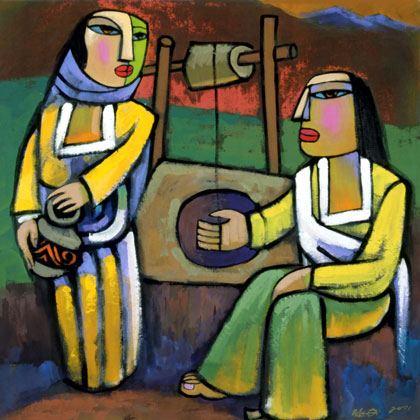
 “While he was praying …” (Luke 9:27) During my time in Kenya, one of my friends was missioned in Guatemala among the Quechua people. That is a part of the country where people are poor, easily overwhelmed by the authorities in Guatemala City and the provinces, the maze of governmental forms and foreign laws of another culture.
  The playwright Oscar Wilde once wrote, “I can resist anything except temptation.” The humor of the remark is mixed with a sad recognition that we fail so often to resist the temptations that come our way each day and from every direction. Of course, there are temptations and then there are temptations writ large. What are people’s greatest temptations? Why? What are their “favorite” sins – indicated by frequency and repetition? Why do we so often find ourselves in the same position as St. Paul? “What I do, I do not understand. For I do not do what I want, but I do what I hate.” (Romans 7:15) During this Lenten season, each of us is called to name our temptations as part of a moral and ethical struggle in trying to live a holy and righteous life. Then once we name that temptation, to begin to unfold and inspect, to then start to answer what it is about this temptation that becomes especially alluring. Such are the first steps to healing.
  ” Bless me Father, for I have sinned….” So often people confess anger as a sin which plagues them. But often their description leaves me wondering. “You mentioned anger, but it sounded more like exasperation.” The person agrees and in the discussion mentions that they said nothing to the other person, we’re not uncharitable to them, and it did not affect their relationship. I offer that perhaps that moment is one of the most Christian of moments. They faced a choice: do what their inner emotion would have them – perhaps say a harsh word, sever the relationship, etc. – or choose what God asks and act in charity. But…
  friarmusings