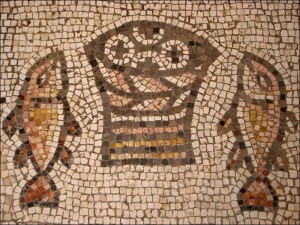
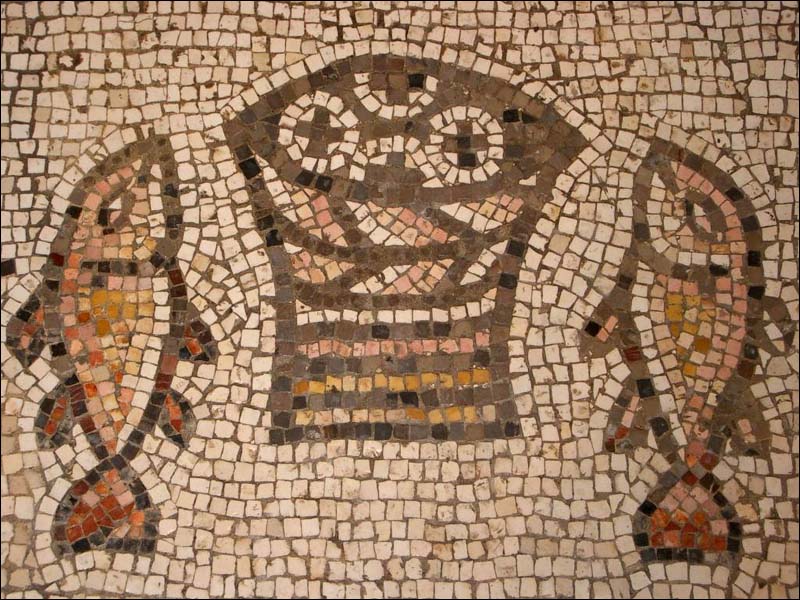
 41 The Jews murmured about him because he said, “I am the bread that came down from heaven,” 42 and they said, “Is this not Jesus, the son of Joseph? Do we not know his father and mother? Then how can he say, ‘I have come down from heaven’?” 43 Jesus answered and said to them, “Stop murmuring among yourselves. 44 No one can come to me unless the Father who sent me draw him, and I will raise him on the last day. 45 It is written in the prophets: ‘They shall all be taught by God.’ Everyone who listens to my Father and learns from him comes to me. 46 Not that anyone has seen the Father except the one who is from God; he has seen the Father. 47Amen, amen, I say to you, whoever believes has eternal life. 48 I am the bread of life. 49 Your ancestors ate the manna in the desert, but they died; 50 this is the bread that comes down from heaven so that one may eat it and not die.
These verses precede the Gospel text and serve to remind the reader that Jesus’ discourse is controversial and has raised grumblings among the people.
Continue reading →

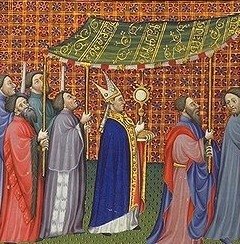 The Last Supper. In the verses which follow v.17, Mark concentrates all of his attention upon two incidents which marked the meal: the moment of the dipping of the bread and the bitter herbs in the bowl of stewed fruit when Jesus spoke of his betrayal (verses 18–21), and the interpretation of the bread and the third cup of wine following the meal itself (verses 22–25). Continue reading
  When I was a midshipman at the United States Naval Academy (last century!) I encountered a new phrase: “if the minimum weren’t good enough, it wouldn’t be the minimum.” There a bit of logic to it, but…. can’t say it is the most inspiring bit of prose ever recorded. Yet, there was a sense in which tradition enshrined the saying. The person who graduated with the lowest GPA (2.5 was the minimum) was referred as the “Anchor Man.” At the end of the graduation he was paraded around on his classmates shoulders and we were all expected to give him a dollar. Strange tradition, that. He had done the minimum – and who knows he may have worked twice as hard as the rest of us….
  The first movie I saw after my years in mission in Kenya was “Shakespeare in Love.” There is a scene between Philip Henslowe, the theatre owner and producer, and Hugh Fennyman, the investor, which I have always remembered.

 friarmusings