The Net Cast Widely

This coming Sunday is the 17th Sunday in Ordinary Time. “Again, the kingdom of heaven is like a net thrown into the sea, which collects fish of every kind.” The net pictured here is a large dragnet, usually about six feet deep and up to several hundred feet wide, positioned in the lake by boats and requiring several men to operate (hence the plurals of v. 48). The picture is realistic, portraying an ordinary event with no surprising twists: The net brings in “every kind” of both good and bad fish, which are then sorted, the good being kept and the bad thrown out.

Continue reading

Two Parables

This coming Sunday is the 17th Sunday in Ordinary Time. “Again, the kingdom of heaven is like a merchant searching for fine pearls. When he finds a pearl of great price, he goes and sells all that he has and buys it. Matthew apparently intends the parable of the treasure to be interpreted together with the parable of the pearl, which immediately follows. The two parables do have common features: (I) In each case only a brief vignette of a crucial situation is given, without enough details to evaluate them as realistic stories. The interpreter should, therefore, be wary of filling in the gaps from pious imagination, but concentrate on what the parable does, in fact, portray. Continue reading

A Pearl of Great Price

This coming Sunday is the 17th Sunday in Ordinary Time. Pearls were as highly valued in the ancient world as they are today, and were a conspicuous way of displaying wealth (1 Tim 2:9; Rev 17:4; 18:12, 16). Huge pearls are the gates in the symbolic new Jerusalem (Rev 21:21). But there is a subtle difference between this and the preceding parable. Continue reading

Hidden Treasure

This coming Sunday is the 17th Sunday in Ordinary Time. “The kingdom of heaven is like a treasure buried in a field, which a person finds and hides again, and out of joy goes and sells all that he has and buys that field.” Buried treasure is the stuff of popular stories in every age and while out “pirates” no longer sail the Seven Seas we seem content with stories of lottery winners. Given Israel’s location at the crossroads of major powers to the north and east and to the south (Egypt) there is a long history of wars and rumors of war playing out upon the promised land. Continue reading

Parables: final thoughts

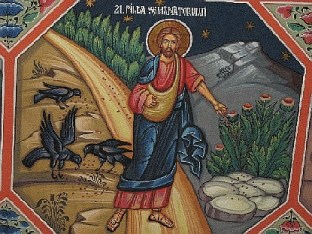
parable_SowerThis coming Sunday’s gospel ends: With many such parables he spoke the word to them as they were able to understand it. Without parables he did not speak to them, but to his own disciples he explained everything in private. (Mark 4:32-34) Mark concludes this collection of parables with a summary indicating  that he has selected illustrations of Jesus’ teaching from a much larger cycle of tradition. It was Jesus’ method to teach the people through parables such as the one which Mark has presented. Through these parables Jesus is proclaiming the good news of the Kingdom; in other words, He was proclaiming “the word.” The term is an echo of the explanation given to the parable of the sower, where it occurs eight times. It is appropriate to the vocabulary of revelation and means clearly “the word of God,” or more concretely “the word of the Kingdom.”

Continue reading

A Sunday of parables

parable_SowerThis coming Sunday the Church returns to “Ordinary Time” – not ordinary as regular and everyday, but from the Latin meaning to count. We celebrate the 11th Sunday in Ordinary Time. The readings, especially the first reading from the Prophet Ezekiel and the Gospel from Mark, each make use of parables. The New Testament scholar, Charles H. Dodd (d. 1973) gave the Church its most classic and enduring definition of a parable: “a metaphor or simile drawn from nature or common life, arresting the hearer by its vividness or strangeness, and leaving the mind in sufficient doubt about its precise application to tease it into active thought.”
Continue reading

Whole-hearted response

Next Sunday is the celebration of the 17th Sunday in Ordinary Time. You can read a complete commentary on the Gospel here.

44 “The kingdom of heaven is like a treasure buried in a field, which a person finds and hides again, and out of joy goes and sells all that he has and buys that field. 45 Again, the kingdom of heaven is like a merchant searching for fine pearls. 46 When he finds a pearl of great price, he goes and sells all that he has and buys it. 47 Again, the kingdom of heaven is like a net thrown into the sea, which collects fish of every kind. 48 When it is full they haul it ashore and sit down to put what is good into buckets. What is bad they throw away. 49 Thus it will be at the end of the age. The angels will go out and separate the wicked from the righteous 50 and throw them into the fiery furnace, where there will be wailing and grinding of teeth. 51 “Do you understand all these things?” They answered, “Yes.” 52 And he replied, “Then every scribe who has been instructed in the kingdom of heaven is like the head of a household who brings from his storeroom both the new and the old.” (Matthew 13:44-52) Continue reading

What was lost

This morning’s gospel is the parable of “The Prodigal Son” (Luke 15:11-32)

Luke 15 is one of the great chapters of Scripture for parables, bound together by the theme of joy over the recovery of what was lost. All three parables of Luke 15 (the Lost Sheep, the Lost Coin, and the Prodigal Son) point to the idea of the return of one that was lost.  To the simple structure of lost/found/joy, in the Prodigal Son parable, there is further development of the theme of God’s love and the contrast of the older brother’s hostility. Luke uses this motif to teach a newer, more full meaning of repentance. Continue reading

Talents: sharing joy

Talents4A Curious Start. 14 “It will be as when a man who was going on a journey called in his servants and entrusted his possessions to them. 15 To one he gave five talents; to another, two; to a third, one—to each according to his ability. Then he went away.” If Matthew had used a copy editor, I am sure they would be discussing the use of “it.” What will be as…? Curiously, most Matthean parables are explicit when it comes to the kingdom of heaven. The previous parable (Wise and Foolish Maidens) begins, “the kingdom of heaven will be like.” (25:1). Here Matthew begins hōsper gar, literally “for just as”, indicates that the same subject is under discussion. Continue reading