
The National Museum of the Marine Corps is an amazing history museum and a tribute to the U.S. Marines Corps. It is located on a 135-acre site adjacent to Marine Corps Base Quantico, Virginia and right off Interstate I-95. Its exhibits cover the history of the Marine Corp from its inception November 10, 1775, at Tun Tavern in Philadelphia to it modern 21st century deployments. The exhibits include artifacts, movies, and other features that animate and amplify the presentation. Most, if not all, of the docents are retired U.S. Marines and are steeped in the history of the Corps.
In the World War II Hall one segment is dedicated to the landings at Iwo Jima and the iconic flag raising on February 23, 1945 atop Mt. Suribachi. The first flag was raised about 10:30 am by a patrol from the 28th Marines who tied a small flag to a piece of iron pipe and planted it. The sight of this first flag was roundly cheered by the Marines fighting on the island and the fleet on the ships offshore.
Shortly after, the commanding officer, Lieutenant Colonel Chandler Johnson, realized the small flag was obscured from many parts of the island and decided a larger flag was needed for maximum visibility. A 96-by-56-inch flag was brought up the mountain to replace the original one. It was this second flag-raising that Associated Press photographer Joe Rosenthal captured in his Pulitzer Prize-winning photograph. Today, both historic flags are preserved at the National Museum of the Marine Corp. The second flag, which flew for several months, is wind torn and stained by the island’s volcanic ash, and is always on display. The first Iwo Jima flag is brought out of storage and displayed annually from mid-February through late March to align with the historical timeline of the Battle of Iwo Jima, which lasted from February 19 to March 26, 1945.
There is a whole story about the second flag raising which you can read here. Each time I have visited the museum – which is only 5 minutes from the friary – the docents well explain the history. However, the last visit was different.
Across the passage from the flag display is a memorial wall that contains an “Eagle, Globe & Anchor” pin for each Marine who died on Iwo Jima, a Navy emblem for the sailors who perished in the Iwo Jima operation, and a single emblem for the Coast Guard sailor who died. If you simply turn around from the “flag corner” you miss something very special. But if you move ~15 feet away and turn around, you will see this:
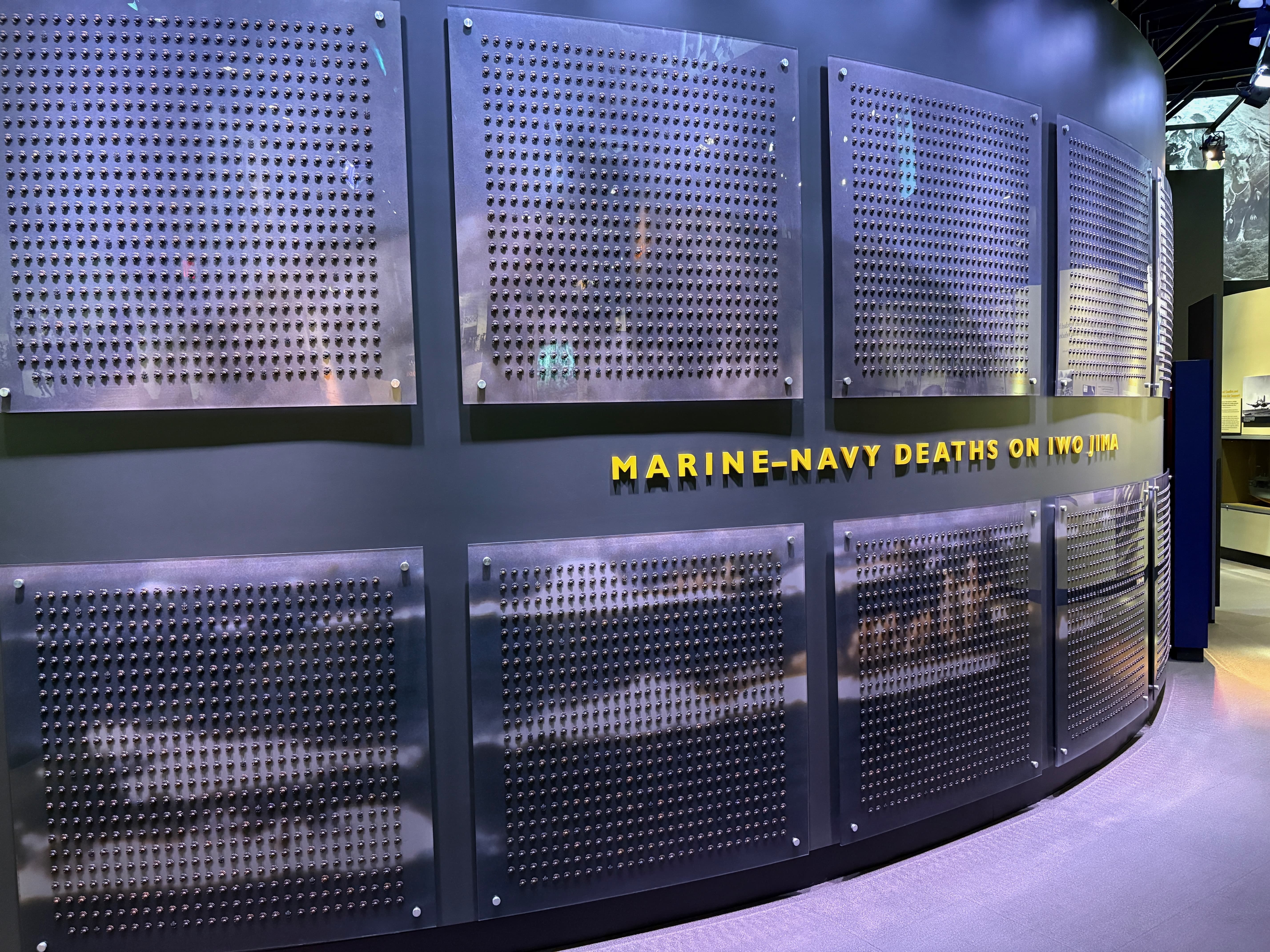
It is an image of Mt. Suribachi with landing craft headed toward shore for the landing.
So, visit the museum, enjoy the docents and take a moment to see this spectacular memorial and in so donig, honor the 6,821 U.S. service members who were killed in action or died of their wounds.
Discover more from friarmusings
Subscribe to get the latest posts sent to your email.


A neighbor of mine is a docent at the Marine Corps Museum. In fact I believe he manages their schedules. His wife just called me and I mentioned that you were in the Navy and had visited the museum a few days ago. She said if you were interested in a guided tour, he could do that for you. And when school opens again, you can take a group. His name is Tom Smith.
Side story: The family is very religious but think Catholics have it wrong. I took her to Mass with me about 5 years ago. She was quiet until I pulled into her driveway. Before she got out of the car she said Catholics give too much attention to the Blessed Mother. She was only like the rest of us. Taking too much away from her Son. Then she got out of the car.
We have just ignored that. Would not be able to change her mind. Good neighbors.
Let me know if you want their phone number or email address.
Julie Anton
This one I read! 😜