Today is the first of three consecutive days when I am presiding at the parish daily Mass. The three gospels are all taken from Matthew 5, the Sermon on the Mount. What follows is really one longer reflection delivered over three days because these three Gospel passages form a remarkably coherent sequence. They are not merely three disconnected sections of the Sermon on the Mount; they describe a progression in Christian discipleship:
Who we are becoming (The Beatitudes) – today
What our lives are meant to do (Salt and Light) – tomorrow
The foundation upon which we live (Fulfillment of the Law) – the next day
Together they form a unified theme: The Shape, the Mission, and the Foundation of the Christian Life.
Who we are becoming (The Beatitudes)
In today’s Gospel, Jesus goes up the mountain, sits down, and begins to teach. His first words are not commands. He does not begin by telling his disciples what they must do. Instead, he describes the kind of people who belong to the Kingdom of God. “Blessed are the poor in spirit, for theirs is the Kingdom of heaven…Blessed are the merciful, for they will be shown mercy…Blessed are the peacemakers, for they will be called children of God.”
When we hear the Beatitudes, it is tempting to hear them as a checklist of virtues. But they are more than that. They are a portrait of Jesus himself. Jesus is poor in spirit, trusting completely in the Father. Jesus is merciful toward sinners. Jesus is pure of heart. Jesus is the peacemaker who reconciles humanity to God through the Cross. In other words, the Beatitudes show us what a life transformed by God looks like.
This is important because we often think about our life of faith in terms of activities: attending Mass, praying, serving others, following commandments. All of these are important. But before Christianity is about what we do, it is about who we are becoming. It is about God shaping us into the likeness of Christ.
That shaping often happens quietly. We become merciful by learning to forgive. We become humble by recognizing our dependence on God. We become peacemakers by choosing reconciliation over resentment. Most of us do not become saints through dramatic moments. We become saints through daily conversion.
The Beatitudes remind us that God is not simply interested in improving our behavior. He is transforming our hearts.
As we begin this three-day journey through the Sermon on the Mount, let us ask ourselves: What kind of person is God shaping me to become? Because before Jesus speaks about our mission in the world, he first teaches us the shape of the Christian life.
Image credit: Sermon on the Mount (1877) by Carl Heinrich Bloch, Museum of National History at Frederiksborg Castle, Public Domain
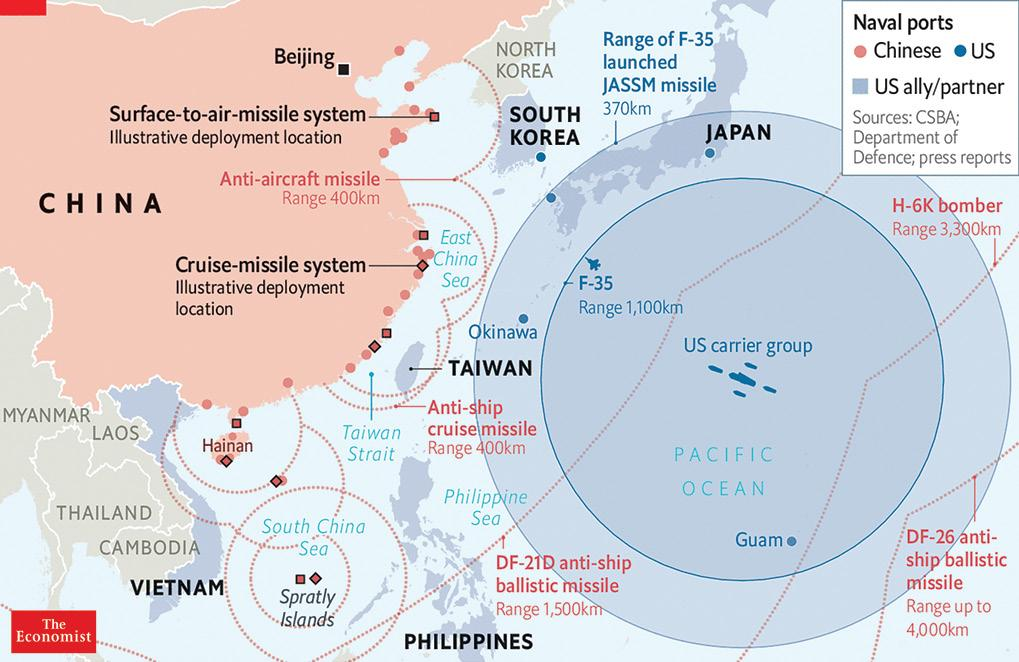
For decades, U.S. policy has been characterized by “strategic ambiguity.” Washington intentionally avoids answering two questions:
Would the United States definitely defend Taiwan militarily?
Would Taiwan be supported if it declared formal independence?
The purpose is to discourage both a Chinese attack on Taiwan and a unilateral declaration of independence by Taiwan. By leaving its response uncertain, the United States seeks to deter actions by either side that could trigger a conflict. Successive administrations, both Republican and Democratic, have generally pursued four goals: preserve peace and stability in the Taiwan Strait, deter the use of force by China, support Taiwan’s ability to defend itself, and avoid unilateral changes to the status quo by either Beijing or Taipei.
American concern about Taiwan is driven by several factors:
strategic location – Taiwan sits near major sea lanes and occupies a key position in the Western Pacific.
democratic values – Taiwan has evolved into a vibrant democratic society. Many American policymakers see support for Taiwan as consistent with broader U.S. support for democratic partners.
economic importance – Taiwan plays a critical role in global technology supply chains, especially through Taiwan Semiconductor Manufacturing Company (TSNC), the world’s leading advanced semiconductor manufacturer.
It is reminiscent of the 1900 policy of the United States: The China Open Door. The policy was focused on securing international agreement of equal opportunity for international trade and commerce in China, and respect for China’s administrative and territorial integrity. The articulation of the Open Door policy represented the growing American interest and involvement in East Asia at the turn of that century. Still seems to ring true today – ambiguity and all.
But what’s at stake for China? From Beijing’s perspective, the principal potential gain is political and strategic: completing national unification, strengthening regime legitimacy, and improving China’s position in the western Pacific. The principal risks are economic disruption, military losses, possible conflict with the United States and its allies, and the long-term challenge of governing a resistant Taiwanese population. As a result, many analysts believe Chinese leaders face a difficult calculation: the symbolic and strategic value of Taiwan is extraordinarily high, but the costs of achieving reunification by force could also be extraordinarily high and highly uncertain. The uncertainty itself, more than any single factor, is one reason why China has thus far relied primarily on military pressure, economic influence, and diplomatic efforts rather than launching an invasion.
Massive Economic Costs. This is arguably the greatest risk. China’s economy remains deeply connected to global trade, finance, and technology markets. An invasion could trigger international sanctions, restrictions on advanced technology imports, capital flight, reduced foreign investment and disruptions to maritime trade.
Military Casualties and Uncertainty. A cross-strait invasion would be among the most complex military operations attempted since the Normandy Landings because of rough seas in the Taiwan Strait, limited suitable landing beaches, dense urban areas, mountainous interior terrain, and a well prepared and trained defending military armed with advanced western nations military technology. Even if China ultimately prevailed, casualties could be very high and victory could take much longer than expected.
Even if you “win”, military conquest does not automatically produce political control. Taiwan has developed a distinct political identity over several decades. The majority of the people on Taiwan do not primarily identify as “Chinese.” Taiwanese is an identity they see as distinct from the people on mainline China. So, even after a successful invasion, China could face civil resistance, political unrest, security challenges, and long-term occupation costs. The postwar burden could persist for years or decades.
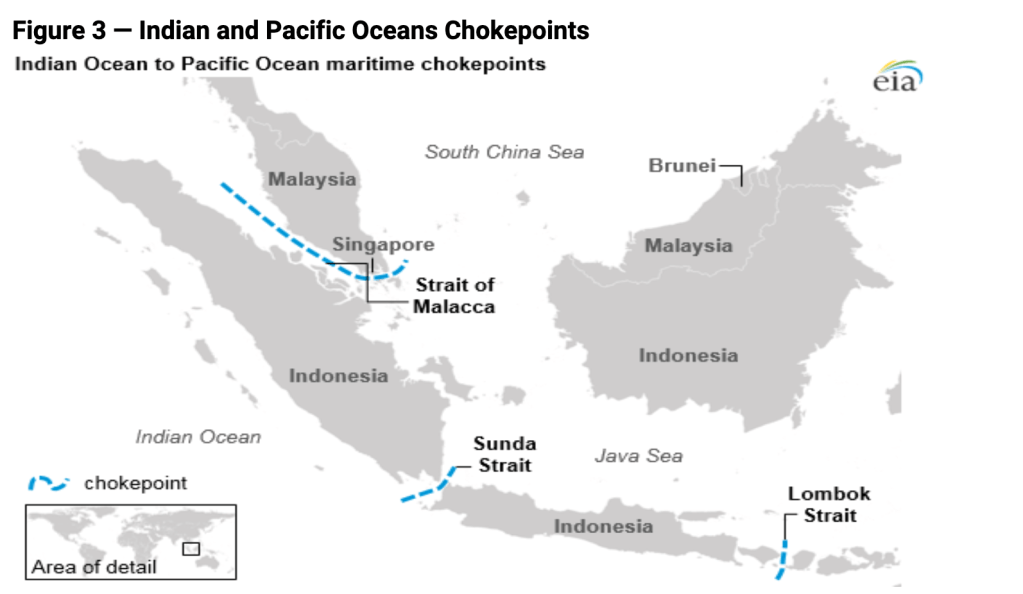
Although the United States maintains a policy of strategic ambiguity regarding Taiwan, Beijing cannot assume that Washington would remain uninvolved. An invasion could potentially draw in not just the United States, but also Japan, Korea, the Philippines, Australia – possibly even Vietnam, Indonesia, Malaysia, and Singapore. The latter three control the Malacca Strait, a major choke point for oil, commodities, and most commercial shipping. What would invading Taiwan do to China’s international standing?
What is clear is that “One China” has been a long-standing goal of China/PRC and the regime of Xi Jinping has staked his legacy on reunification. In Chinese political discourse, reunification is often portrayed not merely as a policy objective but as a historical mission. Success could become a defining achievement comparable to other major milestones in modern Chinese history.
There is a lot at stake.
A Final Thought for this series… for the moment
The U.S. position is that it recognizes the People’s Republic of China as the government of China, maintains unofficial but robust relations with Taiwan, opposes any attempt to change Taiwan’s status by force, supports Taiwan’s self-defense, and seeks a peaceful resolution of cross-strait differences without formally endorsing either Taiwanese independence or Chinese sovereignty over Taiwan.
Things are not “broke” so no need to fix it. Military action is certainly a quick way to break things:
One area in which China can not project the same power is over the Malacca Straits. 80% plus of China’s oil supply flows through these choke points as well as a huge amount of commercial shipping. It is China’s “Malacca Dilemma.”
Malacca is just one choke point. There are others.
This Sunday is the 11th Sunday of Ordinary Time in Liturgical Year A. The gospel is taken from Matthew 9:36 – 10:8 which falls in a section that is part of the Galilee ministry, but towards the end with a third cycle of Jesus’ mighty acts (9:18–34) which reveals his power over death and chronic illness, blindness, and speechlessness. The Galilee ministry ends with essentially a summary verse: “Jesus went around to all the towns and villages, teaching in their synagogues, proclaiming the gospel of the kingdom, and curing every disease and illness.” (Mt 9:35, a virtual repeat of Mt 4:23)
It is from this summary verse that we see the connection between discipleship and mission:
At the sight of the crowds, his heart was moved with pity for them because they were troubled and abandoned, like sheep without a shepherd. Then he said to his disciples, “The harvest is abundant but the laborers are few; so ask the master of the harvest to send out laborers for his harvest.” (vv. 36-38)
The connection is made clear in that both endeavors, shepherding and harvest, need workers to bring the endeavor to its completion. God is the ultimate shepherd and harvest master, but he needs the cooperation of those who accept Jesus’ invitation to discipleship. The three sections on discipleship in chapters 8–9 emphasize the radical demands that it can involve, the fact that all kinds of people can be called to it and the radical newness that it represents, and its missionary dimension (9:35–38). The final verses of Matthew 9 serve as the prologue for the great Missionary Discourse (Mt 10:1-42).
The disciples’ mission is limited to the people of Israel (vv. 5b–6), and they are to avoid entering the cities of non-Jews and Samaritans (whose Judaism was suspect in the eyes of Judeans and Galileans). Only after the death and resurrection of Jesus does the mission to the latter groups begin (see 28:19). The disciples’ mission replicates and extends the mission of Jesus in preaching the coming of God’s kingdom and in healing the sick. As discipleship has been offered to them as a gift, so they are to offer it to others.
Wandering preachers representing various philosophies and religions were a common sight in the world of Jesus’ time. Jesus’ disciples are instructed not to be anxious about money or baggage or lodging, but rather to depend on the charity of their hearers (vv. 9–13). Their lack of concern for money, clothing, and lodging allows them to carry out the mission in a more single-minded way. It also bears witness to their trust in God’s care for them and to their conviction that what has been freely received should be freely given.
Image credit: Duccio di Buoninsegna, 1308-1311, National Gallery of Art, Public Domain
This Sunday we will celebrate the 11th Sunday in Ordinary Time. Ordinary Time includes the days not part of the Advent, Christmas, Lent or Easter seasons. The Easter season extends to and includes Pentecost Sunday. Ordinary Time starts the Monday following Pentecost. Apart from special feast days and memorials, the liturgical color is green, but you may have noticed the two Sundays following Pentecost used white as the liturgical colors. Still, the Solemnity of Holy Trinity (9th week) and Corpus Christi (10th week) are part of Ordinary Time.
Did you know that the word “ordinary” as used here comes from the ordinal numerals by which the weeks are identified or counted. The weekly count moves from the 1st week of Ordinary Time in January (typically the Baptism of the Lord) to the 34th week that begins toward the end of November. In 2023 we celebrated the 7th Sunday of Ordinary Time just before Ash Wednesday, the week following Pentecost was the 8th Week of Ordinary Time. The 9th and 10th Sundays were noted above – and that brings us to the 11th Sunday.
Will this always be the same each year? Nope. It all depends on when Easter is celebrated which in turn affects the date of Ash Wednesday, which always falls 46 days before Easter Sunday. The earliest Ash Wednesday can be celebrated is February 4th. Of course that last happened in 1818 and won’t happen again until the year 2285. The latest Ash Wednesday can be celebrated is March 10th, but it has to be in a Leap Year with other factors falling into place and that won’t happen again until 2096.
For the record, the last Sunday of Ordinary Time is the Solemnity of Christ the King. And since we are on the topic, the liturgical year can have either 33 or 34 weeks of Ordinary Time. How that shifts is too long to explain, but here is an easy way to remember. If the following liturgical year starts in November, the previous liturgical year’s Ordinary Time will have 33 weeks. If the following liturgical year starts in December, the previous liturgical year’s Ordinary Time will have 34 weeks.
Image credit: Duccio di Buoninsegna, 1308-1311, National Gallery of Art, Public Domain