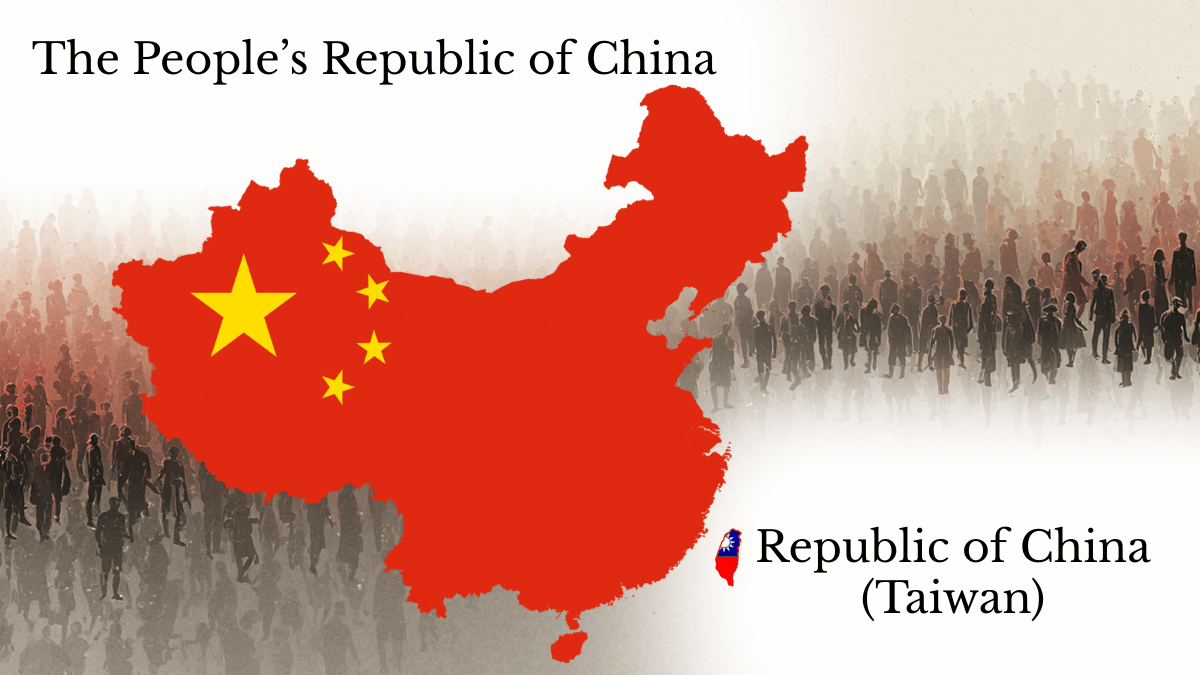
For decades, U.S. policy has been characterized by “strategic ambiguity.” Washington intentionally avoids answering two questions:
Would the United States definitely defend Taiwan militarily?
Would Taiwan be supported if it declared formal independence?
The purpose is to discourage both a Chinese attack on Taiwan and a unilateral declaration of independence by Taiwan. By leaving its response uncertain, the United States seeks to deter actions by either side that could trigger a conflict. Successive administrations, both Republican and Democratic, have generally pursued four goals: preserve peace and stability in the Taiwan Strait, deter the use of force by China, support Taiwan’s ability to defend itself, and avoid unilateral changes to the status quo by either Beijing or Taipei.
American concern about Taiwan is driven by several factors:
strategic location – Taiwan sits near major sea lanes and occupies a key position in the Western Pacific.
democratic values – Taiwan has evolved into a vibrant democratic society. Many American policymakers see support for Taiwan as consistent with broader U.S. support for democratic partners.
economic importance – Taiwan plays a critical role in global technology supply chains, especially through Taiwan Semiconductor Manufacturing Company (TSNC), the world’s leading advanced semiconductor manufacturer.
It is reminiscent of the 1900 policy of the United States: The China Open Door. The policy was focused on securing international agreement of equal opportunity for international trade and commerce in China, and respect for China’s administrative and territorial integrity. The articulation of the Open Door policy represented the growing American interest and involvement in East Asia at the turn of that century. Still seems to ring true today – ambiguity and all.
But what’s at stake for China? From Beijing’s perspective, the principal potential gain is political and strategic: completing national unification, strengthening regime legitimacy, and improving China’s position in the western Pacific. The principal risks are economic disruption, military losses, possible conflict with the United States and its allies, and the long-term challenge of governing a resistant Taiwanese population. As a result, many analysts believe Chinese leaders face a difficult calculation: the symbolic and strategic value of Taiwan is extraordinarily high, but the costs of achieving reunification by force could also be extraordinarily high and highly uncertain. The uncertainty itself, more than any single factor, is one reason why China has thus far relied primarily on military pressure, economic influence, and diplomatic efforts rather than launching an invasion.
Massive Economic Costs. This is arguably the greatest risk. China’s economy remains deeply connected to global trade, finance, and technology markets. An invasion could trigger international sanctions, restrictions on advanced technology imports, capital flight, reduced foreign investment and disruptions to maritime trade.
Military Casualties and Uncertainty. A cross-strait invasion would be among the most complex military operations attempted since the Normandy Landings because of rough seas in the Taiwan Strait, limited suitable landing beaches, dense urban areas, mountainous interior terrain, and a well prepared and trained defending military armed with advanced western nations military technology. Even if China ultimately prevailed, casualties could be very high and victory could take much longer than expected.
Even if you “win”, military conquest does not automatically produce political control. Taiwan has developed a distinct political identity over several decades. The majority of the people on Taiwan do not primarily identify as “Chinese.” Taiwanese is an identity they see as distinct from the people on mainline China. So, even after a successful invasion, China could face civil resistance, political unrest, security challenges, and long-term occupation costs. The postwar burden could persist for years or decades.
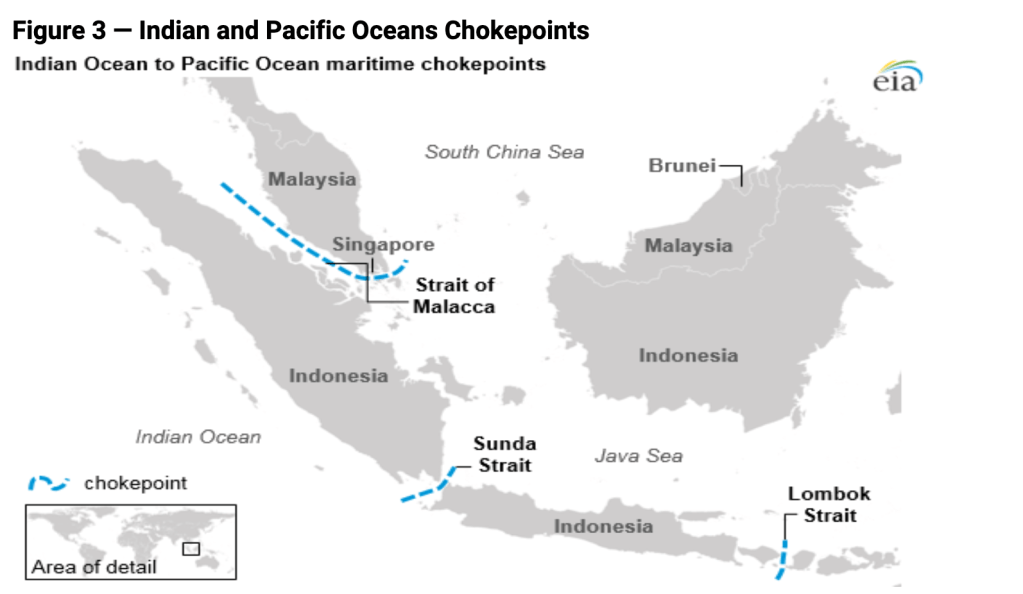
Although the United States maintains a policy of strategic ambiguity regarding Taiwan, Beijing cannot assume that Washington would remain uninvolved. An invasion could potentially draw in not just the United States, but also Japan, Korea, the Philippines, Australia – possibly even Vietnam, Indonesia, Malaysia, and Singapore. The latter three control the Malacca Strait, a major choke point for oil, commodities, and most commercial shipping. What would invading Taiwan do to China’s international standing?
What is clear is that “One China” has been a long-standing goal of China/PRC and the regime of Xi Jinping has staked his legacy on reunification. In Chinese political discourse, reunification is often portrayed not merely as a policy objective but as a historical mission. Success could become a defining achievement comparable to other major milestones in modern Chinese history.
There is a lot at stake.
A Final Thought for this series… for the moment
The U.S. position is that it recognizes the People’s Republic of China as the government of China, maintains unofficial but robust relations with Taiwan, opposes any attempt to change Taiwan’s status by force, supports Taiwan’s self-defense, and seeks a peaceful resolution of cross-strait differences without formally endorsing either Taiwanese independence or Chinese sovereignty over Taiwan.
Things are not “broke” so no need to fix it. Military action is certainly a quick way to break things:
One area in which China can not project the same power is over the Malacca Straits. 80% plus of China’s oil supply flows through these choke points as well as a huge amount of commercial shipping. It is China’s “Malacca Dilemma.”
Malacca is just one choke point. There are others.
China is noted for the system of walls and fortifications known as the Great Wall that stretches 13,000 miles across its historical northern borders as protection against various nomadic groups invading from the Eurasian Steppe. Modern day China may one day be equally known for the underwater version it has constructed and continues to expand on the seabed of on its eastern border, the South and East China Seas. And ostensibly for the same reason: to stop “nomadic” submarines invading from the Pacific Ocean.
The underwater “great wall” consists of advanced acoustic and non-acoustic sensor technologies that monitor underwater activities as well as surface transits. The technological foundation of China’s submarine listening network is built upon a combination of advanced passive sonar systems, underwater sensors, and sophisticated data analysis tools The inputs are integrated to a regional central command and control center that coordinates local maritime and naval responses in immediate action is deemed appropriate, but it also is used to populate large databases used to analyze movements, uncover patterns, and possibly detect new operations and technology.
The purpose is part of its evolving anti-submarine warfare (ASW) capability, but it also supports China’s broader objectives of asserting its claims in the South China Sea for fishing, commerce, and territorial claims. The information gathered through this network enables Chinese naval forces to conduct more informed “grey zone” operations, ensuring that they can protect vital shipping lanes and respond to challenges posed by other regional powers. In this context, seabed listening is not merely a defensive measure; it is an integral part of China’s strategy to project power and influence across the maritime domain.
In addition to traditional passive sonar systems, China has invested heavily in developing underwater drones and autonomous vehicles equipped with advanced sensors. These platforms enhance the network’s reach and capabilities, allowing for more extensive monitoring of vast maritime areas without taking on additional infrastructure costs associated with installation and maintenance. The drones also allow exploration of places where the seabed depth offers substantial challenges.
Like all nations and industry, the Chinese have invested heavily in artificial intelligence and machine learning to enable more efficient data processing and analysis, allowing Chinese analysts to quickly interpret complex acoustic data and identify potential threats.
Despite its advancements, China’s submarine listening network faces several challenges and limitations that could impact its effectiveness. One significant challenge is the vastness of the maritime domain that needs to be monitored. While technological advancements have improved detection capabilities, there are still limitations regarding range and accuracy, particularly in deep-water environments where submarines have traditionally operated undetected. Additionally, the placement of sensors is dependent on “hardwire” connections which can be disrupted, tapped, or otherwise disturbed. This particular “arms races” will be waged in the arenas of technology, signal processing, AI analysis support, and new acoustic measures and counter-measures. The “underwater wall” as vast as it is presents challenges as components wear out or are compromised with zero-day intrusions.
Outside territorial waters, China has two underwater sensor arrays situated between the United States island of Guam and the South China Sea. Though officially for scientific research, the undersea listening devices are likely doing double duty, monitoring the movements of American and other foreign submarines and potentially intercepting and water-borne communications. This shows China’s commitment to expanding the range of early detection of potential threats. One array is near Guam and the other is located near Yap – a pathway that happens to lie along potential naval tracks leading from Guam to the South China Sea entrance south of the Philippines.
China’s submarine listening network constitutes a fundamental element of its defense infrastructure, directly supporting its expanding maritime objectives. This surveillance system enhances China’s awareness of underwater activities in the Asia-Pacific region while functioning as a strategic deterrent. The comprehensive array of acoustic sensors and monitoring equipment positioned along coastal areas and key maritime zones demonstrates the critical importance of subsurface intelligence gathering in contemporary naval operations.
The network serves broader strategic purposes beyond surveillance capabilities, reflecting China’s aspirations toward maritime dominance. Through substantial investments in sophisticated acoustic detection technologies, China seeks to safeguard vital sea lanes, reinforce territorial claims, and protect naval assets. In the context of increasing tensions throughout the South China Sea region, this submarine detection infrastructure significantly influences regional security dynamics and military strategic planning.
The role of naval vessels, aircraft, missiles, drones, and ground forces are likely more familiar to the average citizen than the role, use, and operation of submarines. While I enjoyed the Hunt for Red October, I wondered if the screen writers wanted the submarines to perform an Immelmann Loop or some other amazing maneuver from the world of aerobatics. If jet aircraft are the Lamborghinis, submarines are the Dodge Ramblers of the order of battle. Your options are left, right, up, down, forward, and occasionally reverse. And doing all this blindfolded. Sound, sound detection, and silence are critical success factors.
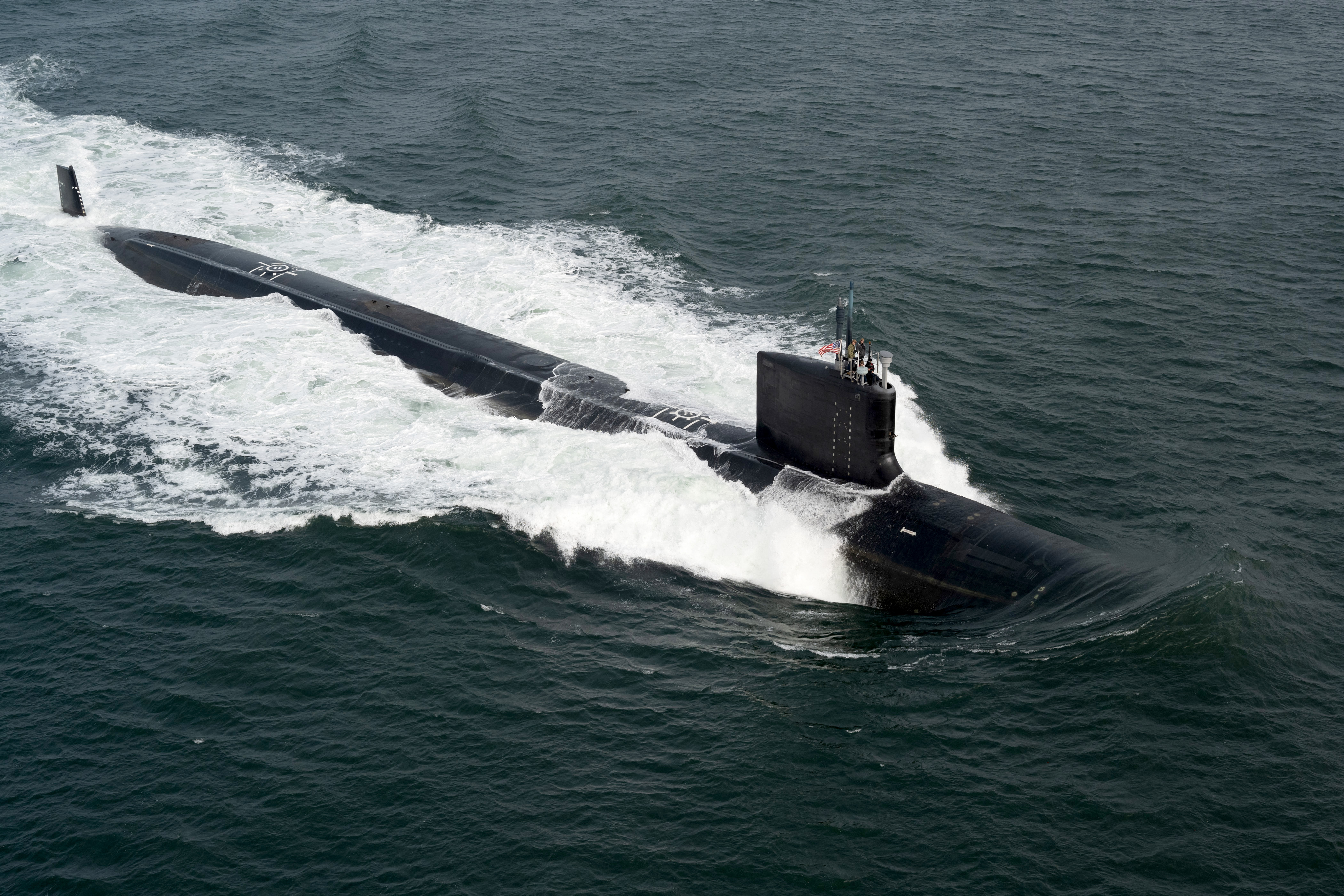
The U.S. submarine fleet is all nuclear powered which gives each submarine the ability to operate for extended periods of time during which fuel/fuel oil is not the limiting factor for operations. There are 14 Ohio Class ballistic missile boats (submarines are referred to as boats, not ships); 4 Ohio class boats were converted to Tomahawk cruise missiles. Each boat is capable of carrying up to 154 Tomahawk cruise missiles. The fast-attack (SSN) fleet consists of 28 older Los Angeles class boats, 25 newer Virginia class boats, and 3 from the Seawolf class. The Virginia and Seawolf boats are similar in capabilities. If you are interested in submarines and their operations in the 21st century, take a moment to watch this video on the Virginia Class submarine.
Virginia Class Submarines. The PRC’s China Maritime Studies Institute released their assessment of the Virginia Class submarine and its capabilities and threats. The title of the assessment was: The Elusive “Deep-Sea Beast”: Analysis of the Performance of the Main Equipment of the U.S. Navy Virginia-Class Nuclear Attack Submarine. The Virgnia Class has their attention because these boats are designed for classic submarine offensive operations, but also anti-submarine missions, special forces operations, intelligence gathering, surveillance and reconnaissance missions, and more.
The boat has advanced active and passive sonar systems, internal and external design features which are next generation noise suppression including the propulsion system which no longer utilizes the traditional massive propeller. All of these advanced systems are supported by advanced real-time processing solutions integrated into their specific mission. There are more than 400 sensors targeting internal ship noise and vibration that compromise the overall noise profile emanating from the boat – the profile that could be detected by other submerged units. The suite of active and passive sonar is greatly enhanced with acoustic signal processing to identify underwater sounds from biologics to marine life to other underwater vehicles – manned or unmanned.
What does all of that mean? The Virginia class boats are capable of operations in the South China Sea if needed.
Sea Mines
Because of the current situation in the Straits of Hormuz, the general public is aware that sea mines remain a potent threat in denial of access operations. China might be expected to mine lanes of expected naval operation, waters around contested shoals and islands, and similar operations. China has no shortage of vessels from which to seed the waters. The U.S.’s most stealth means of laying mines is the submarine force. The US retains the capability to lay mines from surface vessels and aircraft. During WW II, the extensive mining of Japanese straits, ports, and waterways was accomplished by low flying B-29 bombers. It should be noted surface and air mine laying operations assume domination of the attending air space.
Denial of access operations would be a way for China to keep foreign vessels out. But at the same time, it is a way for other nations to keep China “in” and deny the flow of merchant shipping which is the life blood of the Chinese economy. Such an action is probably a last step before the outbreak of hostilities. When the U.S. and allies embargoed oil shipments to Japan, it was the first domino to fall leading to Pearl Harbor.
A modern sea mine is a self-contained explosive device designed to destroy ships, submarines and other types of vessels. Mines deny enemy ships and submarines access to specific ocean areas or channelize the enemy into operating in certain particular areas. As such, mines provide low-cost battlespace shaping and force protection capabilities for the U.S. Navy. And you do not have to bump into one in order to detonate the mine. Mines can operate on proximity triggers (magnetic, acoustic, pressure and vibrational) that are supported by microprocessors, e.g. to listen for the distinct and specific sound of a vessel’s propulsion, and machinery through the water.
U.S. submarines are capable of laying specialized autonomous naval mines. The Mark 67 SLMM is a covert, submarine-launched mobile mine designed for shallow waters, while the Mark 60 CAPTOR encapsulates a torpedo. The Mark 60 waits on the ocean floor and uses its processing circuits to detect enemy submarines. Rather than exploding, the mine launches the torpedo. There are other mines in the inventory, but they operate similarly.
Unmanned Underwater Vehicles (UUVs)
But the truly next-level capability is with unmanned underwater vehicles (UUVs). The extent of which these are currently deployed and their planned future – e.g., the DARPA Manta Ray Project – are the subject of next level undersea warfare. The UUVs will extend the base submarine’s sonar and weapons suite to areas either inaccessible (depth, danger, or incident avoidance, etc.) or prudently avoided. From the base submarine, there is a complete integration of sensor and communication systems, target motion analysis, tactical situational awareness, command and control decision tools, and launch control of all submarine payloads, including torpedoes, missiles, unmanned vehicles, and countermeasures.
If the People’s Republic of China did not directly invade Taiwan, there are flash points that could still bring China and the United States to the brink of armed conflict. Such events would probably emerge from a combination of:
maritime confrontations,
escalation from gray-zone coercion,
accidents or miscalculation,
alliance obligations,
and disputes over freedom of navigation and regional dominance.
Most analysts believe a future crisis is more likely to begin through escalation of a limited confrontation than through a deliberate declaration of war.
South China Sea Confrontation: Philippines
These are the most likely near-term flash points. As described in previous posts China is hyper-aggressive about asserting its claims about sovereignty over a large portion of the South China Sea. The aggressiveness is evident in naval patrols, Coast Guard patrol, maritime enforcement by the People’s Armed Forces Maritime Militia (PAFMM), as well as armed fishing boats, trawlers, and fishing fleet “mother ships.”
While much attention is paid to the Taiwan Straits, the single most plausible flash point outside Taiwan is the South China Sea involving the Philippines. The danger centers around: Chinese Coast Guard pressure, maritime militia operations, Philippine resupply missions to its outposts, and U.S. treaty commitments. The most volatile areas include Second Thomas Shoal, Scarborough Shoal, and Mischief Reef.
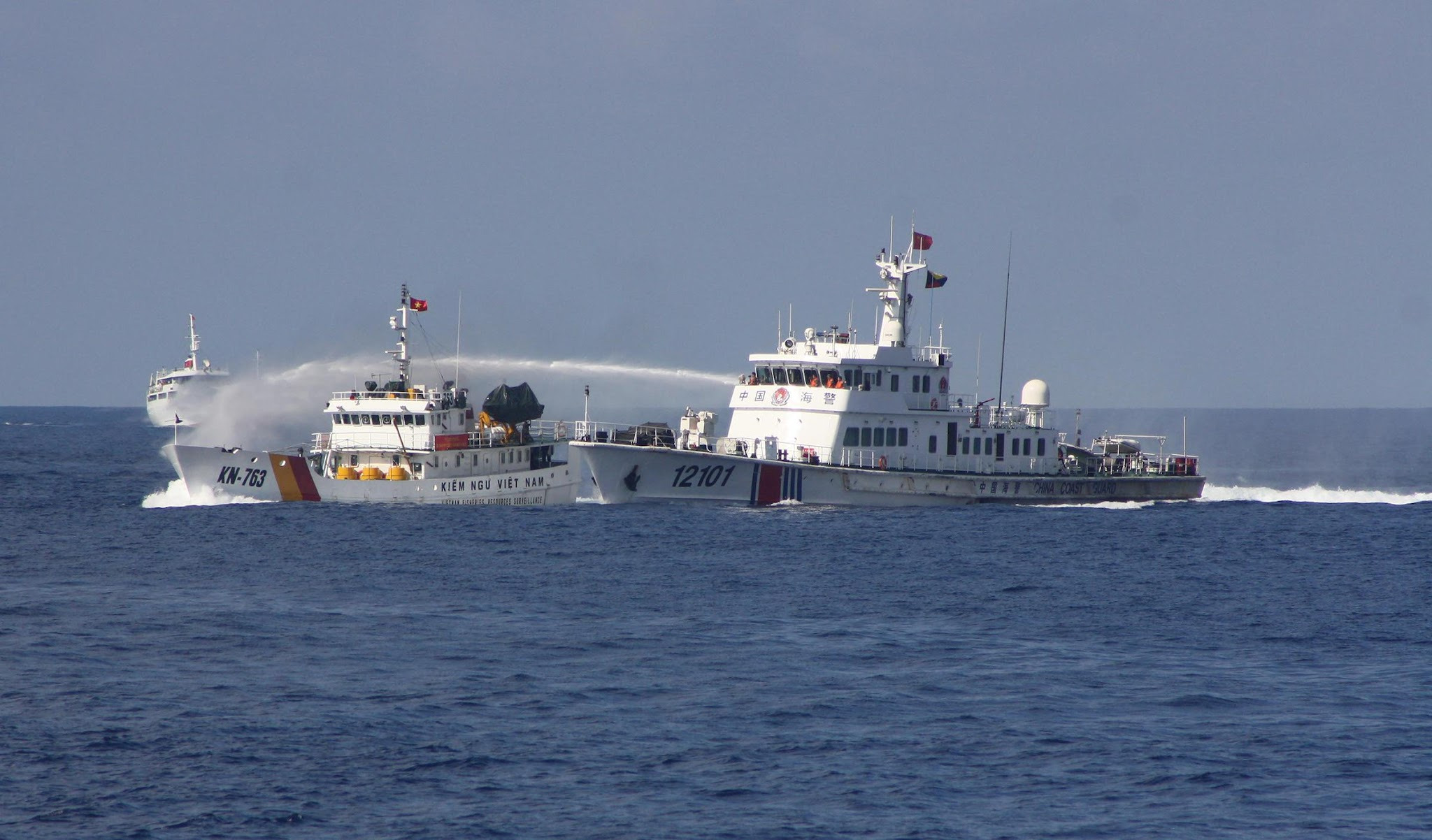
Second Thomas Shoal was occupied by the Philippines when in 1999 they grounded the BRP Sierra Madre on the Shoal. Manila intentionally beached there in 1999 to establish a permanent presence. China aggressively contests Philippine control by maintaining constant coast guard and maritime militia patrols, obstructing Philippine resupply missions, using water cannons, maneuvering dangerously near Philippine vessels, and attempting to isolate the outpost. This is China’s “grey zone playbook.” There is risk of vessel damage, loss of life, and escalation of weapons exchanges. Because the United States and the Philippines are bound by a Mutual Defense Treaty, Washington could face pressure to intervene in some fashion.
Scarborough Shoal is controlled by the Chinese but the shoal has not yet been militarized. Unlike Mischief Reef or Fiery Cross Reef, China has not yet expanded by Shoal by constructing a major artificial island or large permanent military base. Analysts widely believe Beijing has refrained from major land reclamation there partly because of its proximity to the Philippines and large-scale militarization could provoke strong U.S. and regional reactions. Still, China effectively controls the area operationally.
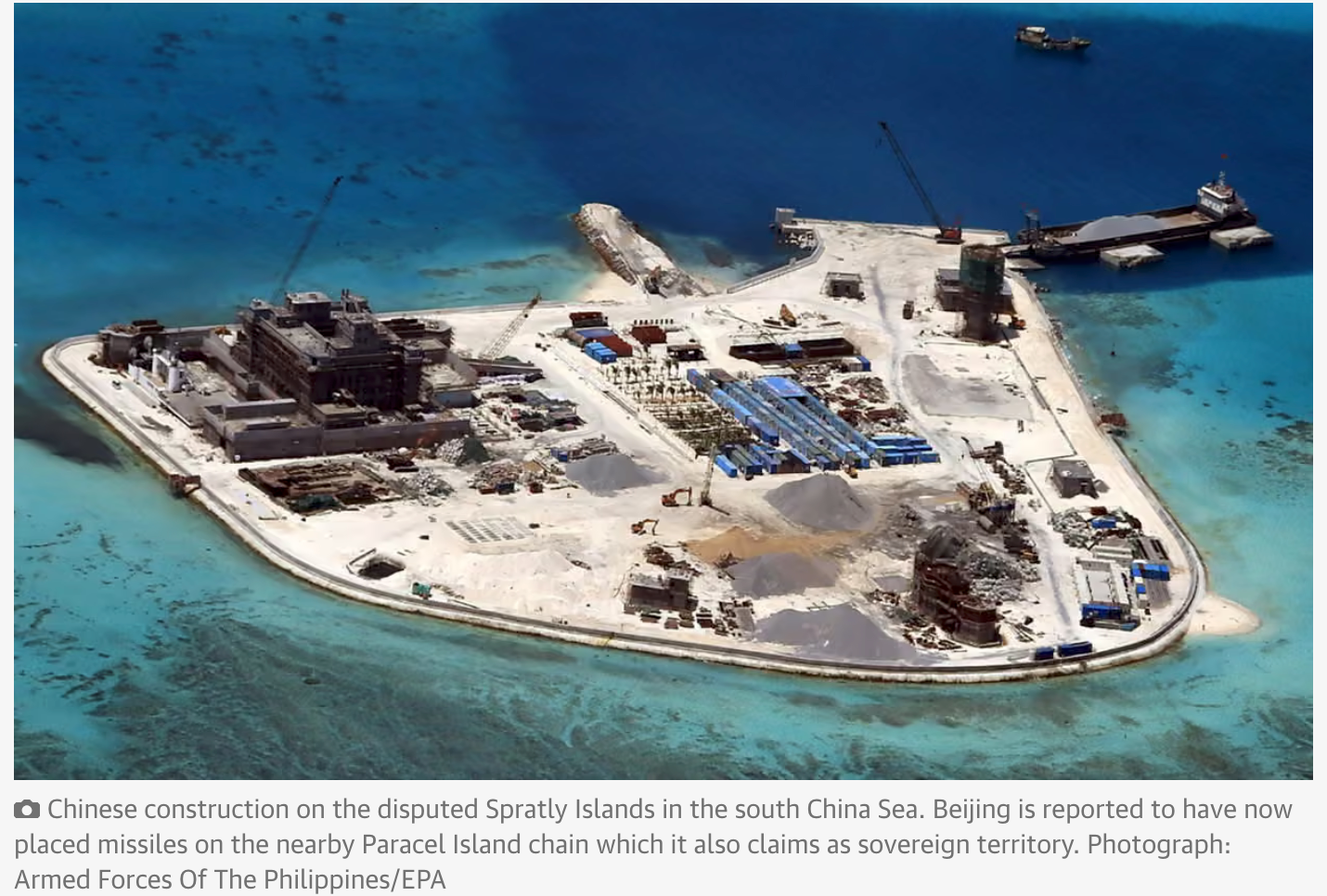
Mischief Reef is the clearest example of full Chinese occupation and militarization. The 2016 Hague arbitration ruling determined that Mischief Reef lies within the Philippine EEZ, and China’s construction activities violated Philippine sovereign rights under UNCLOS. Nonetheless, China has transformed it into a massive artificial island during the island-building campaign after 2013. China constructed a large airfield, extensive port facilities, radar installations, hangars, missile-capable infrastructure, barracks, and hardened military facilities. Mischief Reef now functions as a major forward operating base.
East China Sea Confrontation: Japan
Another major flash point is the dispute between China and Japan over the Senkaku Islands (called the Diaoyu Islands by China) in the East China Sea (north of Taiwan). Japan administers the islands, but China claims them.
China operates out of the “grey zone playbook” but with more caution as Japan has a more robust military and ability to respond. Japan is also a treaty ally of the United States under the Treaty of Mutual Cooperation and Security.
Taiwan Straits
Between the East and South China Seas is the Strait of Taiwan – which interestingly is the name used by the PRC. However, the political significance comes not from the name, but from how the PRC characterizes the legal status of the waters. China increasingly argues that the Taiwan Strait is not entirely “international waters,” but rather includes Chinese internal waters, territorial seas, contiguous zones, and exclusive economic zones. Beijing objects particularly to statements that the strait is wholly an “international waterway.” The United States and many maritime powers counter that: large portions of the strait constitute international waters under the United Nations Convention on the Law of the Sea, and therefore support freedom of navigation and military transit.
One of the great unknowns is a scenario that unfolds if China attempts to restrict maritime passage through the Strait – unknown to the “person on the street” – but no doubt the topic of think tanks and military planners. China accepts part of the Strait as an international waterway in peaceful times, but are there scenarios when China closes the recognized international waterway, temporarily, for the safety of international maritime passage? One such scenario might be, not an invasion of Taiwan, but a blockade of the island nation. By definition, a blockade is an act of war, but as the United States played out the scenario in 1960 regarding Cuba it was classified as “a strict quarantine” with ships subject to onboard inspections.
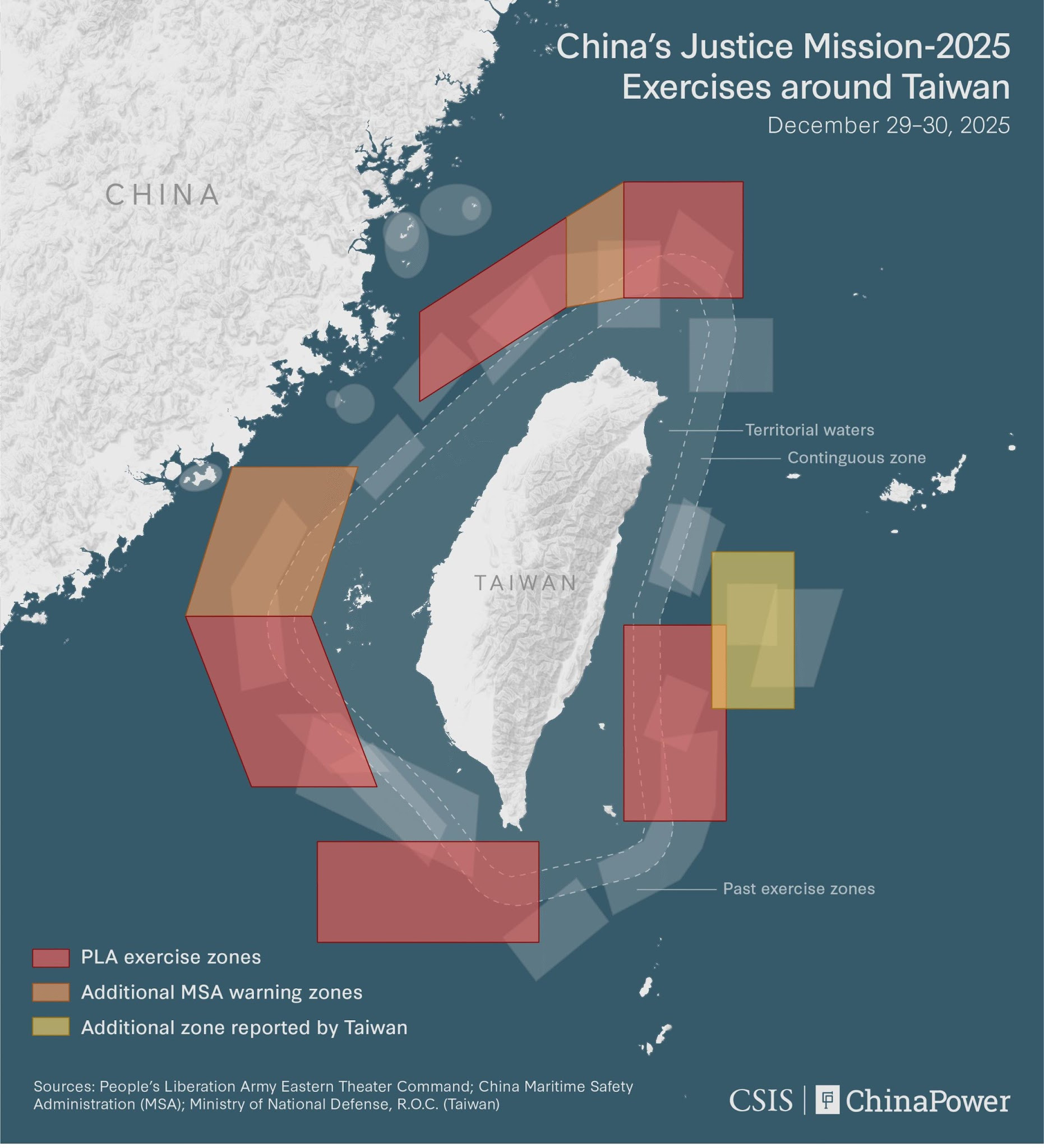
We don’t have to imagine what a blockade/quarantine of Taiwan would look like. China demonstrated it in late 2025 in “Justice Mission – 2025”
Justice Mission – 2025
This two-day exercise was a joint military exercise by China conducted around Taiwan in December 2025. It was one of the largest and most operationally sophisticated Taiwan-focused exercises China had conducted up to that point, and it significantly expanded the PLA’s emphasis on blockade operations, encirclement, anti-intervention deterrence, and joint multi-domain warfare. This language was important because it signaled that the PLA was practicing not merely a symbolic demonstration, but elements of maritime quarantine, strategic isolation of Taiwan, and deterrence of U.S. and allied intervention.
China was not shy about its intention, publicly stating that the exercise focused on “sea and air combat readiness patrols,” “seizing comprehensive superiority,” “blockading key ports and areas,” and “three-dimensional outer-line deterrence.” [Global Taiwan Institute] The exercise was preceded by public campaigns against Taiwan and Japan. The Chinese Foreign Ministry stated that Japan had “crossed a red line” in its position regarding Taiwan. The normally cautious and indirect language traditionally employed in Asia-Pacific diplomatic discourse was abandoned. The timing and circumstances surrounding these events suggest that the PRC leadership made a conscious decision to press a harder line against Japan: both to gauge the reaction of Japan’s new government, and as a warning to other regional states that might consider offering further security support for Taiwan in the face of Chinese pressure.
One of the most important interpretations of Justice Mission-2025 is that it reinforced growing evidence that China may see blockade, quarantine, and coercive isolation as plausible alternatives or precursors to a direct amphibious invasion. The exercise emphasized control of ports, airspace disruption, long-range rocket strikes, coast guard integration, and maritime encirclement – all the elements of a sustained blockade. Analysts see this stratagem as less risky than inclusive military operations and yet can exert significant economic and political pressure on Taiwan.
Many observers viewed it less as a rehearsal for a single “D-Day”-style invasion and more as practice for sustained coercive campaigns, maritime isolation, and gradual escalation designed to pressure Taiwan while complicating U.S. intervention decisions.
Air or Naval Collision Escalation. A major crisis could emerge accidentally as U.S. and Chinese forces operate in close proximity in the South China Sea, East China Sea, Taiwan Strait, and western Pacific. Dangerous encounters occur regularly involving fighter aircraft, surveillance planes, destroyers, and coast guard ships. Over the last 20 years there have been near-collisions in the air and afloat. Air incidents can be as simple as a plane one side considers a surveillance aircraft encroaching on what one party considered an exclusion zone and so send armed interceptors to investigate…and occasionally lock-on targeting radar. Or something as simple as unwanted “formation flying” as a means of intimidation. Should one of these incidents turn fatal (collision or shootdown), nationalist outrage could lead to “sabre rattling” of military mobilization and reciprocal escalation before diplomacy stabilizes the crisis.
Cyber or Space Escalation. Less visible but increasingly serious are cyberattacks, satellite interference, and attacks on communications infrastructure. A crisis involving undersea cables, GPS disruption, financial systems, or military satellites could escalate quickly if interpreted as prelude to wider conflict.
Most of Taiwan’s international digital connectivity travels through a relatively limited number of submarine cable landing points. This creates a potential vulnerability in a crisis as cables could be damaged faster than they can be repaired, especially if repair ships are blocked from operating.
The simplest and most deniable model involves fishing vessels, anchors, dredging activity, or commercial ships. A state actor could exploit this ambiguity by directing civilian or quasi-civilian vessels toward sensitive cable areas, causing “accidental” disruptions difficult to attribute conclusively. This model is especially relevant because China possesses enormous fishing and maritime militia fleets and gray-zone ambiguity is central to Chinese maritime strategy. Taiwan has already experienced several suspicious cable outages involving nearby islands in recent years. Major powers possess at least some capability for deliberate deep-sea cable interference via submarines, unmanned underwater vehicles, specialized seabed systems, or covert engineering ships.
Another scenario involves simultaneous cuts to multiple cables. Rather than completely severing Taiwan from the world, the objective could be degrading bandwidth so as to slow military coordination and a range of financial market disruptions. A coordinated campaign could target cable chokepoints and terminal landing stations. Analysts frequently discuss cable disruption as part of a broader Chinese coercive strategy short of outright invasion.
The Broader Strategic Reality. The most dangerous scenarios are probably not deliberate declarations of war or carefully planned invasions. Rather, they are incremental coercion, gray-zone confrontations, alliance entanglement, and accidental escalation. Both China and the United States likely understand that a major war between them would carry catastrophic economic and military consequences. Yet both are also increasingly operating in overlapping maritime and strategic spaces where nationalism, deterrence, alliance commitments, and military signaling create persistent risk of crisis escalation.
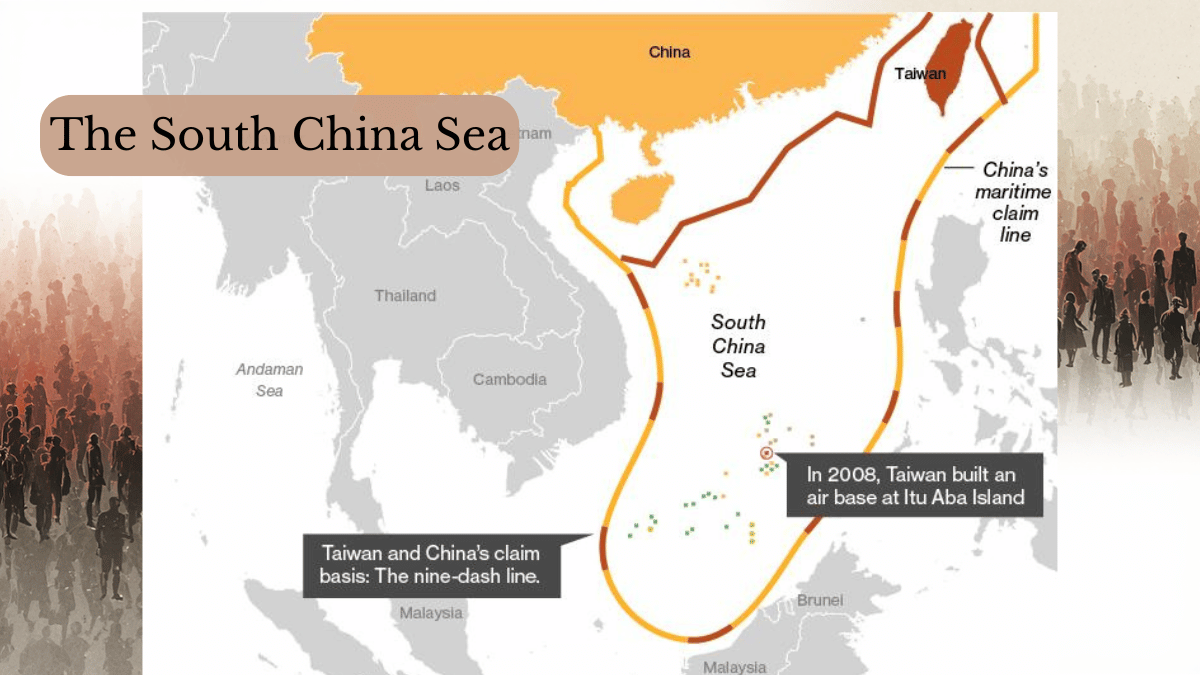
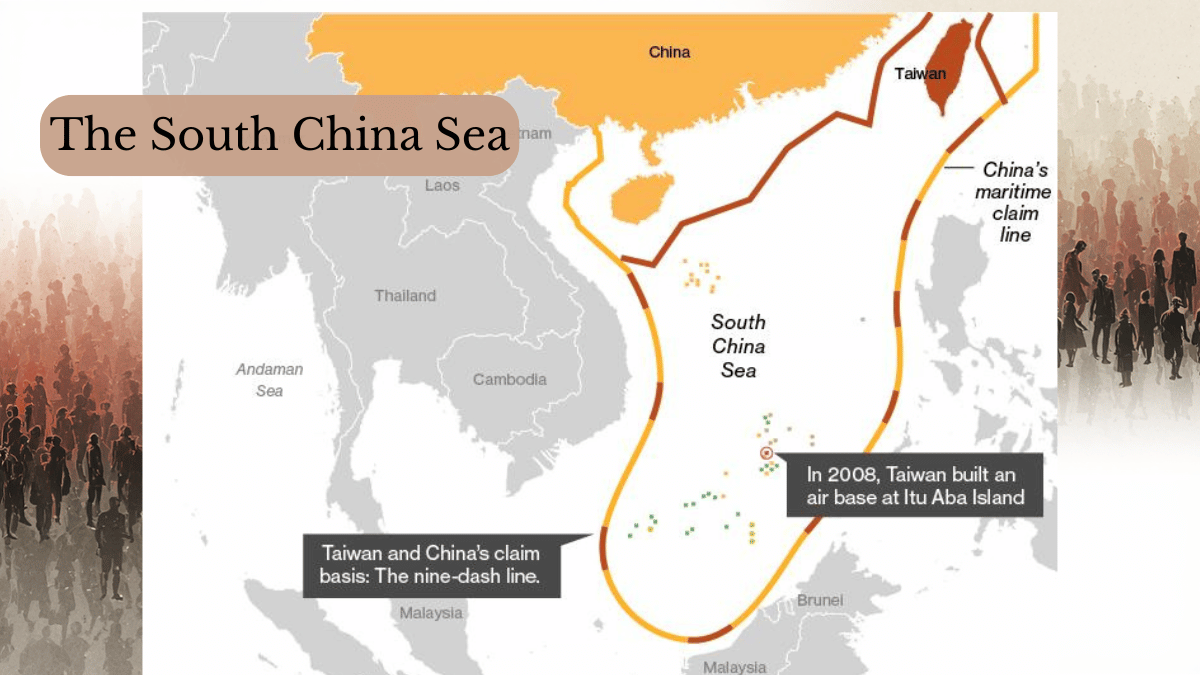
As the posts in this series to this point have indicated, China views the South China Sea (SCS) as well within its territorial waters and not international waters (The 9-Dash Line,). The degree to which they enforce that claim depends on who and what is transiting the waters. During the week of May 24, 2026 the PLAN aggressively denied a Dutch warship entrance into the SCS while commercial traffic proceeded uninterrupted. The Chinese ability to enforce the claim is substantial and has been steadily enhanced in the passing years as this post will show. China’s ability to enforce its claims consists of:
A fleet of naval combatants ranging from aircraft carriers to frigates with a combined lethality of strike aircraft, vertical launch missiles, and naval rifles (5-inch and higher). As well their submarine force is quite capable.
Chinese air force assets from the mainland with sufficient range to cover the entire region.
Buildup of islands and shoals into military installations all of which are believed to have vertical launch missiles and some able to support air operations (“unsinkable” aircraft carriers)
An extensive fleet of Coast Guard and maritime enforcement vessels, most armed.
All of the above bring to bear radar and other surveillance capability that results in an air and surface space that is hyper-monitored
Evidence that China has developed the Command, Control and Communications (C3) capability to integrate all into a well coordinated response.
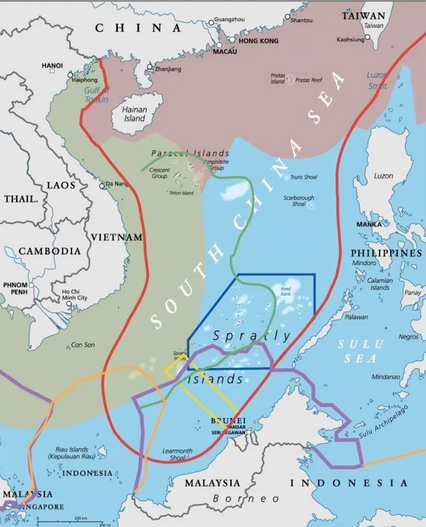
Some Details. With the above being the executive summary, here are some of the details. A previous post, The 9-Dash Line, outlined the claims and counter-claims on islands and shoals in the CSC which are being methodically militarized.
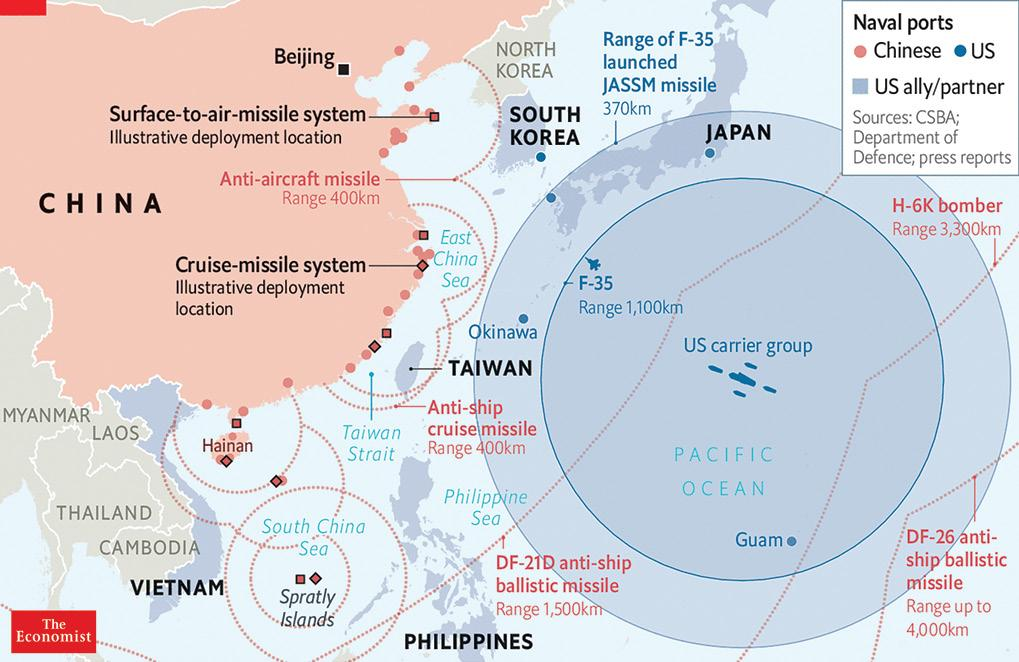
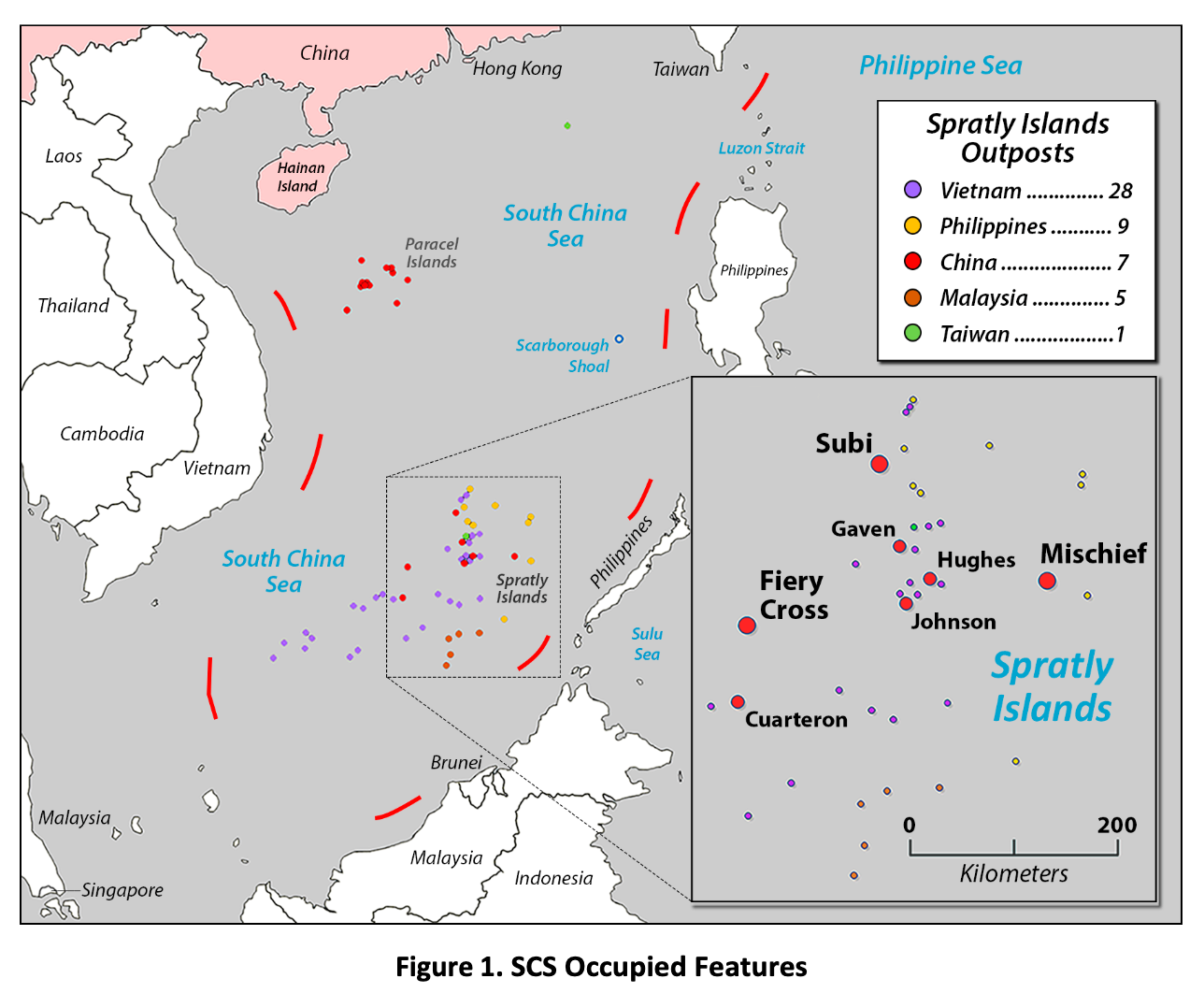
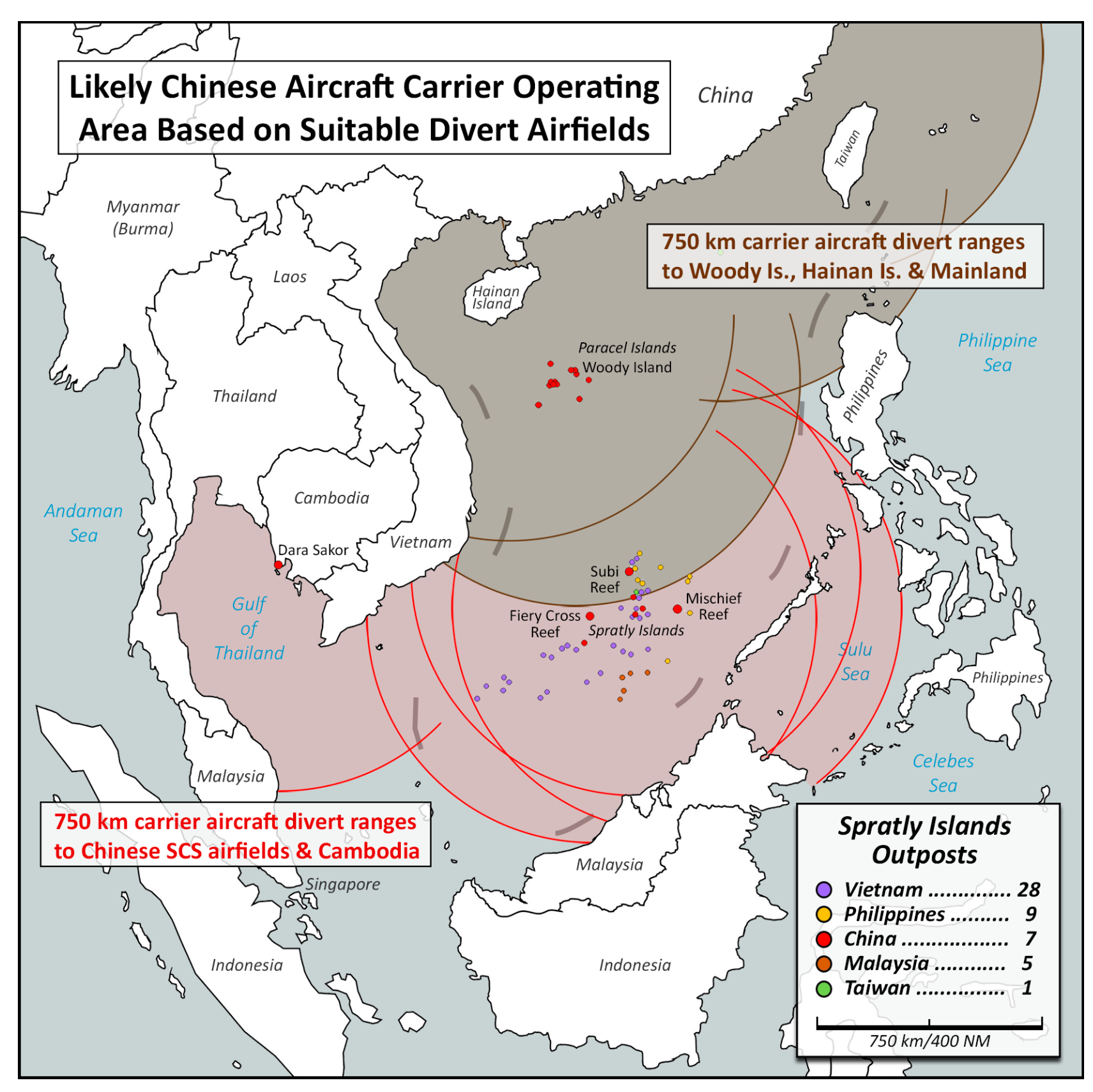
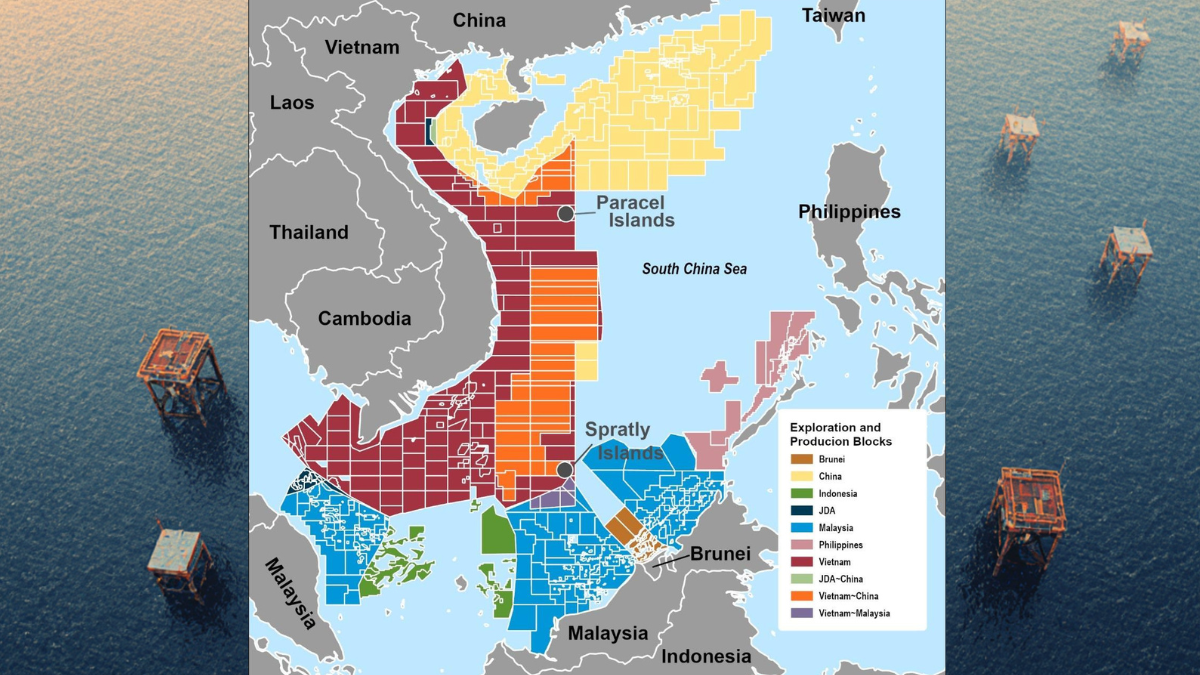
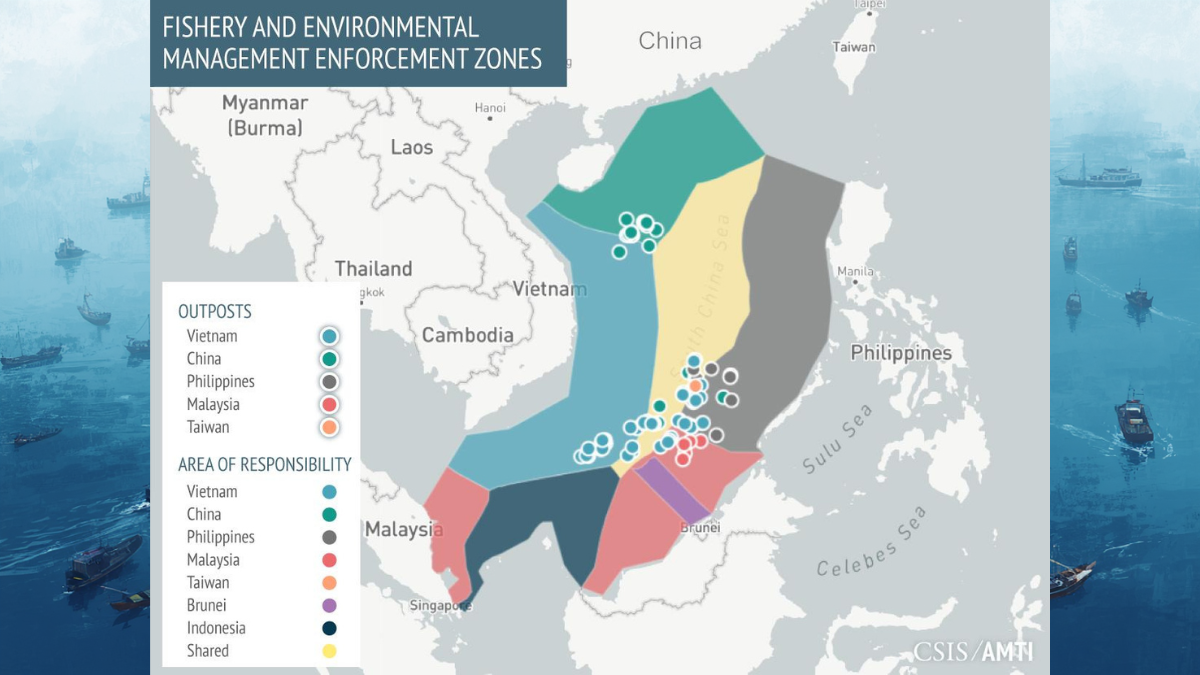
As mentioned in previous posts, China is not the only nation adding military capability to the SCS arena as seen in the above map.
Spratly Islands: China has built up seven “islands”, with the most heavily developed being Subi Reef, Mischief Reef, and Fiery Cross Reef. These three feature significant airfields, missile shelters, and radar arrays – including YJ-62 and YJ-12B anti-ship cruise missiles
Paracel Islands: China controls about 20 outposts here, including Woody Island, which serves as a regional administrative and military hub. Since 2016, China has sent advanced HQ-9 surface-to-air missiles to the Paracel Islands. Woody Island frequently hosts H-6K nuclear-capable bombers, which are capable of launching missiles with range extending to Australia.
Scarborough Shoal: While no permanent structures have been built yet, China maintains a constant coast guard presence here to control the feature, according to the Center for Strategic and International Studies. Others are getting in on the trend of dredging and building island bases, especially Vietnam.
Military emplacements at Mischief Reef include advanced radar systems, missile storage facilities, and hangars for fighter planes. (Supplied: CSIS Asia Maritime Transparency Initiative/Maxar)
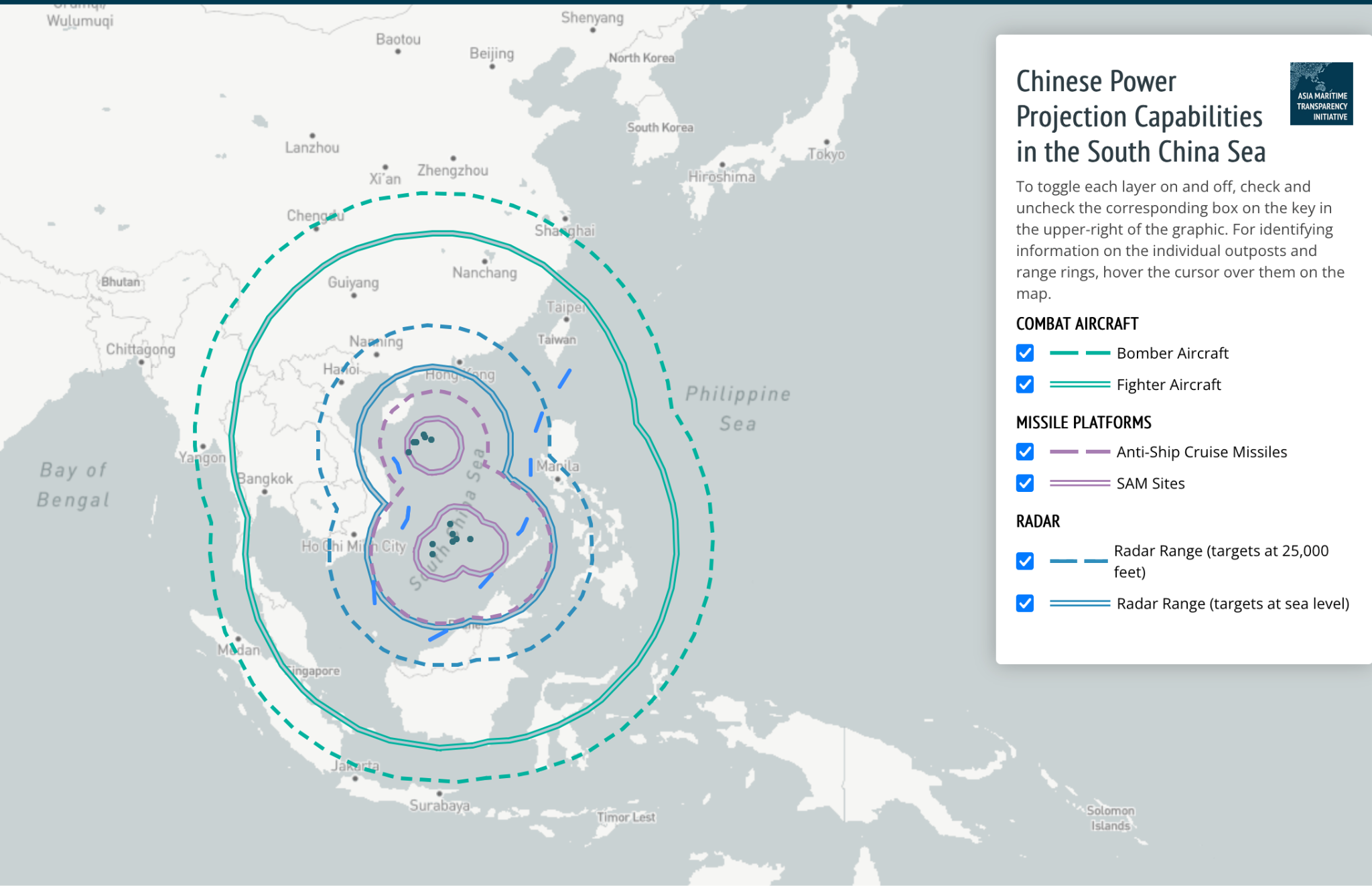
These installations, particularly on the “Big Three” reefs in the Spratlys (Fiery Cross, Subi, Mischief), allow China to project power deeper into Southeast Asia threatening maritime and air traffic. These deployments are part of an anti-access/area denial (A2/AD) strategy to contest US military presence in the region. The following image shows the ability of China to “project power” over the SCS area.
Even in the absence of a large-scale deployment of PLA weapons, the island-reefs have already been weaponized with significant information capabilities—command, control, communications, computers, intelligence, surveillance, and reconnaissance (C4ISR). When and if there is a large-scale deployment of weapons to the Chinese outposts, necessary conditions will have been established in the information domain. The island-reefs are equipped to provide the PLA with superior battlespace awareness and a decided information advantage in any future military conflict in the SCS.
Offensive and defensive strike capabilities on the island-reefs may best be described as “modular.” Infrastructure on the PLA outposts was built to accommodate close-in-weapons systems (CIWS), surface-to-air missiles (SAMs), surface-to-surface missiles (SSMs), large aircraft, fighter-sized aircraft, and helicopters. A vast majority of PLA weapons systems are road-mobile or relocatable. The major island-reefs—Fiery Cross, Subi, and Mischief Reefs—are large enough to accommodate virtually any mobile weapons system or aircraft in the PLA inventory. Delivered by ship or aircraft, future deployments of offensive or defensive lethal capabilities to the SCS island-reefs could occur with little or no warning.
China is currently engaged in a concerted effort to increase the PLAN’s capabilities in the undersea environment and perform acoustic reconnaissance from fixed arrays, ASW aircraft, and surface ships. However, even if the PLA Navy (PLAN) can detect an enemy submarine at long range, underwater weapons, such as torpedoes or depth charges, have very short ranges. Generally, once detected through acoustic or non-acoustic means, a submarine must still be localized by another submarine, a ship, or an ASW aircraft before that platform can prosecute the target with short-range underwater weapons.
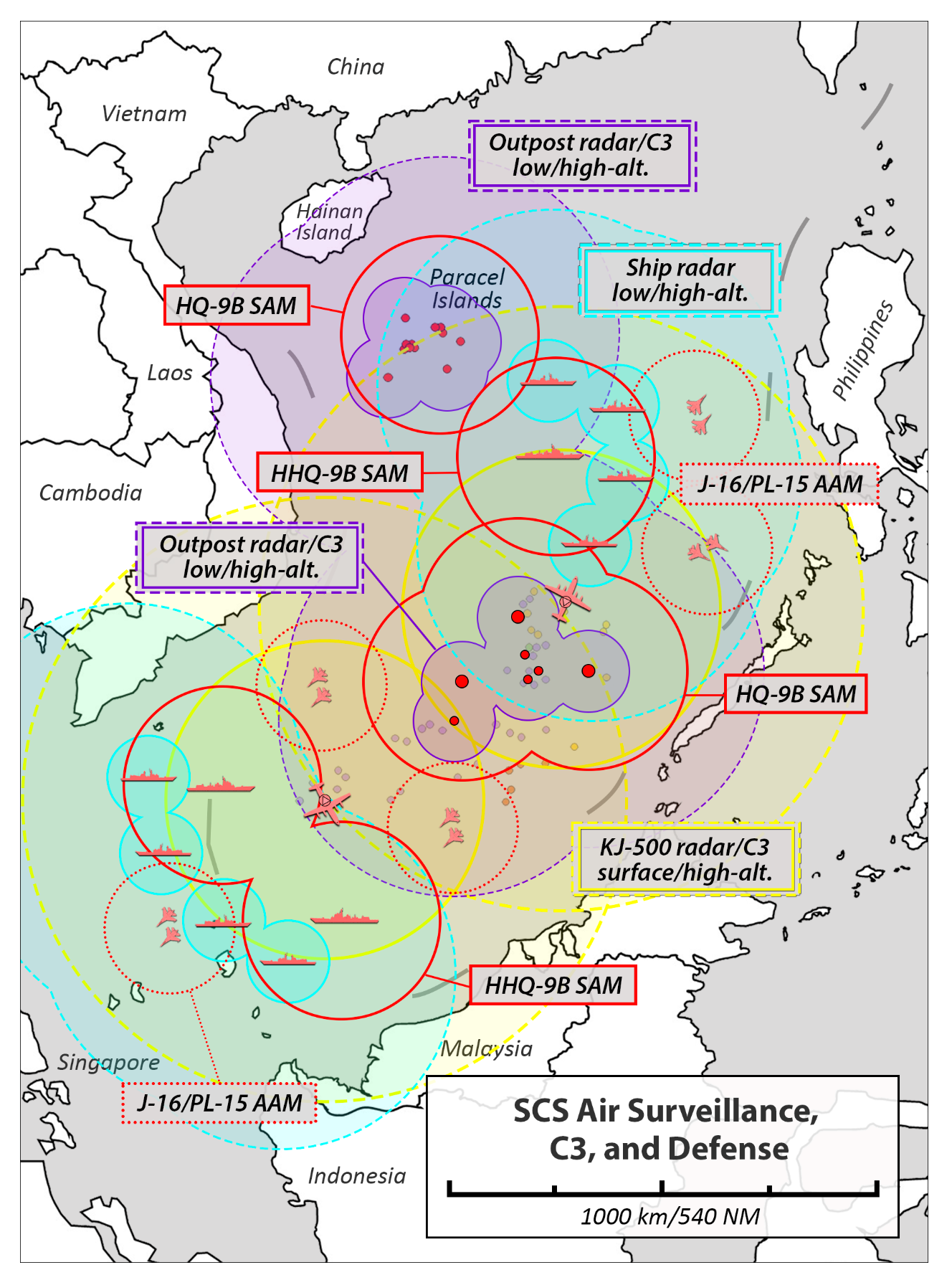
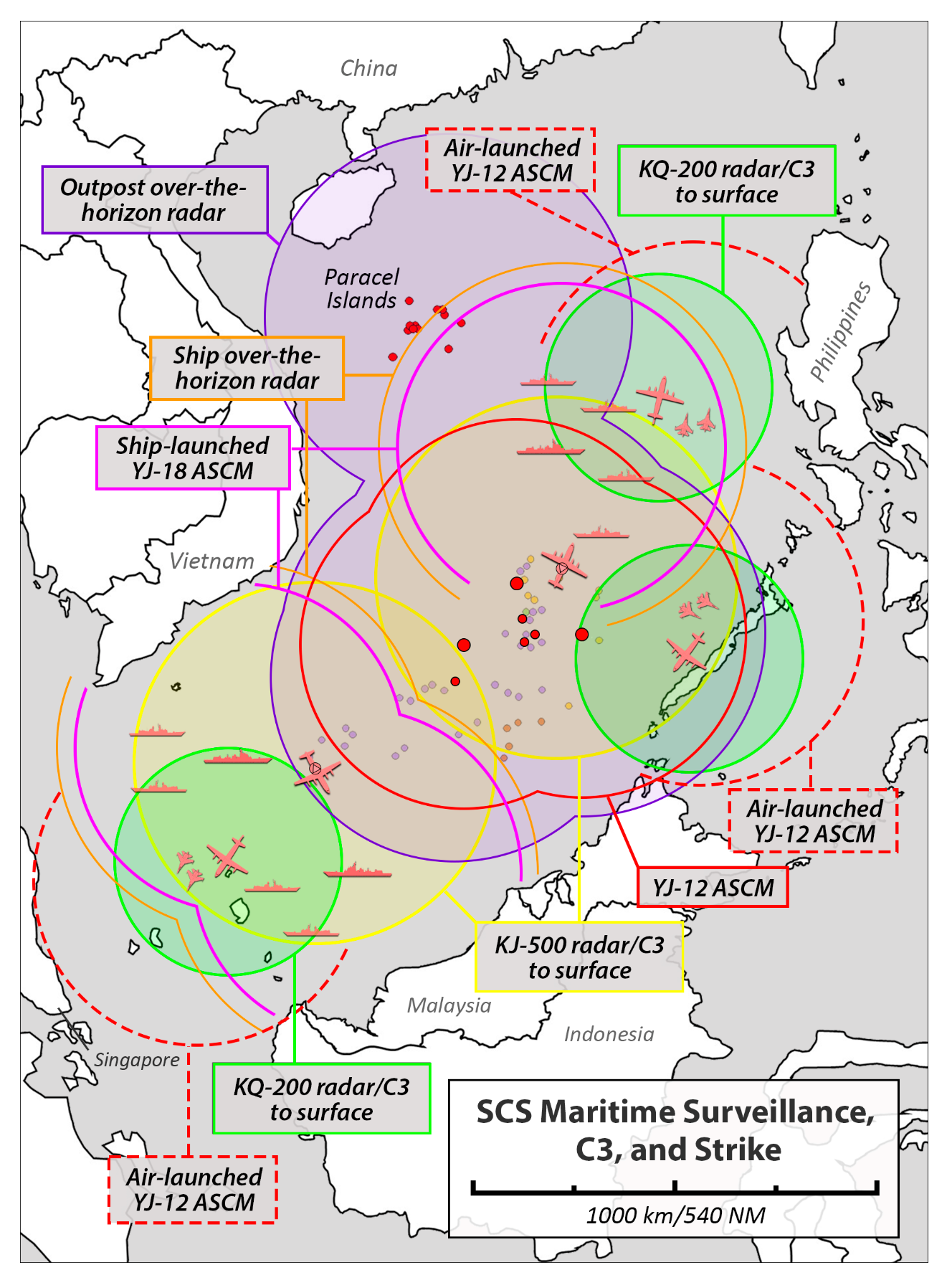
If a picture is worth a thousand words, the following images will give you an idea of the “threat environment” in the SCS:
Combat air coverage capability,
Depth of surveillance capability, and
Maritime strike capability.
The South China Sea is an “inland sea” over which China can exercise extensive anti-access/area denial (A2/AD) strategy to contest any foreign military presence in the region.
In the year 2024 China built more ships in their own yards – in one year – than the United States built, in total, since the end of World War II. At the end of that war the U.S. had approximately 11,000 logistic and auxiliary vessels – far, far more than we needed for peacetime. Post-war the surplus was sold or given to European allies to “jump start” their economies and shipyards. The same was done for Asian nations – including Japan. Today, China’s shipbuilding capacity is approximately 200 times that of the United States. That reflects the massive expansion of Chinese capacity and near extinction of a once great U.S. capacity. It wasn’t always that way.
This post walks the reader through the history of U.S. shipbuilding from the 1920s up until today. It describes the output as well as the supporting political action needed to build the needed war-time capacity for a two-ocean Navy. It does not take much to imagine the needed capital and political commitment to begin to restore U.S. shipbuilding.
U.S. Shipbuilding – a history
Following World War I and the Great Depression, America’s shipbuilding industry had severely atrophied. Between 1922 and 1937, U.S. shipyards produced almost no oceangoing dry cargo freighters. The few yards that did remain operational were mostly focused on occasional naval cruisers or tankers. In 1937, the United States possessed a mere 10 shipyards with the capacity to construct oceangoing vessels. However, by the conclusion of World War II in 1945, this industrial base had undergone a dramatic expansion, resulting in more than 80 major public and private shipyards operating nationwide to sustain the wartime fleet.
Between 1937 and 1945, U.S. shipyards produced a staggering total of over 14,000 major vessels, including approximately 5,200 large ocean-going merchant ships and nearly 9,000 naval combatants and major auxiliaries (excluding over 50,000 small landing craft).
Merchant and Cargo Fleet Production. Under the strategic direction of the U.S. Maritime Commission, the industry prioritized the production of commercial hulls essential to maintaining the global allied supply chain. This immense industrial effort yielded a total of 5,171 ocean-going merchant vessels, including:
Liberty Ships: A total of 2,710 built. These standard, mass-produced cargo vessels served as the indispensable backbone of allied wartime logistics.
Victory Ships: A total of 534 built. As faster and larger successors to the Liberty ship, these were designed to remain competitive in post-war merchant trade.
Standard Cargo Ships: approximately 700 built. These high-quality, turbine-driven vessels (comprising C1, C2, C3, and C4 designs) were utilized for both cargo transport and various military conversions.
Tankers: A total of 705 built. This figure includes 525 of the iconic T2 turbo-electric tankers, which were vital for the transport of fuel, oil, and aviation gasoline.
Minor/Specialized Merchant Hull Types: Approximately 522 built. This diverse category included refrigerated “Reefer” ships, Lakers, barges, and ocean-going tugboats.
Naval Combatant Production. The U.S. Navy underwent a historic expansion to become the most powerful fleet in human history, incorporating thousands of warships into its ranks. Major combat vessels constructed during this period included:
Aircraft Carriers (All Types): A total of 128 built. This included 22 fleet carriers (CVs), Light Carriers (CVLs) built on smaller hulls often converted from cruiser designs to rapidly put more flight decks into service and smaller escort carriers (CVEs or “jeep carriers”) converted from merchant hulls and primary used to transport aircraft from the U.S. to operating carriers or bases.
Battleships: A total of 8 built, representing the North Carolina, South Dakota, and Iowa classes. These served as fleet anti-craft platforms as well as shore bombardment ships.
Cruisers: A total of 48 built, including heavy (CA) and light cruisers (CL/CLAA). As the war in the Pacific progressed cruisers were part of the defence-in-depth screen for the aircraft carriers with enhanced anti-aircraft defense while still retaining surface combat capability.
Destroyers: A total of 352 built of which 175 were Fletcher class DDs that were the workhorse of fleet picket and anti-aircraft defence.
Destroyer Escorts: A total of 563 built. These were specialized anti-submarine warships tasked with convoy protection.
Submarines: A total of 203 built, primarily consisting of Gato, Balao, and Tench-class fleet submarines.
Auxiliary and Small Naval Craft. In addition to frontline combatants, American shipyards produced thousands of secondary and logistical naval hulls to support the fleet:
Frigates and Corvettes: Approximately 160 built, largely consisting of Tacoma-class patrol frigates.
Mine Warfare and Patrol Vessels: Over 2,500 built, including minesweepers, sub-chasers, and PT boats.
Amphibious Warfare Ships: Over 2,500 built, including large ocean-going amphibious vessels such as LSTs (Landing Ship, Tanks) and LSMs.
U.S. Shipbuilding Acts and Programs
The Roosevelt Administration was active as much as 8 years before the war. Early acts served dual purposes of economic stimulation during the Great Depression but also to keep the shipyards open and the skilled labor engaged.
Program / Act
Year
Core Objective
Key Combatant Impact
NIRA Executive Order
1933
Depression relief; initial modernization.
Funded USS Enterprise & Yorktown.
Vinson-Trammell Act
1934
Build up to maximum international treaty ceilings.
102 replacement warships (Cruisers/DDs/Subs).
Second Vinson Act
1938
20% expansion post-treaty collapse.
Shifted focus to Essex-class carriers & fast battleships.
11% Naval Expansion Act
1940
Emergency tonnage boost following the fall of France.
Accelerated fast carrier task force components.
Two-Ocean Navy Act
1940
70% fleet expansion; global naval dominance.
Laid down the massive fleet that fought from 1942–1945.
The point of this historical review is to show what was necessary in terms of supporting military operations at distances far from home ports – the dynamic that the U.S. faces in the Indo-China Region – an area that ranges from the Straits of Hormuz to the South China Sea.
U.S. Shipbuilding – 2026
At present, the United States maintains four public naval shipyards alongside approximately eight to nine active private facilities possessing the industrial capacity to construct large, deep-draft ocean-going merchant vessels or major naval combatants.
Public Naval Shipyards (4)
Operating under the direct supervision of the U.S. Navy via NAVSEA, these four public facilities are no longer utilized for new construction. Instead, their operations are dedicated exclusively to the intricate depot-level maintenance, refueling, and modernization of the fleet’s nuclear-powered aircraft carriers and submarines.
Norfolk Naval Shipyard (NNSY): Located in Portsmouth, VA, this yard manages the maintenance requirements for nuclear carriers and submarines.
Puget Sound Naval Shipyard & IMF (PSNS): Situated in Bremerton, WA, its primary focus remains nuclear vessel support and carrier maintenance.
Pearl Harbor Naval Shipyard & IMF (PHNSY): Positioned in Oahu, HI, this facility is strategically vital for Pacific Fleet submarine overhauls.
Portsmouth Naval Shipyard (PNSY): Located in Kittery, ME, this yard is specialized specifically in submarine modernization and overhaul.
Private Shipyards Capable of Large-Scale New Construction (8–9)
The defense industrial base relies on a highly consolidated group of private defense contractors—primarily dominated by General Dynamics and Huntington Ingalls Industries (HII)—alongside a limited number of commercial shipbuilders.
Naval Combatant Specialists. The following major yards are responsible for the construction of frontline combatants for the U.S. Navy and Coast Guard:
Newport News Shipbuilding: Located in Newport News, VA, this is the nation’s sole facility capable of constructing nuclear-powered aircraft carriers (the Gerald R. Ford class) and one of only two yards building nuclear-powered submarines.
General Dynamics Electric Boat: Situated in Groton, CT, this facility is dedicated exclusively to the design and construction of nuclear submarines, including the Virginia and Columbia classes.
General Dynamics Bath Iron Works: Located in Bath, ME, this yard primarily constructs surface combatants, with a focus on Arleigh Burke-class guided-missile destroyers.
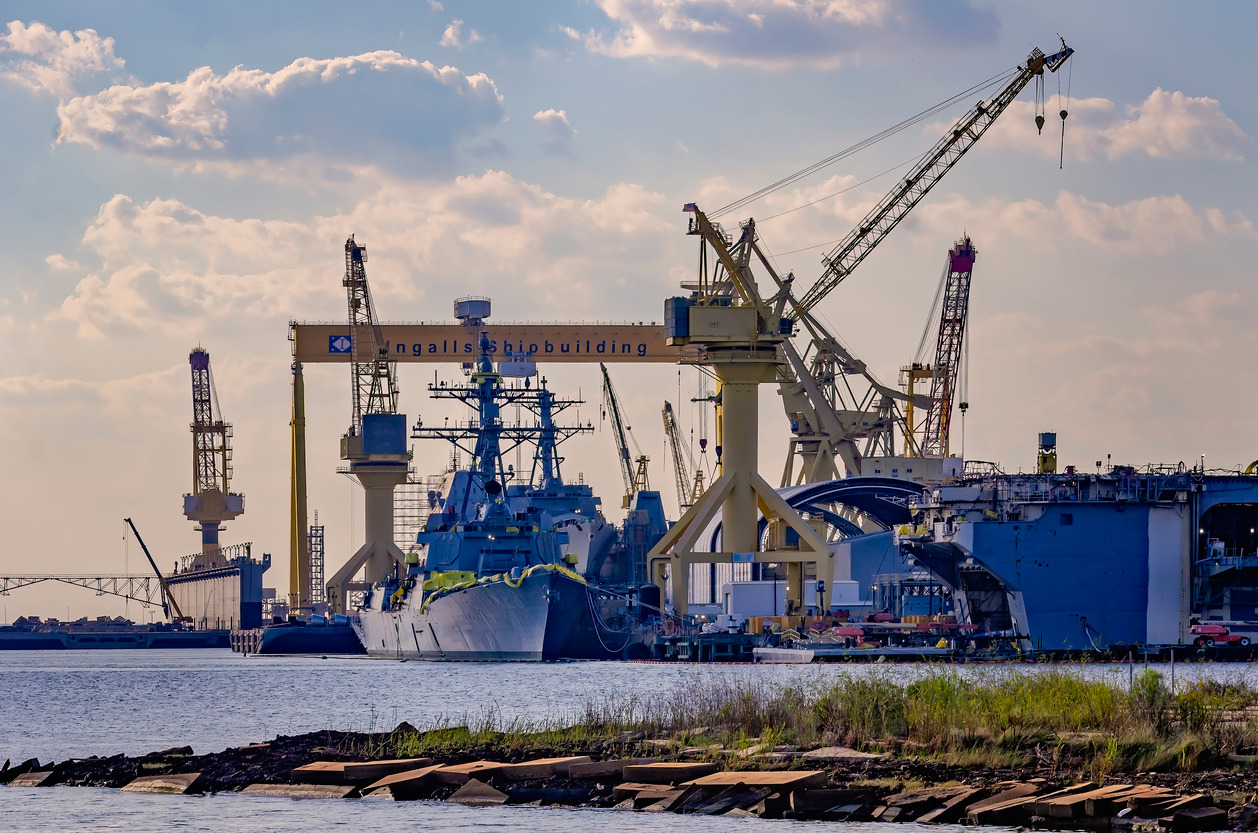
Ingalls Shipbuilding: Positioned in Pascagoula, MS, this yard builds amphibious assault ships, Arleigh Burke destroyers, and national security cutters for the U.S. Coast Guard.
Austal USA: Located in Mobile, AL, this facility specializes in aluminum and steel vessels, such as Littoral Combat Ships (LCS), expeditionary fast transports, and Coast Guard cutters.
Fincantieri Marinette Marine: Situated in Marinette, WI, this yard constructed the Freedom-class LCS and is currently tasked with the production of the Navy’s new Constellation-class guided-missile frigates.
Currently, the United States accounts for less than 1% of the world’s large commercial shipbuilding, producing only 3 to 5 deep-draft merchant vessels annually. As private builders are heavily optimized for the specific requirements of rigid naval contracts, the industry lacks the requisite “surge” capacity or infrastructure to absorb substantial merchant or naval losses during a prolonged geopolitical crisis.
Commercial Cargo & Dual-Use Yards
A select group of only two to three shipyards maintains the industrial infrastructure necessary for the construction of large, ocean-going commercial hulls. These facilities persist largely through the fulfillment of U.S. government auxiliary contracts, bridging the gap between civilian and military requirements.
General Dynamics NASSCO: San Diego, CA, this yard constructs large commercial product tankers and container ships while simultaneously producing Navy auxiliary supply ships, such as the T-AO fleet oilers.
Philly Shipyard: Philadelphia, PA, this facility has a historic record of building large commercial container ships and tankers; it was recently acquired by Hanwha Ocean of South Korea to support the production of national-security multi-mission vessels.
Keppel AmFELS: Brownsville, TX, this yard retains significant large-scale construction capability and occasionally delivers Jones Act-compliant commercial transport vessels to the domestic market.
The Hanwha Group and U.S. Shipbuilding
Hanwha Group has formally concluded its $100 million acquisition of Philly Shipyard, a transaction that signals a fundamental paradigm shift in the revitalization of the nation’s atrophied maritime industrial base through allied foreign investment. Prior to this landmark deal, the Philadelphia facility struggled with inconsistent order books, often delivering fewer than two vessels per year.
In a massive commitment to industrial modernization, Hanwha announced a $5 billion infrastructure plan dedicated to the comprehensive upgrade of the Philadelphia yard. This strategic capital injection will fund the construction of two additional dry docks, three quays, and a state-of-the-art block assembly facility. Through these enhancements, Hanwha aims to scale the yard’s industrial output from 1.5 ships annually to an unprecedented capacity of 10 to 20 vessels per year by 2035.
Central to this revitalization is the implementation of the “Smart Yard” concept, which integrates highly automated South Korean shipbuilding technologies—including robotic welding, automated inspections, and digital twin modeling—to address decades of stagnant productivity in American shipyards. Furthermore, the investment establishes a 36-month apprenticeship program designed to train over 1,000 new shipbuilders, ultimately supporting a workforce of up to 5,000 personnel in Pennsylvania.
This acquisition serves as the cornerstone of a broader $150 billion commitment by South Korea. Acknowledging that the United States lacks the organic capacity to match the industrial shipbuilding scale of China, Washington is increasingly viewing South Korea and Japan as vital industrial lifelines rather than mere trading partners.
While U.S. statutes historically prohibited the foreign construction of naval combatants, Hanwha’s strategy of acquiring and modernizing facilities on American soil effectively circumvents these restrictions while ensuring compliance with “Made in America” mandates. Consequently, the current administration has signaled that Hanwha will play an integral role in the future construction of Navy frigates and nuclear-powered submarines.
Current Initiatives
The administration has announced several major initiatives intended to rebuild and expand U.S. commercial and military shipbuilding capacity, largely in response to concerns about China’s dominance in maritime industry and naval production. The centerpiece is President Donald Trump’s April 2025 executive order, “Restoring America’s Maritime Dominance.” The administration directed multiple federal departments (Defense, Transportation, Commerce, Homeland Security, and Labor) to create a comprehensive strategy for rebuilding U.S. shipbuilding and merchant marine capability – a Maritime Action Plan (MAP). The February 2026-issued MAP focuses on expanding U.S. shipyard capacity, increasing the number of U.S.-built commercial ships, strengthening the maritime workforce, improving Navy and Coast Guard procurement efficiency, revitalizing the U.S.-flag merchant marine and rebuilding maritime supply chains.
Despite the ambitious rhetoric, significant obstacles remain.
U.S. shipyards lack large-scale commercial production capacity
Workforce shortages are severe
Shipbuilding costs in the U.S. remain far higher than in Asia
Many proposals require congressional appropriations
Rebuilding industrial supply chains may take a decade or longer
Some analysts have also questioned whether executive actions alone can reverse decades of industrial decline without sustained bipartisan funding and long-term policy continuity.
The Jones Act
The “Jones Act” is the common name for Section 27 of the Merchant Marine Act of 1920, a U.S. federal law governing domestic maritime commerce. The law requires that cargo transported between two U.S. ports must be carried on ships that are built in the U.S., owned by U.S. citizens or U.S. companies, registered (flagged) in the U.S. and crewed primarily by U.S. citizens or permanent residents. The law applies to “cabotage,” meaning domestic shipping between American ports, e.g.: Houston to New York, Los Angeles to Hawaii, Jacksonville to Puerto Rico, Seattle to Alaska, Long Beach to Guam.
The Jones Act was enacted after the First World War because the United States recognized that it lacked a sufficiently strong merchant marine and shipbuilding base to support wartime logistics. Congress concluded that the nation needed a domestic shipbuilding industry, a trained pool of mariners, and a reserve fleet that could support military mobilization – all national security issues. Many defense analysts, shipbuilders, labor unions, and maritime organizations argue that the Jones Act is essential for national security and industrial resilience. Critics argue that the Jones Act substantially increases shipping costs and contributes to inefficiency.
Military Sealift Command
The Military Sealift Command (MSC) is the primary organization responsible for strategic sealift, naval logistics, and ocean transportation for the United States military. It operates one of the world’s largest government-owned auxiliary fleets and is essential to sustaining U.S. global military operations.
MSC operates approximately 130 ships supported by roughly 5,000–5,500 civilian mariners supplemented by additional contract mariners and military personnel. MSC’s fleet is absolutely critical because it carries fuel, ammunition, vehicles, aircraft equipment, supplies, troops and general cargo. Without MSC, the U.S. military could not sustain large overseas operations.
MSC faces several serious challenges today. Many sealift ships are old, some average over 40 years in age which carries increasing maintenance costs as well as needed upgrades in navigation, communications, and security measures. Because of the diminished shipbuilding capability and budgetary constraints, the U.S. has struggled to replace ships quickly or at all.
The U.S. also faces shortages of qualified civilian mariners. Current assessments indicate that sustained wartime activation could exceed available crews. This issue is increasingly viewed as a national-security concern.
Potential conflict scenarios involving Taiwan or the western Pacific create enormous logistics challenges because of vast distances, missile threats, port vulnerability and limited sealift capacity.
Opposed amphibious landings are difficult to say the least. Later this week we will remember the Normandy landings of June 6, 1944 which were, and remains, the largest amphibious invasion in history. The Allied Forces under the central command of General Dwight D. Eisenhower deployed nearly 7,000 naval vessels, over 11,000 aircraft, and enormous logistical support systems. The naval force included battleships, cruisers, destroyers, troop transports, and specialized landing craft. Over the course of the day more than 165,000 troops landed at five different beaches. Resistance ranged from intense at Omaha Beach to minimal at Utah Beach. This was made possible by complete domination of the sea and air – and a massive prepared logistic system in support from D-Day onward.
An opposed amphibious landing by China against Taiwan will be on the same order of magnitude. – and the Chinese have been practicing in plain sight for more than a decade.
This post describes the World War II logistic efforts to give the reader a sense of scope and complexity. The post goes on to describe China’s preparation for a potential amphibious landing. There are parallels to Normandy and there are massive differences.
D-Day at Normandy.
The landings were successful and then the logistic war needed to be won. The 165,000 soldiers needed to be resupplied with food, ammunition, and replacement soldiers. Heavy equipment such as artillery, tanks, trucks, etc. needed to be brought ashore. The inventory of what was needed to supply this massive invasion force is epic – and there were no ports, piers, heavy lift cranes/capacity and all the equipment that make up modern harbors. The Allies needed BYOH – bring your own harbors. And that is exactly what they did: the Mulberry Harbors.
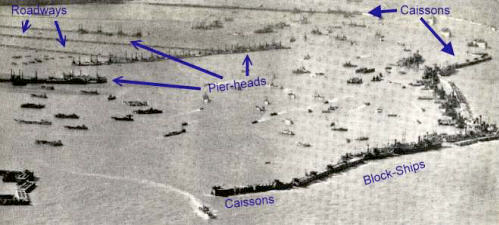
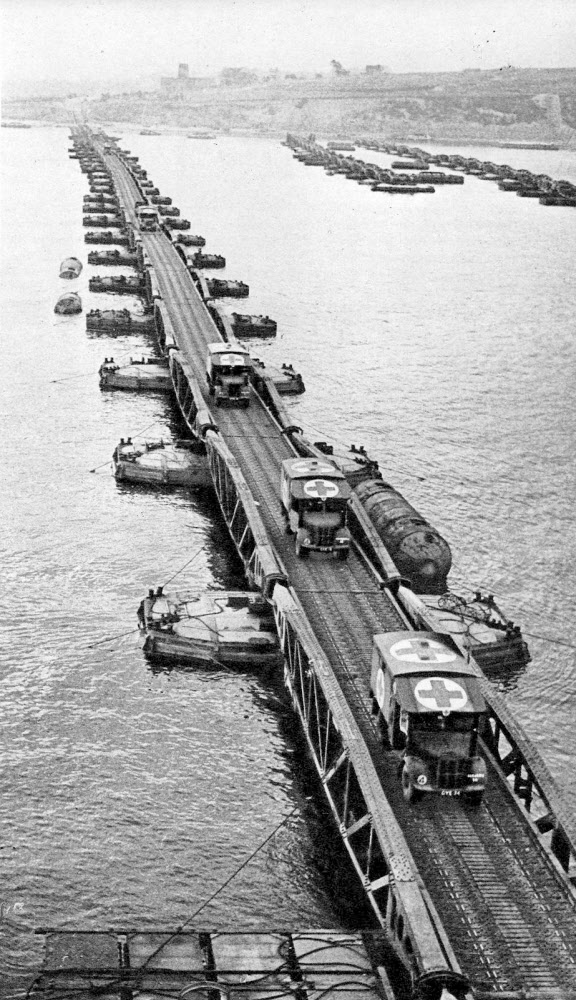
Mulberry harbours were two massive, prefabricated portable harbours designed by the British in World War II to supply Allied forces on the open beaches of Normandy immediately following the D-Day landings. Components were built in the UK in great secrecy and towed across the English Channel, featuring breakwaters made of concrete caissons and sunken ships to combat storms and the harsh seas of the English Channel. Within the breakwaters the Mulberrys featured floating roadways supported by pontoons connected to massive floating pierheads that adjusted to the tidal changes.
Normandy Mulberry Harbor and a Roadway
The vastness of the operation and the absolute necessity to move men, supplies, munitions and equipment to the right place at the right time are way beyond the logistics faced by the largest supermarket chains. It has been calculated that each soldier needed 6.5lb per day to sustain him in the field. On this basis the initial landing force needed 1,072,500 lbs per day – and that was just the initial landing force. As the size of the invading force grew, so did the daily demand for supplies. In addition, there were trucks, tanks, artillery pieces, ammunition, military field hospitals, mobile radar and communications units etc, etc. all of which had to be transported across the English Channel. More than 4,000 ships operated daily to provide the supplies.
Mulberry A at Omaha was destroyed by a massive English Channel storm 2 weeks after the landings. Mulberry B was used until the ports of Cherbourg and Antwerp became available.
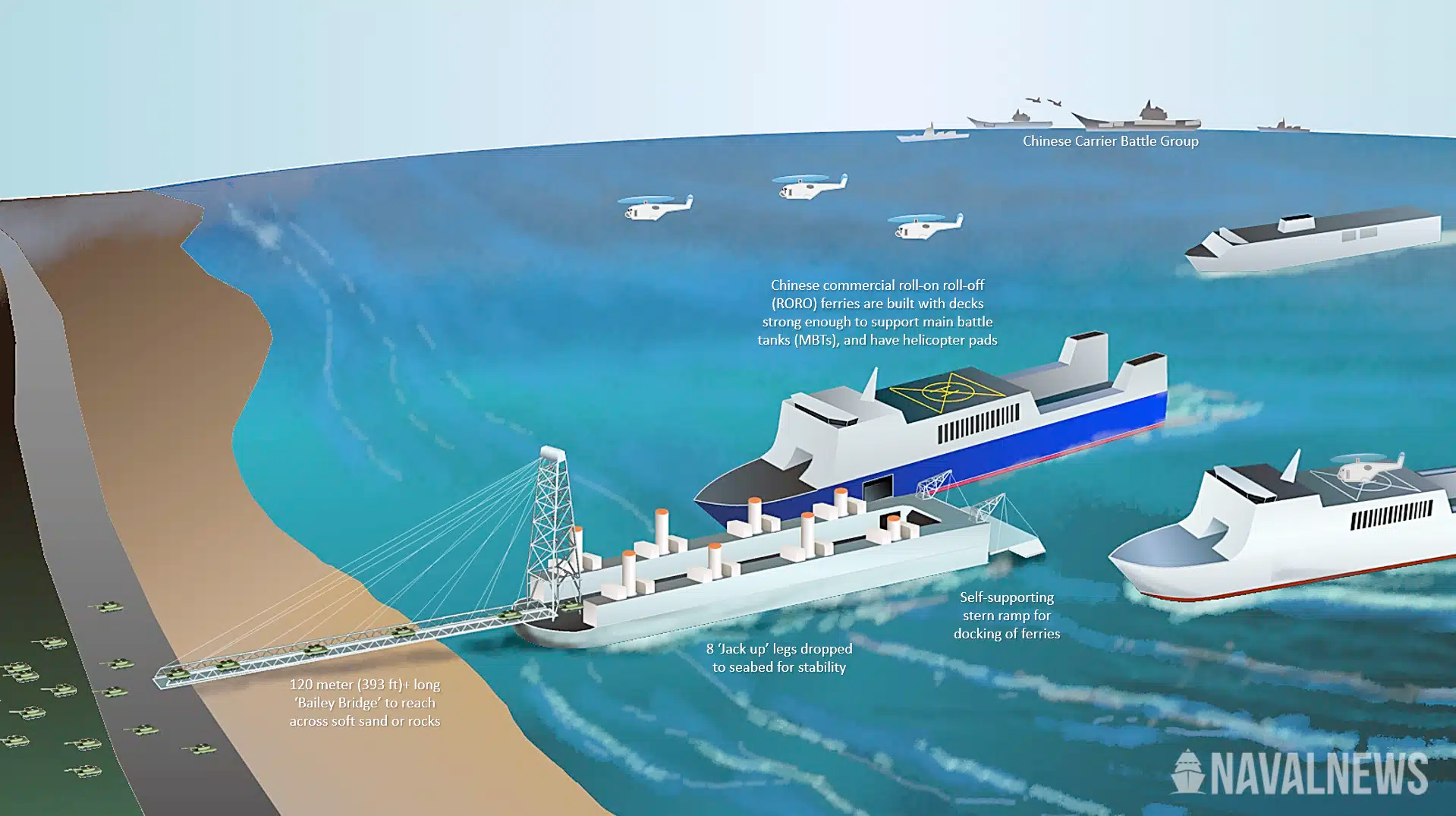
Anyone wondering what an invasion of Taiwan might look like now has a fresh visual clue. Defence analysts watching Chinese shipyards have noticed an increase in a particular type of vessel. China has rapidly developed specialized large-scale landing platforms, known as Shuiqiao-class barges (Type 071or Landing Platform Utility – LPU), designed for an invasion of Taiwan. Sighted in early 2025, these vessels can connect in strings of three, totaling over 820 meters (2,690 ft) in length to create massive temporary, floating piers for landing tanks and heavy military equipment directly on beaches. In the picture below, the orange capped vertical appendages are jack-up legs that extend down to anchor on the bottom specifically for stability against tides and currents as it lifts up the craft at the same time. These self-propelled landing platform utility (LPU) barges have telescoping Bailey bridges that produce a relocatable pier. There is no obvious commercial use case for these vessels. They are rather dedicated platforms for landing on beaches to deliver high volumes of wheeled and tracked military vehicles, together with associated personnel and material.
China has modified large commercial civilian roll-on/roll-off ferries to transport troops and armored vehicles to the beaches. The Shuiqiao barges will likely serve as landing platforms for these vehicles.
This article draws on the leading extant analysis, published by J. Michael Dahm and Thomas Shugart through the Naval War College’s China Maritime Studies Institute (CMSI)
Shuiqiao LPU, like the PLA-controlled ferries that would feed military vehicles through them, are not designed to be used during the initial assault phase against an opposing force, but rather as logistics support for second reinforcements. Like the Mulberrys, because of their vulnerability, they would be best employed only after a beachhead lodgment has been secured, in locations where the PLA Army and/or Marines already had solid, if not complete, control. To land the Shuiqiaos at an acceptable risk of loss, China’s military forces would first have to suppress Taiwanese defenders’ indirect and direct fire systems.
Expanded Amphibious Warfare Exercises
In August 2025, the People’s Liberation Army (PLA) troop and naval units conducted a large-scale exercise to simulate an invasion of Taiwan. This “capstone” amphibious exercise suggests that PL training and preparations for a future Taiwan campaign are becoming more focused, realistic, and sophisticated. The following information is taken a U.S. Naval War College China Maritime Report #52: Everything Everywhere All At Once: The Growing Complexity of PLA Amphibious Exercises.
“There has been much public discussion in recent years surrounding the PLA’s amphibious transport “gap” and China’s supposed inability to sustain a large-scale amphibious invasion of Taiwan. This discourse seems to have ignored the Chinese Communist Party’s decades-long strategy to obscure, obfuscate, and otherwise minimize its military intent and operational capabilities, hiding them from both the Chinese public and the international community. Satellite imagery reveals that in August 2025, the PLA executed a large-scale “capstone” amphibious exercise along China’s southeastern coastline, rehearsing an invasion of Taiwan. This exercise suggests that PLA training and preparations for a future Taiwan campaign are becoming more focused and sophisticated.”
Main Findings
The exercise consolidated elements from previous years into a single simulated operation. It integrated a floating causeway system, anti-landing barriers and obstacles, and amphibious Landing Craft Tank (LCT) vessels that landed forces directly onto beachheads.
For the first time observed, the PLA conducted a phased exercise with simultaneous amphibious landings in three distinct locations. Exercise areas incorporated civilian aquaculture obstacles like those expected to be found along Taiwan’s coastline, increasing environmental and tactical realism.
The exercise occurred at simulated “landing locations” opposite Taiwan, particularly within the Zhangzhou-Xiamen-Quanzhou littoral zone. The locations were distributed at distance intervals comparable to likely wartime beachheads along Taiwan’s western coastline. The total distance between discrete exercise locations was approximately 360 kilometers, roughly the distance between Taipei and Kaohsiung.
Not merely hypothetical in nature, the exercise reflected a specific geographical and operational focus. It appears to be part of a larger trend whereby the PLA is mapping its exercises onto analogous geography that reflects envisioned targets.
Future research should explore the potential applications and implications of PLA efforts to train with similar distances and geometries as would be found in prospective conflict zones.
Starting this summer, observers should scrutinize future capstone amphibious exercises to better understand the PLA’s strengths, weaknesses, and underlying operational assumptions.
Overall, the 2025 capstone exercise demonstrated meaningful progress toward the PLA’s ability to coordinate large-scale, dispersed amphibious operations using civil-military assets. The PLA probably leverages commercial, dual-use vessels to minimize its military logistics “signature” and can be expected to muster invasion forces in multifarious civilian ports. By intentionally blurring the line between civilian and military activity, the PLA raises uncertainty and increases the cost and effort of U.S. and Taiwanese monitoring, requiring additional sensors and analysts to interpret activity. The deployment of dual-use vessels obfuscates the PLA’s intentions, reduces indications and warning, and minimizes the amount of “executive decision time” available to non-PRC military and civilian officials prior to conflict, thus maximizing the probability of surprise.
The exercises also reinforce a broader trend: China is steadily moving from a coastal-defense navy toward a force capable of large-scale joint expeditionary and amphibious operations supported by immense commercial sealift capacity and rapidly expanding naval shipbuilding.
Operationally, the exercise makes sense within current PLA doctrine. Chinese planners increasingly appear interested in:
distributed amphibious entry points,
seizure of ports and airfields,
vertical helicopter envelopment,
and rapid inland penetration rather than a purely linear Normandy-style beach assault.
Multiple simultaneous landing zones could:
dilute Taiwanese defensive concentration,
create confusion about the main effort, and
accelerate operational collapse if successful.
The four-location concept is particularly notable because it suggests the PLA is practicing operational dispersion and synchronization at scale. Such operations would require:
advanced command-and-control,
very large amphibious logistics capacity,
secure communications,
coordinated naval and air cover,
and the ability to sustain forces ashore rapidly after initial landings.
It also highlights the importance of China’s growing fleet of Type 071 amphibious transport docks, Type 075 amphibious assault ship vessels, civilian roll-on/roll-off ferries, and large commercial sealift assets developed under China’s military-civil fusion strategy.
A closing thought
“Amphibious operations are among the most complex in modern warfare. They require effective command and control to synchronize an almost endless number of subcomponents into an effective whole. By increasing its flexibility and proficiency across relevant skill sets over time, the PLA is increasing the likelihood that it views (or will soon come to view) its ability to conduct a successful amphibious invasion of Taiwan as a viable option. The 2025 capstone exercise was conducted along the Zhangzhou-Xiamen-Quanzhou corridor, which closely matched the scale, spacing, and distances of plausible Taiwan invasion beachheads. Approximately 360 kilometers separated operational nodes in the exercise—comparable to the full north-south span of Taiwan’s western coastline. This scenario-specific rehearsal suggests the PLA is aligning its exercise designs with envisioned operational objectives, using geography and scale to refine campaign execution and facilitate its potential real-world application.” (CSMI Report #52)
This is a somewhat longish post with details that may be of interest to a smaller group. Perhaps an “executive summary” would be helpful:
Chinese shipyards generally build both civilian-use and military-use vessels – and often civilian vessels meet military specifications, e.g., ferries – allowing their easy incorporation into fleet use.
China’s first interest is the South China Sea (SCS) and this is reflected in their “order of battle” in that combat ships are modern but the vessels needed for logistic support for a “blue water” navy are not part of the order.
With their mainland based airfields, combatants, and fortified SCS islands and shoals, their “inland sea” is saturated with communications, detection and offensive strike ability – against indicating their interest is SCS operations vs. “blue water” operations. That being said, their combatants are more than capable of operating in the open ocean.
Their submarine fleet is largely non-nuclear which is not as much a liability in SCS operations. They are advancing their nuclear fleet of submarines, well equipped with vertical launch systems.
Over the last 10 years, the Chinese amphibious strike capability – undoubtedly aimed at Taiwan – has grown sophisticated and has been well exercised with a December 2025 excise encircling Taiwan to demonstrate they are capable of “strict quarantine” (blockade by any other name) or amphibious landings.
Shipbuilding: Military-Civil Fusion
China has developed the world’s largest and most integrated shipbuilding industry, deliberately structuring it so that commercial and military production reinforce one another. Major state-owned conglomerates such as China State Shipbuilding Corporation (CSSC) oversee vast networks of shipyards capable of producing everything from container ships and liquefied natural gas carriers to destroyers, aircraft carriers, amphibious assault ships, and coast guard vessels. Unlike many Western countries, where commercial and naval shipbuilding are largely separated, China’s shipyards often operate dual-use production lines, employ common suppliers, and maintain workforces and infrastructure that can be shifted between civilian and military contracts. This arrangement gives Beijing enormous surge capacity in wartime while allowing peacetime commercial exports to subsidize and sustain industrial capabilities critical to the People’s Liberation Army Navy (PLAN).
A central feature of this strategy is China’s “military-civil fusion” policy, under which commercial ship designs are increasingly required to incorporate specifications that could support military mobilization. Particular attention has been given to large roll-on/roll-off (Ro-Ro) ferries, vehicle carriers, and heavy-lift merchant vessels that could rapidly transport troops, armored vehicles, and logistics supplies during an amphibious operation, especially in a Taiwan contingency. Chinese shipyards have produced dozens of large Ro-Ro ferries with strengthened vehicle decks, helicopter landing capability, reinforced ramps, and compatibility with military loading requirements. Vessels operated by commercial firms routinely participate in annual PLA amphibious exercises, demonstrating how civilian shipping assets could augment dedicated naval amphibious lift.
China is also the dominant force in global commercial shipbuilding, accounting in recent years for roughly half of worldwide merchant ship output by tonnage. This dominance provides strategic advantages beyond economics. Massive commercial production sustains steel fabrication, marine engine manufacturing, electronics integration, port infrastructure, and skilled labor pools that are directly relevant to naval expansion. As already mentioned, many categories of Chinese-built commercial vessels possess latent military utility, including ferries, container ships, offshore support vessels, dredgers, and logistics carriers. While only a minority are explicitly designed for military conversion, the overall scale of China’s merchant fleet and shipyard output gives Beijing access to a reserve maritime transport capacity unmatched by most other nations.
The dual-use character of Chinese shipbuilding has become a growing concern for the United States and its allies because it blurs the traditional distinction between civilian and military maritime power. In a prolonged crisis, China could leverage its enormous commercial maritime base not only to sustain trade and logistics, but also to support sealift, repair, replenishment, and amphibious operations. This integration of civilian industry with naval strategy reflects a broader Chinese view that economic infrastructure, transportation networks, and industrial capacity are all components of comprehensive national power.
Blue-Water Combatants, Maritime Enforcement Vessels, and Amphibious Support Forces
The naval modernization of the People’s Republic of China over the past two decades has transformed the People’s Liberation Army Navy (PLAN) from a largely coastal defense force into one of the world’s most powerful maritime services. Today, the PLAN fields a rapidly expanding fleet of advanced surface combatants, a massive maritime enforcement structure, and increasingly capable amphibious support forces designed to sustain operations far from the Chinese mainland. China’s naval buildup reflects both its economic rise and its strategic ambition to become the dominant maritime power in the western Pacific and a global naval presence by mid-century.
A key aspect of the PLAN’s evolution has been the development of a modern “blue-water” navy capable of operating across the Indo-Pacific and beyond. Blue-water combatants include aircraft carriers, guided missile destroyers, cruisers, frigates, nuclear submarines, and replenishment ships capable of sustained long-range operations. The PLAN now possesses the world’s largest navy by number of hulls, with estimates placing the fleet at approximately 370 battle-force ships and submarines.
Aircraft Carriers. Among the most visible symbols of China’s naval rise are its aircraft carriers. China currently operates three carriers: the Liaoning, the Shandong, and the newer Fujian. The first two employ ski-jump launch systems similar to earlier Soviet carrier designs, while the Fujian represents a major technological leap with electromagnetic catapult launch capability comparable to modern American carriers. Although Chinese naval aviation experience remains less mature than that of the United States Navy, the PLAN has demonstrated increasing proficiency in carrier flight operations and task-group coordination. These carriers provide China with expanding regional power-projection capability and support Beijing’s strategic objectives in the South China Sea, East China Sea, and western Pacific.
Large Destroyers. China’s destroyer force has also expanded dramatically. Of particular importance is the Type 055 Renhai-class guided missile destroyer, often regarded by Western analysts as functionally equivalent to a cruiser because of its size and firepower. The Type 055 destroyer carries 112 vertical launch system (VLS) cells. By way of comparison, the U.S. Arleigh Burke-class destroyer (Flight IIA) typically has 96 cells while the Ticonderoga-class cruiser has 122 cells.
In March 2026, China officially confirmed the commissioning of its ninth and tenth Type 055 vessels, bringing the total operational fleet to ten ships. These ships displace approximately 12,000 to 13,000 tons and carry advanced radar systems, long-range surface-to-air missiles, anti-ship missiles, land-attack cruise missiles, and anti-submarine warfare systems. The Type 055 provides escort capability for aircraft carriers while also serving as a major strike platform in its own right.
Small Destroyers and Frigates. Supporting the Type 055s are large numbers of Type 052D destroyers. One of the defining features of the Type 052D is its 64-cell universal vertical launch system (VLS) with a mix of long-range surface-to-air missiles, anti-ship cruise missiles, land-attack cruise missiles, anti-submarine rocket torpedoes, and other missile types. This gives the ship substantial flexibility in fleet operations. The Type 052D serves several key functions: escorting aircraft carriers, defending fleets from aircraft and missiles, striking enemy ships, supporting amphibious operations, and demonstrating Chinese blue-water naval reach. There are also modern frigates such as the Type 054A class with its 32-cell vertical launch system (VLS). The Type 054A is especially important because of its ASW mission. All of the above support advanced helicopter operations especially for ASW operations.
China’s destroyer and frigate construction rate has significantly exceeded that of most other navies.
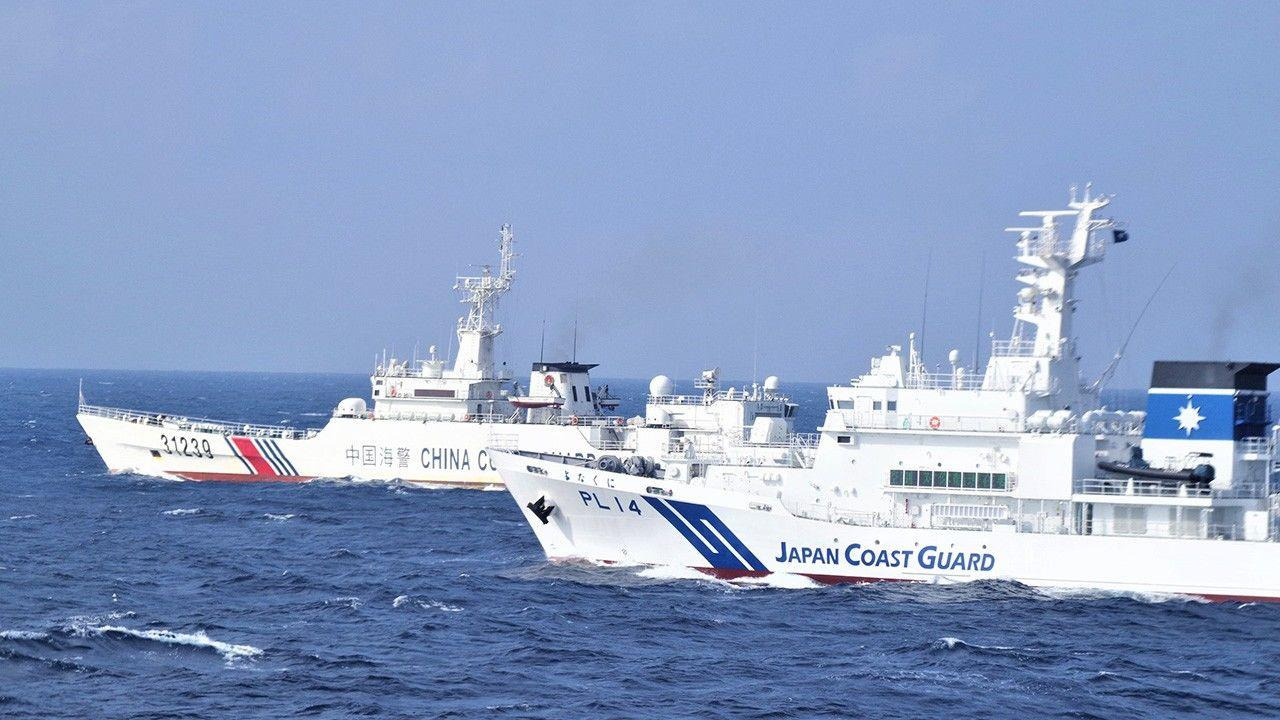
Maritime Enforcement. In addition to combat warships, China has built a substantial maritime enforcement fleet centered on the China Coast Guard (CCG) and supported by the People’s Armed Forces Maritime Militia (PAFMM). These forces play a central role in China’s “gray-zone” strategy, which seeks to assert Chinese territorial claims without triggering outright military conflict. The CCG has become the world’s largest coast guard force and operates heavily armed cutters capable of intimidating neighboring states in disputed waters such as the South China Sea and around the Senkaku/Diaoyu Islands.
Many Chinese coast guard vessels are larger than the naval combatants of neighboring countries. Some are converted former PLAN warships, while newer purpose-built cutters incorporate reinforced hulls, helicopter facilities, water cannons, and in some cases weapons systems approaching naval capability, e.g 30mm automatic cannons and 76mm naval guns. There are standard cutters and larger vessels (Zhaotou-class) that carry even larger weapons and tactical support. One of the capabilities not to be underestimated are the water canons.
Chinese Coast Guard ships frequently use water cannons against Philippine resupply vessels, fishing boats, and other foreign craft. These systems can damage equipment, injure crews, disable navigation gear, and force vessels off course. Because they are considered “non-lethal,” they allow coercion below the threshold of formal armed conflict.
The China Coast Guard operates under the People’s Armed Police and ultimately under the command authority of the Chinese Communist Party’s Central Military Commission, blurring distinctions between civilian law enforcement and military operations.
China also relies heavily on the maritime militia, a loosely organized fleet of fishing vessels and commercial ships that can support surveillance, logistics, and coercive maritime operations. Maritime militia vessels frequently operate alongside coast guard ships in disputed waters, allowing China to maintain pressure on rival claimants while avoiding direct naval escalation. Analysts increasingly view these forces as an integral part of China’s layered maritime strategy. There is no standard vessel configuration but most analysts believe equipment includes small arms, machine guns, signal equipment, reinforced hulls for ramming, water cannons, military communications gear, and surveillance electronics.
Militia vessels also support maritime reconnaissance, electronic observation, and intelligence gathering. Because they operate continuously in disputed areas, they can track foreign ship movements, monitor fishing activity, and relay information to Chinese authorities. They are many in number and are an example of military-civilian-use fusion.
Amphibious Capability
The PLAN’s amphibious warfare capability has expanded rapidly as well, reflecting China’s growing focus on potential operations involving Taiwan and regional expeditionary missions. Amphibious operations require specialized assault ships, transport docks, landing ships, logistics vessels, and civilian support shipping capable of transporting troops, vehicles, helicopters, and supplies across contested waters.
China’s most important amphibious assault vessels are the Type 075 landing helicopter docks (LHDs). These ships resemble smaller versions of American amphibious assault ships and can carry helicopters, amphibious vehicles, marines, and landing craft. By 2026, China had reportedly fielded eight Type 075 vessels, with additional units planned. The PLAN is also developing the newer Type 076 class, which is expected to incorporate unmanned aerial systems and more advanced aviation capabilities.
Supporting the Type 075s are numerous Type 071 amphibious transport docks (LPDs), traditional tank landing ships, and extensive civilian roll-on/roll-off ferry assets. China’s civilian shipping industry plays a particularly important role in amphibious planning. Under China’s military-civil fusion strategy, commercial ferries and transport ships are designed or modified to support military sealift operations. Large commercial ferries have participated in military exercises simulating troop and equipment transport across the Taiwan Strait.
The integration of civilian and military shipping gives China an enormous logistical advantage in any potential large-scale amphibious campaign. While the PLAN may still face serious challenges in conducting a full-scale invasion of Taiwan—particularly under hostile combat conditions—the scale of Chinese amphibious lift capacity has increased substantially compared to even a decade ago. According to analyses by the China Maritime Studies Institute and other defense organizations, China continues to expand specialized amphibious brigades, landing platforms, and joint logistics capabilities designed for cross-strait operations.
Despite these advances, important limitations remain. China still lacks the operational combat experience possessed by the United States Navy and some allied navies. Carrier aviation operations, large-scale amphibious warfare, anti-submarine warfare, and complex multinational coordination remain areas where the PLAN continues to develop proficiency. Moreover, sustaining naval operations over very long distances remains more difficult for China than for the United States, which maintains a global network of overseas bases and alliances.
Nevertheless, the overall trajectory of Chinese naval power is unmistakable. China has constructed a highly modern fleet of blue-water combatants, built the world’s largest maritime enforcement apparatus, and developed increasingly capable amphibious support forces that together support Beijing’s regional ambitions and global aspirations. The PLAN is no longer merely a coastal defense navy; it is becoming a comprehensive maritime force capable of contesting control of the western Pacific and projecting influence well beyond East Asia. The continued expansion of China’s naval capabilities will remain one of the defining strategic developments of the twenty-first century.
China’s interests in the South China Sea are profoundly commercial and economic, not merely military or nationalist. The sea functions as one of the central arteries of China’s economy and global position. Beijing views control, influence, or at least secure access to the region as vital to national survival and long-term development.
The South China Sea as a Strategic Economic Corridor. Roughly one-third of global maritime trade passes through the South China Sea (SCS), including enormous volumes of container shipping, energy imports, bulk commodities, and manufactured exports. For China specifically, the sea links China’s industrial east coast, Southeast Asian markets, the Indian Ocean, the Middle East, Europe, Africa and the United States. Chinese ports such as Port of Shanghai, Port of Shenzhen, and Port of Guangzhou depend heavily on uninterrupted maritime access through these waters. A disruption in the SCS could severely affect the exports of Chinese manufactured goods, imports of raw materials, and China’s supply chains.
Maritime trade in the South China Sea can be described by any number of measures. Its importance can be measured in a variety of ways: total trade value, shipping volume, energy flows, container traffic, and its role in global supply chains. The most widely cited estimate is that roughly $3–5 trillion in global trade passes through the SCS annually. That represents approximately 25% of global marine trade. Roughly one-third of global maritime crude oil trade passes through these waters. East Asia is the manufacturing center of the global economy and the SCS is central to containerized trade. Major shipping companies route vessels through the SCS because it is the shortest and most efficient path from manufacturing centers to delivery ports abroad.
China’s economy is particularly dependent on these routes because China is the world’s largest exporter, it imports massive energy supplies, and much of its coastal industrial economy faces the South China Sea. Chinese strategic planners worry about blockade risks, foreign naval control, and vulnerability at maritime chokepoints – especially the Malacca Straits, the southwest entrance to the South China Sea.
Energy Security: Oil and LNG Imports. One of China’s greatest vulnerabilities is energy dependence. China imports massive amounts of crude oil, liquefied natural gas (LNG), and other energy products from the Persian Gulf, Africa, and elsewhere in the Indian Ocean region. Much of this energy passes through the Strait of Malacca, then across the South China Sea, and onward to Chinese ports. Chinese strategists often refer to this vulnerability as the “Malacca Dilemma,” the fear that in a crisis, especially involving the United States, these sea lanes could be interdicted or blockaded. This concern drives several Chinese policies including naval modernization, artificial island construction, maritime patrol expansion, diversification of pipelines, and the Belt and Road Initiative.
Oil and Gas Resources Within the South China Sea. The South China Sea itself is believed to contain significant oil reserves, very large natural gas reserves, and rich seabed resources. Estimates vary widely because much of the region remains underexplored, but China sees these potential reserves as strategically important. China’s state energy firms, including China National Offshore Oil Corporation (CNOOC), have pursued offshore drilling, seismic surveys, and joint development proposals. Disputes emerge because Vietnam, the Philippines, Malaysia, and Brunei also claim many of the same waters and offshore blocks.
Fisheries and Food Security
The South China Sea contains some of the world’s richest fishing grounds. Fish are commercially important to China because seafood demand is enormous, coastal populations have long depended on fishing, and food security remains a strategic concern. Chinese fishing fleets operate extensively in disputed waters. Fishing vessels also serve secondary purposes: reinforcing Chinese presence, supporting maritime claims, and sometimes operating alongside the Chinese maritime militia.
Precise estimates of annual fish extraction are difficult because the SCS is heavily overfished, illegal and unreported fishing is widespread, and countries often underreport or distort catch data. Some estimates suggest over half the world’s fishing vessels operate in the broader South China Sea region. But the best academic and fisheries reconstructions provide reasonably credible estimates. Most estimates center on 10 million metric tons per year of fish caught in the SCS. China is estimated to take 35-50% of the total catch which is not surprising since China possesses (by far) the world’s largest fishing fleet, including coastal fleets, distant-water fleets, and maritime militia-associated vessels.
China is the world’s largest seafood consumer and growing middle-class demand has intensified fishing pressure. It must also be remembered that fishing activity is not only economic, but reinforces maritime claims, presence around disputed reefs, and gray-zone operations. As such, the Chinese fishing fleet is highly subsidized because of its importance to China’s economy.
Fish are not a marginal issue in the SCS dispute. For China, fisheries involve food security, employment, maritime sovereignty claims, and regional influence. Some analysts argue that fisheries are one of the most immediate drivers of day-to-day confrontation in disputed waters – more so than oil. This is because studies indicate fish stocks in the SCS have declined by 70–95% since the 1950s, catch rates have fallen dramatically, and fleets increasingly catch smaller and younger fish lower on the food chain. China and bordering nations, all of which historically and culturally have fish as a major source of dietary protein, are chasing an increasingly diminishing commodity.
China has been aggressively intruding into waters and maritime zones that the Philippines claims under international law, particularly within the Philippine Exclusive Economic Zone (EEZ) in the SCS. Much of the friction occurs in waters west of the Philippine island of Palawan, especially around Second Thomas Shoal, Scarborough Shoal, Mischief Reef and Reed Bank. These areas fall within 200 nautical miles of the Philippines and are therefore claimed by Manila as part of its EEZ under the United Nations Convention on the Law of the Sea. Philippine fishermen have repeatedly reported being blocked from traditional fishing grounds, harassment by Chinese coast guard vessels (which are armed with 5-inch guns and automatic weapons), water cannon incidents, confiscation of catches, and dangerous maneuvering at sea. China coast guard and maritime militia vessels are constructed with reinforced bows capable of – not full on ramming – but shall we say quite aggressive nudging.
Maritime militia vessels disguised as fishing boats and PLA Coast Guard vessels are used to assert Chinese claims, maintain constant presence, pressure rival claimants, while avoiding overt naval warfare. The Philippines and its allies characterize many of these tactics as “gray-zone coercion,” aggressive pressure below the threshold of armed conflict.
Trade With Southeast Asia. The South China Sea is also the maritime bridge connecting China to the Association of Southeast Asian Nations (ASEAN) economies. ASEAN is one of China’s largest trading partners accounting for 20% of trade with China. Goods moving through the region include electronics, machinery, semiconductors, consumer goods, agricultural commodities, and industrial inputs. Any instability in these waters threatens Chinese exports, regional manufacturing networks, and supply-chain integration.
Undersea Infrastructure and Communications. Less visible but increasingly important are submarine communication cables, offshore infrastructure, and digital trade routes. The South China Sea contains major undersea fiber-optic cable systems connecting East Asia to the broader world economy. Control or monitoring of maritime zones can therefore have implications beyond shipping to include telecommunications, internet traffic, financial systems, and digital commerce.
The SCS marine floor has the highest concentration of marine fiber optic cables. These cables carry financial transactions, cloud computing traffic, military communications, commercial internet traffic, and industrial data. For China, they support export industries, global manufacturing networks, e-commerce, artificial intelligence infrastructure, and digital connectivity under the Belt and Road Initiative. The SCS infrastructure forms the hub that connects China and East Asia with Singapore, India, the Middle East, Europe, and Africa. It is part of China’s “Digital Silk Road” initiative.
The geography of the SCS makes it difficult to avoid. Nearly all East Asian digital traffic heading westward toward Europe or the Indian Ocean passes through cables in these waters. This creates both opportunity and vulnerability for China. Chinese strategists worry about cable sabotage, surveillance, bottlenecks, and wartime disruption. As a result, China has pursued redundant cable routes, alternate land corridors, and Arctic communications concepts, yet 95% of China’s extra-territorial communication still passes through these cables.
Strategic Economic Buffering. China’s island-building campaign has economic as well as military dimensions. Artificial islands allow China to support coast guard and maritime enforcement activity, monitor shipping, sustain fishing fleets, protect energy exploration, and reinforce administrative control over contested waters. Beijing argues these activities secure lawful commercial interests; critics view them as coercive attempts to dominate international waters.
The Broader Chinese Perspective. From Beijing’s viewpoint, the South China Sea is not a distant frontier. It is viewed as
a near-seas defensive zone,
an economic and food security lifeline,
an energy transit corridor,
and a gateway to China’s continued rise as a global power.
Many Chinese strategists believe that if hostile powers controlled these waters, China’s economy, trade, energy supply, and geopolitical autonomy could all be placed at risk. That perception helps explain why the South China Sea occupies such a central place in Chinese national strategy even beyond the military dimension.
The “Nine-Dash Line” is a map boundary used by the People’s Republic of China to claim large portions of the South China Sea. It is not directly a sovereignty claim over Taiwan, but it is closely connected to the broader China–Taiwan issue because both the government in People’s Republic of China (Beijing/PRC) and the government in Taiwan (the Republic of China, or ROC) historically inherited versions of the same maritime claims from pre-1949 China. But they are not the only countries with claims in the South China Sea. Claimants include Vietnam, Malaysia, Indonesia, Singapore, Brunei and the Philippines.
The line originated with the Republic of China government in 1947 as an “Eleven-Dash Line.” After the Chinese Civil War, the communist government in Beijing adopted and modified it into the current Nine-Dash Line. Taiwan’s ROC government still officially maintains a similar claim, though Taipei today emphasizes stability and practical administration more than expansive maritime nationalism. It is interesting to note that Beijing sometimes argues that Taiwan’s continued adherence to similar maritime claims supports the idea that both sides belong to “one China.”
The Nine-Dash Line matters because the South China Sea contains major international shipping lanes, commercial fishing grounds, potential oil and gas reserves and militarily is a key strategic location. PRC/China has used the claim to justify building shoals into artificial islands, establishing military facilities there and on naturally existing islands, as well as conducting aggressive coast guard and naval patrols. Reports and videos of aggressive maritime engagements routinely appear online, in the news, and in maritime industry journals.
The Nine-Dash Line, in a way, is tangential to the China-Taiwan dispute. The Nine-Dash Line is primarily a South China Sea territorial claim, not a direct claim about Taiwan itself. However, it is important as Taiwan controls Taiping Island (Itu Aba), the largest naturally occurring island in the Spratly chain – and some 1,000 miles south-southwest of Taiwan. This gives Taiwan a direct physical role in South China Sea disputes. Taiwan also sits near the northern gateway to the South China Sea from the East China Sea and along critical naval routes connecting the Pacific Ocean to Chinese coastal waters.
But the nations most impacted by aggressive PRC maritime patrols and attempts at enforcement are the Philippines, Malaysia, Vietnam and Indonesia. The South China Sea is important to these nations for the same reasons it is economically important to China.
Claims and Assertions
The origin of the “Nine-Dash Line” is rooted in a mixture of historical memory, nationalism, geography, imperial legacy, and modern state-building. It was not created out of nowhere as a purely arbitrary assertion, but neither was it historically defined in the precise modern legal sense that China sometimes presents today.
Chinese dynastic records from the Song, Yuan, Ming, and Qing periods contain references to islands, shoals, navigation routes, and fishing grounds in what is now called the South China Sea. For centuries, Chinese fishermen, merchants, and sailors traveled through the South China Sea. Chinese fishermen from Hainan and Guangdong regularly traveled seasonally into the Paracel and Spratly regions. Chinese sources also describe maritime trade routes through the area. Imperial Chinese records, navigation charts, and local gazetteers mention these areas intermittently. China argues that these activities demonstrate discovery and naming of islands, longstanding fishing usage, patrols and survey expeditions, and administrative awareness of the region. There is also archaeological evidence of extensive Chinese commercial activity seen in shipwrecks, porcelain cargoes, copper coins, and evidence of the old Maritime Silk Road crossing the South China Sea.
But the South China Sea was never an exclusively Chinese maritime zone historically. Vietnamese, Malay, Filipino, and other Southeast Asian fishermen and traders also operated throughout the region for centuries and can make the same historical and archaeological claims. Even some Chinese legal scholars acknowledge the sea historically functioned as a shared maritime space used by many peoples.
What’s more, pre-modern Asian states generally did not define maritime sovereignty the way modern international law does. It was understood that “control” was fluid and shifting as seen in tribute systems, fishing access, trade routes, or occasional patrols rather than fixed maritime borders. So there was a historical Chinese presence and awareness in the region, but not continuous modern-style administrative control over the entire sea. The same can be said about several other nations.
This is important because under modern international law, merely having fishermen or traders present does not automatically create sovereignty over enormous maritime areas.
The Modern Era
The 1947 assertion by the Republic of China government under the Kuomintang (still before the takeover by the Communist Chinese) reflected several motivations. It was reclaiming territory after Japanese occupation, asserting China’s status as a restored great power, resisting perceived Western and Japanese encroachment, and strengthening national unity after decades of invasion and civil war. When the communists won the Chinese Civil War in 1949, the government in Beijing took up the mantle of maritime claims.
For many Chinese people both in mainland China and Taiwan, the South China Sea claims became emotionally tied to the broader narrative of overcoming the “Century of Humiliation.” That narrative includes the Opium Wars, the Unequal Treaties that resulted from those wars, the resulting colonial concessions, the Japanese invasion, and the loss of sense from the foreign domination that was in place from the 19th to mid-20th centuries. In this mindset, recovering lost territories became symbolic of restoring national dignity and sovereignty. Many Chinese see the South China Sea claims not as expansionism, but as reversing historical injustice. But the counter-claimants in the region are not nations or peoples involved in any historical injustices against China. The controversy is that historical usage, shifting periods of colonial dominance, and other factors are not automatically factors in modern legal sovereignty under international law.
In 2016, an international tribunal in The Hague ruled in a case brought by the Philippines that China’s sweeping Nine-Dash Line claims had no legal basis under the UN Convention on the Law of the Sea (UNCLOS). Beijing rejected the ruling. Taiwan also rejected parts of the decision because it affected claims tied to Taiping Island.