
If the People’s Republic of China did not directly invade Taiwan, there are flash points that could still bring China and the United States to the brink of armed conflict. Such events would probably emerge from a combination of:
- maritime confrontations,
- escalation from gray-zone coercion,
- accidents or miscalculation,
- alliance obligations,
- and disputes over freedom of navigation and regional dominance.
Most analysts believe a future crisis is more likely to begin through escalation of a limited confrontation than through a deliberate declaration of war.
South China Sea Confrontation: Philippines
These are the most likely near-term flash points. As described in previous posts China is hyper-aggressive about asserting its claims about sovereignty over a large portion of the South China Sea. The aggressiveness is evident in naval patrols, Coast Guard patrol, maritime enforcement by the People’s Armed Forces Maritime Militia (PAFMM), as well as armed fishing boats, trawlers, and fishing fleet “mother ships.”
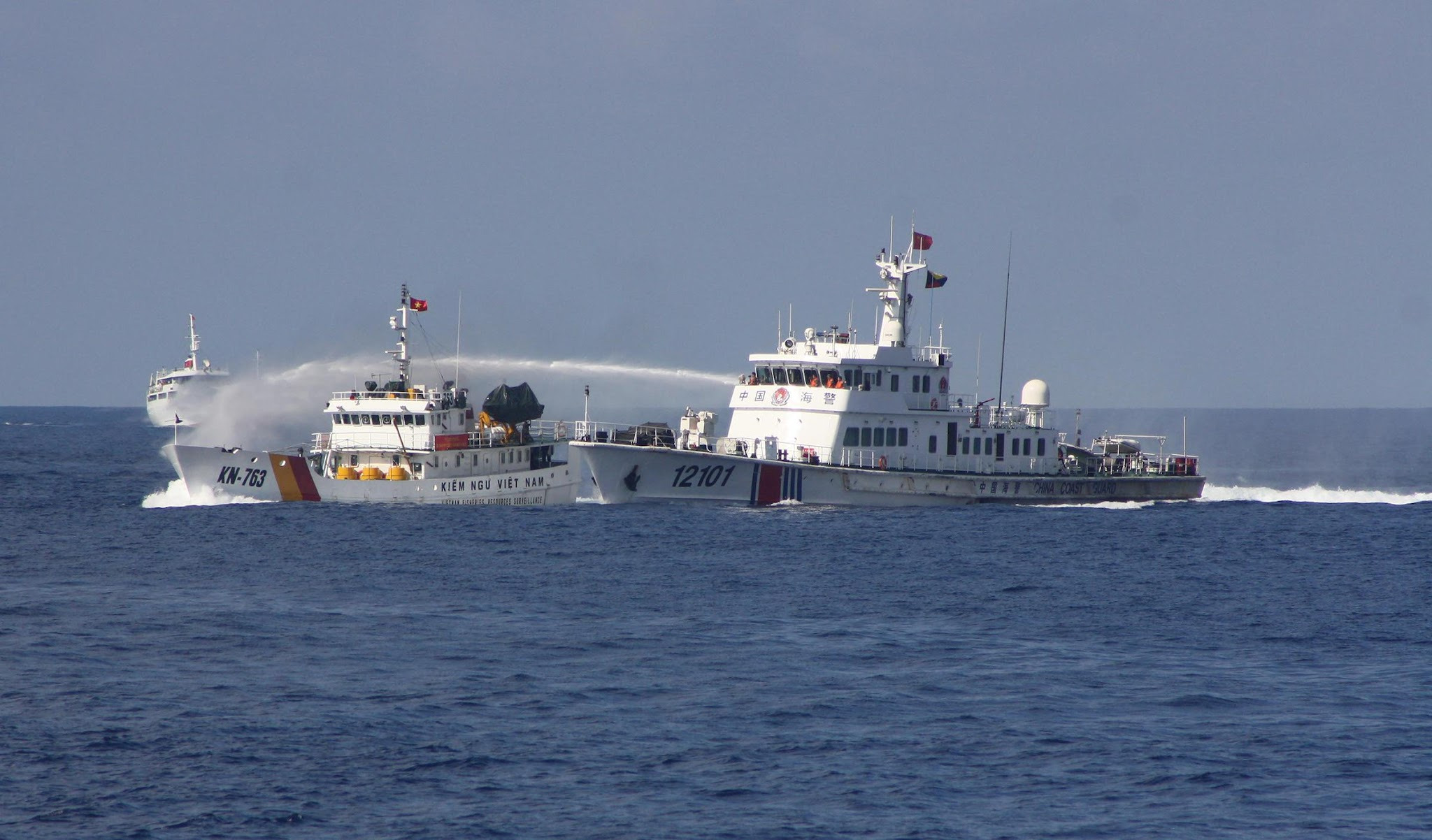
While much attention is paid to the Taiwan Straits, the single most plausible flash point outside Taiwan is the South China Sea involving the Philippines. The danger centers around: Chinese Coast Guard pressure, maritime militia operations, Philippine resupply missions to its outposts, and U.S. treaty commitments. The most volatile areas include Second Thomas Shoal, Scarborough Shoal, and Mischief Reef.
Second Thomas Shoal was occupied by the Philippines when in 1999 they grounded the BRP Sierra Madre on the Shoal. Manila intentionally beached there in 1999 to establish a permanent presence. China aggressively contests Philippine control by maintaining constant coast guard and maritime militia patrols, obstructing Philippine resupply missions, using water cannons, maneuvering dangerously near Philippine vessels, and attempting to isolate the outpost. This is China’s “grey zone playbook.” There is risk of vessel damage, loss of life, and escalation of weapons exchanges. Because the United States and the Philippines are bound by a Mutual Defense Treaty, Washington could face pressure to intervene in some fashion.
Scarborough Shoal is controlled by the Chinese but the shoal has not yet been militarized. Unlike Mischief Reef or Fiery Cross Reef, China has not yet expanded by Shoal by constructing a major artificial island or large permanent military base. Analysts widely believe Beijing has refrained from major land reclamation there partly because of its proximity to the Philippines and large-scale militarization could provoke strong U.S. and regional reactions. Still, China effectively controls the area operationally.
Mischief Reef is the clearest example of full Chinese occupation and militarization. The 2016 Hague arbitration ruling determined that Mischief Reef lies within the Philippine EEZ, and China’s construction activities violated Philippine sovereign rights under UNCLOS. Nonetheless, China has transformed it into a massive artificial island during the island-building campaign after 2013. China constructed a large airfield, extensive port facilities, radar installations, hangars, missile-capable infrastructure, barracks, and hardened military facilities. Mischief Reef now functions as a major forward operating base.
East China Sea Confrontation: Japan
Another major flash point is the dispute between China and Japan over the Senkaku Islands (called the Diaoyu Islands by China) in the East China Sea (north of Taiwan). Japan administers the islands, but China claims them.
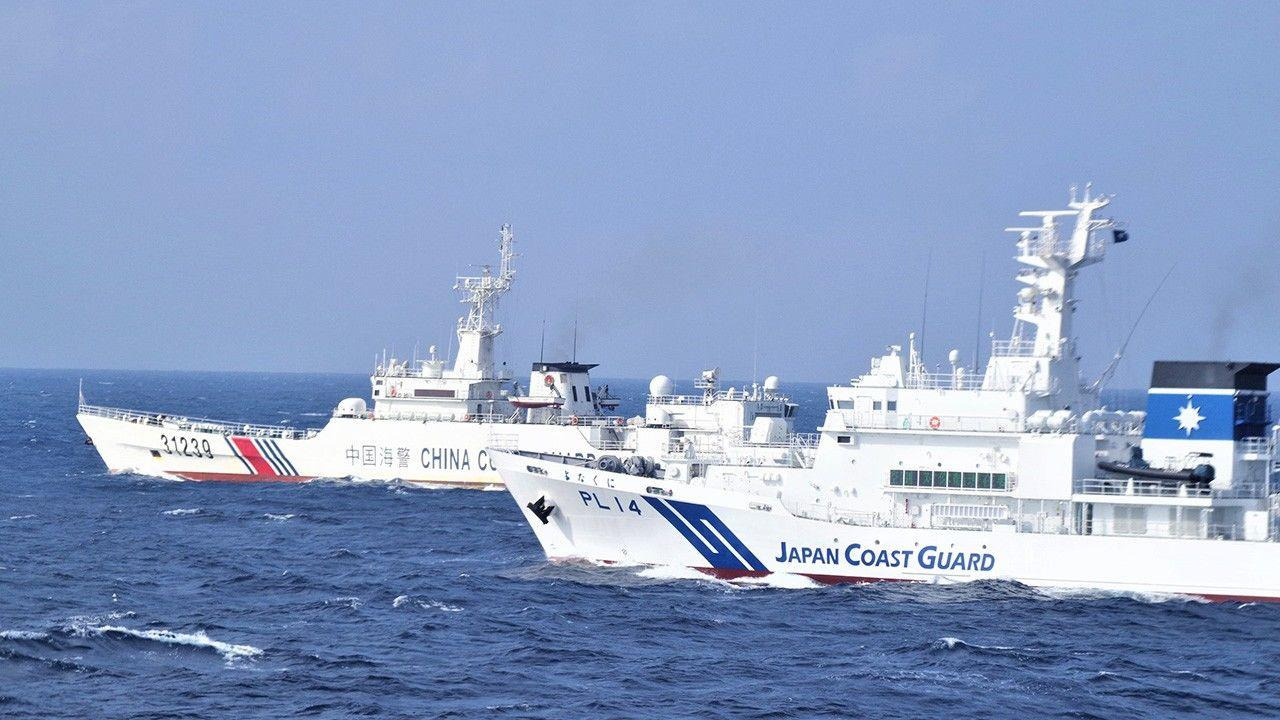
China operates out of the “grey zone playbook” but with more caution as Japan has a more robust military and ability to respond. Japan is also a treaty ally of the United States under the Treaty of Mutual Cooperation and Security.
Taiwan Straits
Between the East and South China Seas is the Strait of Taiwan – which interestingly is the name used by the PRC. However, the political significance comes not from the name, but from how the PRC characterizes the legal status of the waters. China increasingly argues that the Taiwan Strait is not entirely “international waters,” but rather includes Chinese internal waters, territorial seas, contiguous zones, and exclusive economic zones. Beijing objects particularly to statements that the strait is wholly an “international waterway.” The United States and many maritime powers counter that: large portions of the strait constitute international waters under the United Nations Convention on the Law of the Sea, and therefore support freedom of navigation and military transit.
One of the great unknowns is a scenario that unfolds if China attempts to restrict maritime passage through the Strait – unknown to the “person on the street” – but no doubt the topic of think tanks and military planners. China accepts part of the Strait as an international waterway in peaceful times, but are there scenarios when China closes the recognized international waterway, temporarily, for the safety of international maritime passage? One such scenario might be, not an invasion of Taiwan, but a blockade of the island nation. By definition, a blockade is an act of war, but as the United States played out the scenario in 1960 regarding Cuba it was classified as “a strict quarantine” with ships subject to onboard inspections.
We don’t have to imagine what a blockade/quarantine of Taiwan would look like. China demonstrated it in late 2025 in “Justice Mission – 2025”
Justice Mission – 2025
This two-day exercise was a joint military exercise by China conducted around Taiwan in December 2025. It was one of the largest and most operationally sophisticated Taiwan-focused exercises China had conducted up to that point, and it significantly expanded the PLA’s emphasis on blockade operations, encirclement, anti-intervention deterrence, and joint multi-domain warfare. This language was important because it signaled that the PLA was practicing not merely a symbolic demonstration, but elements of maritime quarantine, strategic isolation of Taiwan, and deterrence of U.S. and allied intervention.
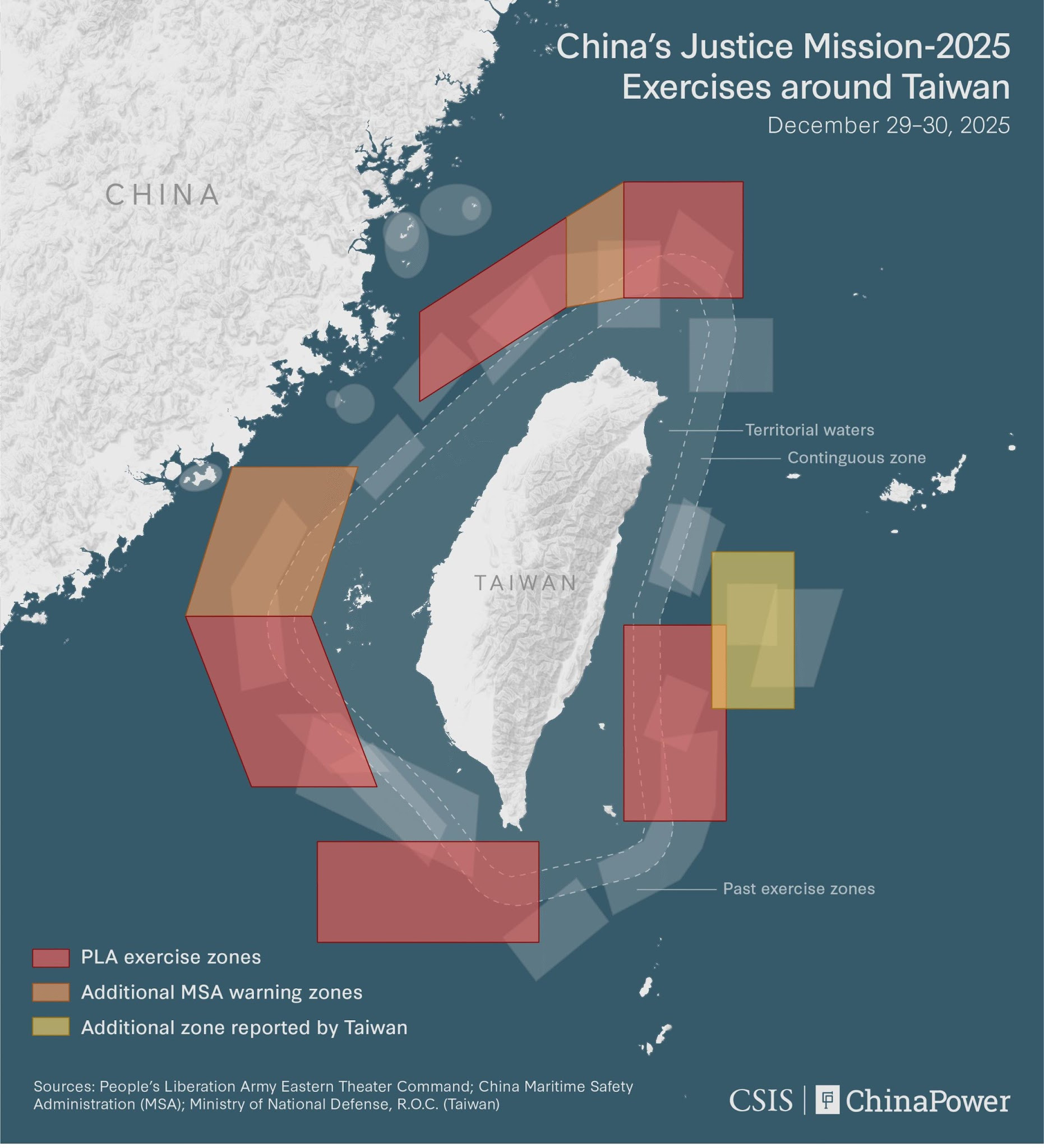
China was not shy about its intention, publicly stating that the exercise focused on “sea and air combat readiness patrols,” “seizing comprehensive superiority,” “blockading key ports and areas,” and “three-dimensional outer-line deterrence.” [Global Taiwan Institute] The exercise was preceded by public campaigns against Taiwan and Japan. The Chinese Foreign Ministry stated that Japan had “crossed a red line” in its position regarding Taiwan. The normally cautious and indirect language traditionally employed in Asia-Pacific diplomatic discourse was abandoned. The timing and circumstances surrounding these events suggest that the PRC leadership made a conscious decision to press a harder line against Japan: both to gauge the reaction of Japan’s new government, and as a warning to other regional states that might consider offering further security support for Taiwan in the face of Chinese pressure.
One of the most important interpretations of Justice Mission-2025 is that it reinforced growing evidence that China may see blockade, quarantine, and coercive isolation as plausible alternatives or precursors to a direct amphibious invasion. The exercise emphasized control of ports, airspace disruption, long-range rocket strikes, coast guard integration, and maritime encirclement – all the elements of a sustained blockade. Analysts see this stratagem as less risky than inclusive military operations and yet can exert significant economic and political pressure on Taiwan.
Many observers viewed it less as a rehearsal for a single “D-Day”-style invasion and more as practice for sustained coercive campaigns, maritime isolation, and gradual escalation designed to pressure Taiwan while complicating U.S. intervention decisions.
Air or Naval Collision Escalation. A major crisis could emerge accidentally as U.S. and Chinese forces operate in close proximity in the South China Sea, East China Sea, Taiwan Strait, and western Pacific. Dangerous encounters occur regularly involving fighter aircraft, surveillance planes, destroyers, and coast guard ships. Over the last 20 years there have been near-collisions in the air and afloat. Air incidents can be as simple as a plane one side considers a surveillance aircraft encroaching on what one party considered an exclusion zone and so send armed interceptors to investigate…and occasionally lock-on targeting radar. Or something as simple as unwanted “formation flying” as a means of intimidation. Should one of these incidents turn fatal (collision or shootdown), nationalist outrage could lead to “sabre rattling” of military mobilization and reciprocal escalation before diplomacy stabilizes the crisis.
Cyber or Space Escalation. Less visible but increasingly serious are cyberattacks, satellite interference, and attacks on communications infrastructure. A crisis involving undersea cables, GPS disruption, financial systems, or military satellites could escalate quickly if interpreted as prelude to wider conflict.
Most of Taiwan’s international digital connectivity travels through a relatively limited number of submarine cable landing points. This creates a potential vulnerability in a crisis as cables could be damaged faster than they can be repaired, especially if repair ships are blocked from operating.
The simplest and most deniable model involves fishing vessels, anchors, dredging activity, or commercial ships. A state actor could exploit this ambiguity by directing civilian or quasi-civilian vessels toward sensitive cable areas, causing “accidental” disruptions difficult to attribute conclusively. This model is especially relevant because China possesses enormous fishing and maritime militia fleets and gray-zone ambiguity is central to Chinese maritime strategy. Taiwan has already experienced several suspicious cable outages involving nearby islands in recent years. Major powers possess at least some capability for deliberate deep-sea cable interference via submarines, unmanned underwater vehicles, specialized seabed systems, or covert engineering ships.
Another scenario involves simultaneous cuts to multiple cables. Rather than completely severing Taiwan from the world, the objective could be degrading bandwidth so as to slow military coordination and a range of financial market disruptions. A coordinated campaign could target cable chokepoints and terminal landing stations. Analysts frequently discuss cable disruption as part of a broader Chinese coercive strategy short of outright invasion.
The Broader Strategic Reality. The most dangerous scenarios are probably not deliberate declarations of war or carefully planned invasions. Rather, they are incremental coercion, gray-zone confrontations, alliance entanglement, and accidental escalation. Both China and the United States likely understand that a major war between them would carry catastrophic economic and military consequences. Yet both are also increasingly operating in overlapping maritime and strategic spaces where nationalism, deterrence, alliance commitments, and military signaling create persistent risk of crisis escalation.
Discover more from friarmusings
Subscribe to get the latest posts sent to your email.

