

 There are three events that seem to highlight the “period of crisis” in Francis life during the period from late 1205 until the summer of 1206:
- Francis’ experiences at the abandoned San Damiano chapel – especially his prayers before the cross
- Francis’ “leaving the world” as he turns away from his family towards the Church and an unknown path with God.
- Francis and the leper (or lepers)
There is no consensus on the order of the events – and there is some question about later embellishments of the event – and even questions about whether some accounts indicating a single event is actually a compilation of a series of experiences. But then the 13th century writers were not trying to capture “history” they were trying to tell their understanding of the “meaning” of the life of St. Francis of Assisi. Continue reading
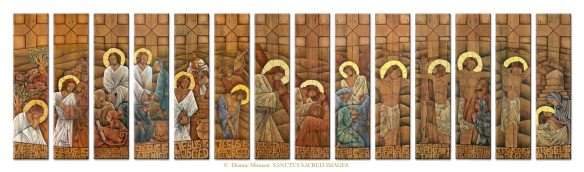 When Holy Land pilgrims returned home, they often brought back a bit of Palestine. In addition to relics, the pilgrims also brought back the desire to re-create scenes from the Holy Land in order to share their experiences with those unable to visit the holy places firsthand. When the Holy Land was closed to western visitors, European replicas of the sacred sites became increasingly popular. Outside of Jerusalem, the tradition of walking the via sacra in commemoration of Christ’s passion, death, and burial with “stations” is mentioned as early as the twelfth century and all of the references point to an outdoor celebration. There was no standard celebration of the via sacra. Depending on the location there were as few as seven and as many as 42 stations. Interestingly, in the beginning, the customary route apparently was the reverse of ours, starting with Calvary and ending at Pilate’s house – and included many other stops that are no longer considered part of the Via Dolorosa (“Sorrowful Way”).
 There are several historical references that one encounters while reading the Book of Jonah. Rather than include this detail in later posts when the references appear, I thought it good to provide some details early on. The setting of the book is a period of Israel’s history when there is a lot going on – inside and outside the traditional boundaries of the Promised Land. The Kingdom of David had split into the Northern Kingdom (confusingly called Israel and consisting of 10 tribes) and the Southern Kingdom (called Judah consisting of two tribes) still loyal to the throne of David and centered in Jerusalem. Beyond the borders was the ever-looming threat of the Assyrian Empire whose capita city was Nineveh. It was located in the area of modern-day Mosul in Northern Iraq. Compared to Israel, it is to the northeast at some distance.
 In most commentaries there are discussions focused on the unity of composition (i.e., were there later editors?), date and purpose of the writing, questions of text preservation (consistency among known copies), underlying theology, and the “Sign of Jonah” from
  Ash Wednesday, the first day of the penitential season of Lent in the Catholic Church, is always 46 days before Easter Sunday. It is a “movable” feast that is assigned a date in the calendar only after the date of Easter Sunday is calculated. How is it calculated? I’m glad you asked.
 In
In 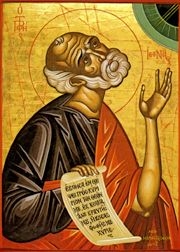 Before we dive into the Book of Jonah, we need to understand what we are reading, in other words, the literary genre. Why? Simply put, you read a newspaper differently than a novel. You read poetry different than history. It is good to understand what the literary genre of Jonah is because there are many different literary types in the OT, including laments, love songs, parables, apocalypses, and histories. Jonah is generally included with the so-called “Minor Prophets” such as Joel, Obadiah and Micah, so perhaps it straight-up prophecy?
