…that you believe: living bread

Bread-of-Life-John-6Comes Down from Heaven. 32 So Jesus said to them, “Amen, amen, I say to you, it was not Moses who gave the bread from heaven; my Father gives you the true bread from heaven. 33 For the bread of God is that which comes down from heaven and gives life to the world.” 34 So they said to him, “Sir, give us this bread always.” 35 Jesus said to them, “I am the bread of life; whoever comes to me will never hunger, and whoever believes in me will never thirst.

At vv.12 and 27 (gathering the fragments after feeding the crowd and referencing perishable food), Jesus implicitly linked the feeding miracle with the manna story of Exodus 16. In v.32, he does so explicitly. For the second time in this chapter Jesus prefaces his remarks with the solemn, Amen, amen, I say to you. Jesus reworks four essential elements of v. 31: Continue reading →
Working for what?

24 When the crowd saw that neither Jesus nor his disciples were there, they themselves got into boats and came to Capernaum looking for Jesus. 25 And when they found him across the sea they said to him, “Rabbi, when did you get here?” 26 Jesus answered them and said, “Amen, amen, I say to you, you are looking for me not because you saw signs but because you ate the loaves and were filled.
The implication of the narrative is the crowd who finally caught up with Jesus in Capernaum could not have known about the miraculous events (vv.16-21) of the evening nor would they have had an opportunity to react to the ego emini statement – to even ponder, “Who is this that calms the sea.” Their last encounter with Jesus was at the miraculous feeding of the 5,000 and their desire then was to take Jesus by force and make him kind. It is at this point Jesus withdrew from them as the people wanted to remake the Messiah in their own conception. Jesus would not allow that; perhaps Jesus does not want to be found by the crowd “looking for Jesus.” Continue reading →

…that you believe: context

Bread-of-Life-John-624 When the crowd saw that neither Jesus nor his disciples were there, they themselves got into boats and came to Capernaum looking for Jesus. 25 And when they found him across the sea they said to him, “Rabbi, when did you get here?” 26 Jesus answered them and said, “Amen, amen, I say to you, you are looking for me not because you saw signs but because you ate the loaves and were filled. 27 Do not work for food that perishes but for the food that endures for eternal life, which the Son of Man will give you. For on him the Father, God, has set his seal.” 28 So they said to him, “What can we do to accomplish the works of God?” 29 Jesus answered and said to them, “This is the work of God, that you believe in the one he sent.” 30 So they said to him, “What sign can you do, that we may see and believe in you? What can you do? 31 Our ancestors ate manna in the desert, as it is written: ‘He gave them bread from heaven to eat.’” 32 So Jesus said to them, “Amen, amen, I say to you, it was not Moses who gave the bread from heaven; my Father gives you the true bread from heaven. 33 For the bread of God is that which comes down from heaven and gives life to the world.” 34 So they said to him, “Sir, give us this bread always.” 35 Jesus said to them, “I am the bread of life; whoever comes to me will never hunger, and whoever believes in me will never thirst. (John 6:24-35) Continue reading →

This week in Scripture

This week the daily gospels from Monday (May 6) through Friday (May 10) are taken from John 6 – the great Eucharistic Discourse. Elsewhere I have posted commentaries on this remarkable chapter and will reprise the posts over the course of the week. There are two contexts for this week’s series of daily Gospels: (1) the miraculous as signs and (2) the people’s reaction to the sign. In other gospels the miraculous feeding presents the sign, here, there is a more expansive explanation of the sign by Jesus. The intent seems focused on explaining the theological and Christological significance of Jesus’ action. All of this is as you might expect for a gospel written some 20-30 years after St. Mark’s narrative. Continue reading →

Shepherd and sheep

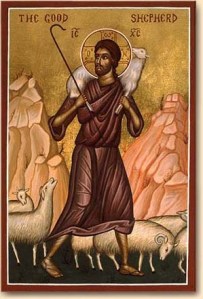
This coming Sunday marks the 4th Sunday of Easter (Year C). You can read a complete commentary on this gospel here. The pastoral imagery of John 10 is always a part of the readings for the 4th Sunday of Easter:

Year A – John 10:1-10 (sheepfold, gatekeeper, sheep recognizing the voice)
Year B – John 10:11-18 (“I am the good shepherd”)
Year C – John 10:27-30

The pastoral images are part of a larger section that includes John 5:1-10:42. Continue reading →

Miserando atque Eligendo

We have a new mayor here in Tampa. Mayor Castor has been in public service for the majority of her adult years, served as Chief of Police and more. There are lots of folks that already knew what kind of leader she will be. Fulfilling positions of leadership is always at the forefront of organizations, politics, and more. It is always a good question for the Church. I have lived during the pontificates of seven popes and in my lifetime we have certainly had a wide variety of types and styles of leaders. In our history, we have had 266 of popes. We have had some spectacularly amazing leaders, saints in the making, and we have had some spectacularly horrific leaders, who would have been quite at home in Game of Thrones (so I hear, I actually haven’t seen it…).  All took up the Keys of Peter, with the same job description given Peter: feed my sheep; tend my lambs. The Pope is the most visible of leaders in the Church, but not the only ones with that same job description. The simple mandate, “feed my sheep; tend my lambs” applies to priests, pastors, parents, principals, police, and anyone who would lead – anyone who would answer the call to minister in the Holy Name of Jesus. Continue reading →

Good and Necessary Things

This year is a year of transition for the parish. There are things we do so very well – such as our Lenten, Holy Week, and Easter celebrations. I have been around 12 years now, and these really were the best ever. We have had so many people make a point of sharing how moved they were by the celebrations. One person came up to me after Holy Thursday and simply said, “Wow, wow, wow…” What makes it so moving for people? Everyone is different, but what is constant is the behind the scene work of dedicated people and their ministries: the Décor and Environment Committee, Readers, Eucharistic Ministers, Altar Servers, Ushers, Choir, Faith Formation/RCIA, the Knights, the parish staff, volunteers who pass out palms, greet people and a million other things. So many people are moved by the Eucharistic Procession on Holy Thursday – behind the scene are staff who recruit TPD for traffic safety, who go to the Franklin Street businesses to let them know, who visit the hotels to make sure they know our Holy Week schedule – so many little things – all that make the big thing the amazing thing. Continue reading →

Baptizing

From time to time some Christians tell other Christians that their baptism was not valid because it was not done by full immersion, the only way Jesus authorized people to be baptized. The claims sometimes go on to claim that “sprinkling” was an invention of the Catholic Church in the 4th century when people began to flood into the church and it was just more efficient that the required full immersion. Continue reading →

Being born…

Jesus answered and said to [Nicodemus], “Amen, amen, I say to you, no one can see the kingdom of God without being born from above.” (John 2:3)

Certainly in the lexicon of American religious language, “being born again” has loomed large in many circles. Growing up in the South I was often asked “Have you been born again.” Today’s gospel is the text that provides the basis for the question. There within the Greek is the expression gennēthē anōthen. It can validly be translated as “born again” or “born from above.”  Some bibles opt for the “again” (TLW), some opt for “again” with a footnote to explain there is an alternative (RSV, NIV, TEV, NASB, ESV, KJV).  Other opt for “from above” without explanation (NAB, NJB) or with explanation as to the alternative (NSRV, CEV). Does it make a difference? Continue reading →

Following

This coming Sunday marks the 3rd Sunday of Easter (Year C). You can read a complete commentary on this gospel here.

Context and the Scholars. These verses are the final chapter in the Gospel according to John. Immediately preceding this chapter are these verses: “Now Jesus did many other signs in the presence of (his) disciples that are not written in this book.  But these are written that you may (come to) believe that Jesus is the Messiah, the Son of God, and that through this belief you may have life in his name.” (John 20:30-31) Continue reading →