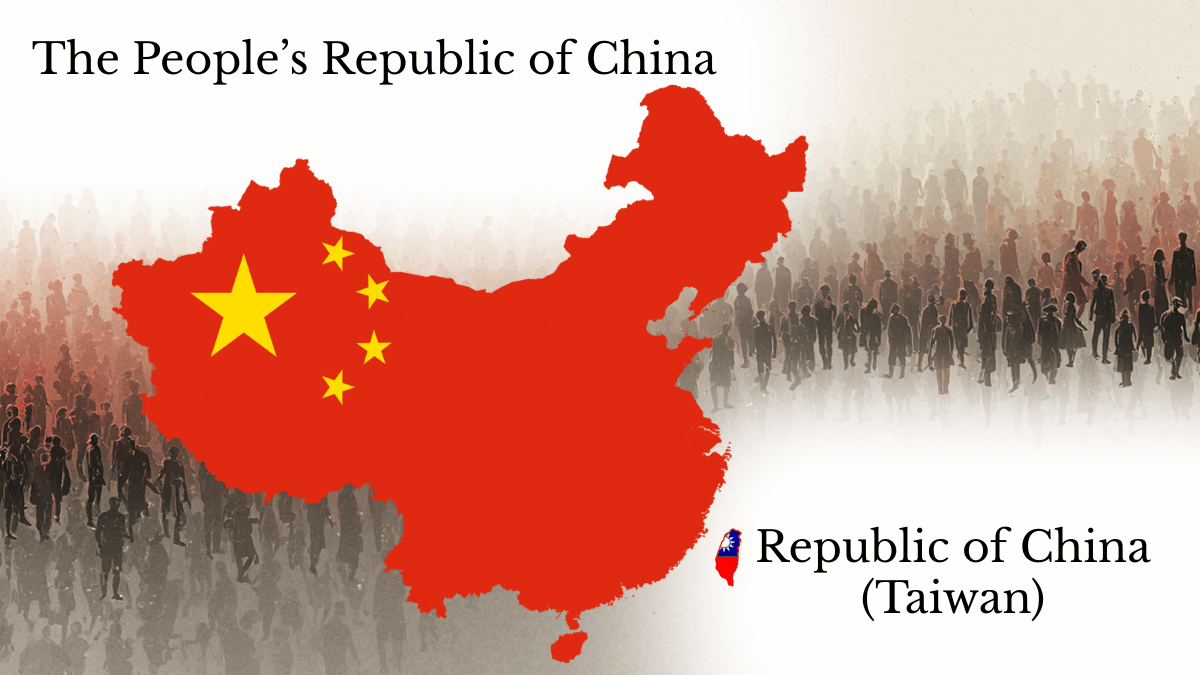
China, Taiwan, and the U.S. Strategy in the Indo-Pacific

Recently folks have been asking me about the U.S. Navy and what do I think about the current state of the fleet in the context of China, Taiwan, the Straits of Hormuz, and a host of related topics. And this is just a portion of fleet operational areas. There are current operations not only in the Indo-China theatre, but also in the Mediterranean, Caribbean, North Atlantic, and the western Pacific. It is a world-wide fleet as regards operations. It is also a fleet that is stretched thin and likely over extended. The USS Gerald R. Ford Carrier Strike Group just returned to Naval Station Norfolk, Virginia after a deployment lasting 11 months (326 days). This marked the longest U.S. aircraft carrier deployment since the Vietnam War. The crew was deployed to the U.S. 4th (SoCom – Caribbean), 5th (Bahrain – Persian and Arabia Gulf), and 6th Fleets (Mediterranean)  where they traveled over 57,713 nautical miles and participated in operations spanning Venezuela to the Middle East.

Because I graduated from the Naval Academy and served in the Pacific submarine force people assume I remain current about “things Navy.” My time of service was last century. Things have changed.  I suspect there is some assumption about my continued knowledge of the Navy and the Pacific given that this year I wrote 130 or so posts on the Asia-Pacific War (1937-1945) but that too was writing about things from the last century. But people also know I remain interested in such things – and so they ask me what I think about China, Taiwan and the U.S. Strategy in the Indo-Pacific. There is a wealth of open source information on all these things and so I have recently been researching facts, opinions, and think-tank publications to see the state of things. And now you know the genesis of this new series: China, Taiwan, and the U.S. Strategy in the Indo-Pacific.

When thinking about what I needed to know and what might be interesting and relevant, I came up with a preliminary list of topics that might become posts:

  • A brief history of China, its relationships to Formosa/Taiwan, and an attempt to place that history in the context of key events of the 16th through 20th centuries. Just like the U.S., all nations have long memories of events and perceptions of those events – and that shapes current and future expectations and actions.
  • An introduction to the South China Sea, a body of water I suspect people are not familiar with. The “northern border” extends as far north as Taiwan where it connects to the East China Sea and its neighbor, Japan.  The “eastern border” is Taiwan and the Philippine Islands. The “western border” is China and Vietnam. The “southern border” is Malaysia, Singapore, Indonesia, and Brunei. Simply put, these are disputed waters in terms of sovereignty, economic zones, international waters and transit zones, and The United Nations Convention on the Law of the Sea (UNCLOS).
  • What are the economic stakes of the above for the bordering nations and what does all of this have to do with maritime trade, supply chains, fishing rights, and security issues.
  • What is the state and readiness of the People’s Liberation Army (PLA) naval forces (PLAN)?
  • What is the state of China’s shipbuilding capability? Sneak peak: it is massive, modern, and a mechanized tour de force.
  • What is the state of U.S. shipbuilding? Sneak peak:…let’s just say it ain’t what it used to be. And that is being kind.
  • What is the state and readiness of the U.S Fleet?
  • What are China’s and the United States’ interest in the Indo-China theatre? What about the interests of Japan and Korea?.. And Russia is not without interests in the region as regards maritime routes.
  • …and what about Taiwan? Officially we do not recognize Taiwan as a nation apart from China, but we are their major supplier of advanced weaponry – and Taiwan is our major supplier of advanced microchips… China’s too.

All of that goes into the “stew” of the mission. There are political goals and objectives that may or may not translate into concrete, definable mission and mission parameters. From a naval perspective the first question is the meaning of sea power. The late 19th century guru of such things was Alfred Thayer Mahan and his 1890 treatise, The Influence of Sea Power Upon History, 1660–1783. He posited that national prosperity and global dominance are fundamentally tied to maritime supremacy, arguing that control of the seas determines the economic strength of a nation, leading to the rise and fall of empires. In World War II Japan based its entire war strategy, in large part, on Mahan’s concepts. Even 80 years ago, his theories were starting to show their age. He was a man of his age, and in his age, the dreadnought (battleship, heavy cruiser) was the apex predator of the oceans. During the War in the Asia-Pacific command of the seas was inextricably linked to aircraft carrier air superiority and intelligence operations. Coupled with logistic and manufacturing capability, the Allies were able to project land-sea-air dominance more than 5,000 miles from the west coast of the U.S. to the doorstep of Tokyo.

That was then. What about now? Long and short-ranged ballistic missiles and satellites fundamentally alter sea control. And that is just one part of the equation. Today, command of the seas is inextricably linked to controlling the sea, the air above it (all the way into space), and the ocean below. Surface-centric doctrines are incredibly vulnerable to modern anti-access/area-denial (A2/AD) capabilities used by adversaries – adversaries who are peers in terms of fleets, technology and perhaps an order of magnitude more capable in terms of ship and weapon building. 

Prior to WW2, Japan was well aware that it needed to achieve an early decisive battle, not to defeat the U.S. but to get them to the bargaining table. It always knew it would lose a war of attrition. They were correct. What would we say about the China-U.S. options at the start of any conflict?

So, what do I think about the current state of our Navy in the context of China, Taiwan, the Straits of Hormuz, and other topics? I am not the best one to ask, but I am curious. I’ll let you know what I discover.


By the way if you are interested in the Asia-Pacific War\ series, the easiest way to access the series is through these two links:

https://friarmusings.com/world-war-ii/

https://friarmusings.com/world-war-2/

Nicodemus

This coming Sunday is Holy Trinity Sunday. In John 3:1-21, the focus shifts from the interaction of the many with Jesus to Jesus’ interaction with a single individual, Nicodemus.  What follows seems to naturally divide into two parts: vv. 1-10, the dialogue between Jesus and Nicodemus; and vv. 11-21, a discourse/commentary by Jesus. This text is the first instance of a common Johannine pattern of a central event, in this case a dialogue, followed by a discourse that draws general theological themes out of the particular event.

The opening verses (vv.1-2) present both positive and negative images of Nicodemus. On the positive side, Nicodemus, a Jewish leader (v. 1), seeks out Jesus. To seek Jesus, as noted earlier (1:38), is one of the first acts of discipleship in John. On the negative side, however, Nicodemus  hides his seeking under the cloak of night (cf. the night visit of King Zedekiah and Jeremiah, Jer 37:16-21). This reference to the time of Nicodemus’s visit is neither an incidental detail nor an attempt at historical reporting. Rather, it provides a clue to the significance of this story for the Fourth Evangelist. “Night” (nyktos) is used metaphorically in the Fourth Gospel to represent separation from the presence of God (9:4; 11:10; 13:30). The symbolic significance of this night visit is confirmed by 3:19-21, which condemns those who prefer darkness to light.

The dialogue is initiated by Nicodemus’s pronouncement about Jesus’ identity in v.2, but Jesus’ response in v. 3 shifts the initiative away from Nicodemus. As the dialogue unfolds, Nicodemus’s speech is reduced to questions (vv.4, 9), while Jesus’ speeches become progressively longer, leading finally to the discourse that begins in v.11.

Nicodemus’s opening words to Jesus in v.2b contain three positive acknowledgments of Jesus’ Identity.

  • First, Nicodemus calls Jesus “Rabbi,” an address that acknowledges Jesus as a teacher (cf. 1:38, 49).
  • Second, Nicodemus acknowledges that Jesus is a “teacher who has come from God.” Although “from God” is a traditional way of speaking of religious figures as God’s emissaries (e.g., John the Baptist in 1:6), that Jesus’ origin is from God is also a crucial Christological affirmation in the Fourth Gospel (e.g., 1:1, 18; 3:31; 6:38; 7:28-29). Nicodemus’s words here are like Caiaphas’s words in 11:50: the full truth is unwittingly told.
  • Third, Nicodemus speaks to Jesus in the first-person plural (“we know”). Nicodemus does not speak to Jesus simply as an individual, but as a leader of his community, who at this point has a positive view of Jesus.

While Nicodemus’s words are positive, they are however based on Jesus’ signs (v.2b). From 2:23-25, the reader knows that Jesus will not entrust himself to those whose faith is based on signs. Nicodemus’s confident assertion of who Jesus is (“we know”) is thus immediately called into question by the warrants he offers for that knowledge: Jesus’ signs. Moreover, Nicodemus assumes that he can explain what Jesus does through his preconceived categories of the possible (“no one can do these signs” v.2). This certainty about what is and is not possible with God will be challenged as the dialogue with Jesus unfolds.

What unfolds is a leader of the Jews has come to Jesus – albeit timidly – to begin a dialogue. But this is Jesus who understood human nature and so he does not respond directly to Nicodemus’s acknowledgment of him. Instead, he challenges Nicodemus with a teaching – one that directly challenges Nicodemus’ world view. It is as if Jesus is saying “You want to see heaven? You think you ‘know’ what is necessary? Hardly, you must be born anōthen (more on that later).”  Each of Jesus’ teachings in John 3:1-11 begins with the introductory formula “Amen, amen” (here in v. 3, later in vv.5, 11). Jesus’ teaching here combines the traditional image of the kingdom of God with a new metaphor, “to be born anōthen”.


Image credit: Rublev, Trinity icon, 15the century, Trinity Lavra of St. Sergius, Moscow, Public Domain