As you may or may not know, in days long past, I served aboard U.S. nuclear submarines. There are lots of sea stories that I can tell. There are lots of questions I am asked about life aboard a submarine: how a submarine operates, if I did this one thing or another, but when I think about it, not too often do I get asked how do we know where we are going when we are underwater. There are lots of interesting questions that can be asked about submarine navigation while underwater. For example:
Why don’t we run into other submarines? Or undersea mountains? Or whales?
Do we ever get lost?
How can submarines navigate without windows to see where we are going or GPS? Are we operating on educated guesswork? Do submarines have Google Maps?
The oceans are really big – you only see the surface. There is lots of space under the waves and there are not that many submarines, so it is not crowded. Besides there are imaginary highways of a kind and submarines get assignments. For example, “operate on Interstate 95 between exits 450 and 520 on this date, during these times” – and you know that you will be the only U.S. submarine there. So… just stay in your lane.
Of course, how do we know where the highways are? We have charts, inertial navigation, we can come to periscope depth to get a satellite fix, and we have other means that are top secret. And if nothing else works, we can, like navigators of old, take a fix on known stars and do the mathematics to obtain a celestial fix.
That’s how we know where we are, but how do we know what’s around us? We can come near the surface and raise the periscope or the optronics mast and see what’s there. Or we can stay submerged and listen. That’s right, listen. It is called passive sonar and especially trained sailors that use their ears and computers to analyze what they are hearing.
Submarines were super interesting back in my day and even more interesting now.
In just a little but we will conduct the “Ceremony of Light” when the soon-graduating 8th grade students “pass the light” of leadership and example to the current 7th graders, who next year will assume the example of moral and spiritual leadership among the student body. As such the reads for this special Mass talk about being the light of the world, not hiding your light, shining before others, and more.
The 8th graders shared their thoughts on the ceremony. Everyone wrote about the passing on of leadership, responsibility, and setting examples for the student body. There were some other comments that were insightful:
Handing on the light was a marker in time: the end of adolescence and the first step into taking deeper responsibility for how life will turn out.
Handing on the light is a passing on of hope. Hope realized in our time at St. Francis and hope for the new future we are entering.
Receiving the light is an act of commitment for the 7th graders. When you receive the light you are making a commitment to leading a holy way of life that will shine before students, teachers, staff and family.
To the 8th graders – thank you for your shining leadership and example. Soon you’ll be moving on to high school where you will observe the students in the upper class and see the light of their leadership and example. Pay attention, take notes about good examples and leadership and that which is, shall we say… not so good.
7th grader, the light is being passed to you: hope, holiness, and the responsibility of holy leadership. Be ready to receive the light and shine brightly.
And you might be wondering, how does all this connect with things “submarine”? I think submarine navigation adds new dimensions to living a Christian life – be it freshmen in high school or as 8th graders.
Like submarines, always remember to stay “in your lane.” You are part of a structure of leadership: the principal, staff, teachers, family. Take the best of their shining example and put it to use in “your lane.” And remember that structure has lots of experience.
Like submarines, there is more than just “seeing.” Listen. As leaders you need to know what is required and what is needed. You can certainly ask (that akin to active sonar) but you can also listen (like passive sonar).
And when you are not sure what to do, come to periscope depth and look for directions. You can even celestial navigate because you have the bright shining stars of the experience of teachers, staff and parents.
Submarines can find their way in the darkness of the ocean’s depths by using all the tools available to them. Freshmen in high school and 8th graders can find their way in the coming new years. Use all the tools available to you: observe, listen, navigate, stay in your lane, and never hesitate to use the greatest resource of all: prayer and the Holy Eucharist. May you continue to well navigate adolescence, be the light and hope for others, and continue your commitment to holiness. Do these and your light will surely shine for all to see.
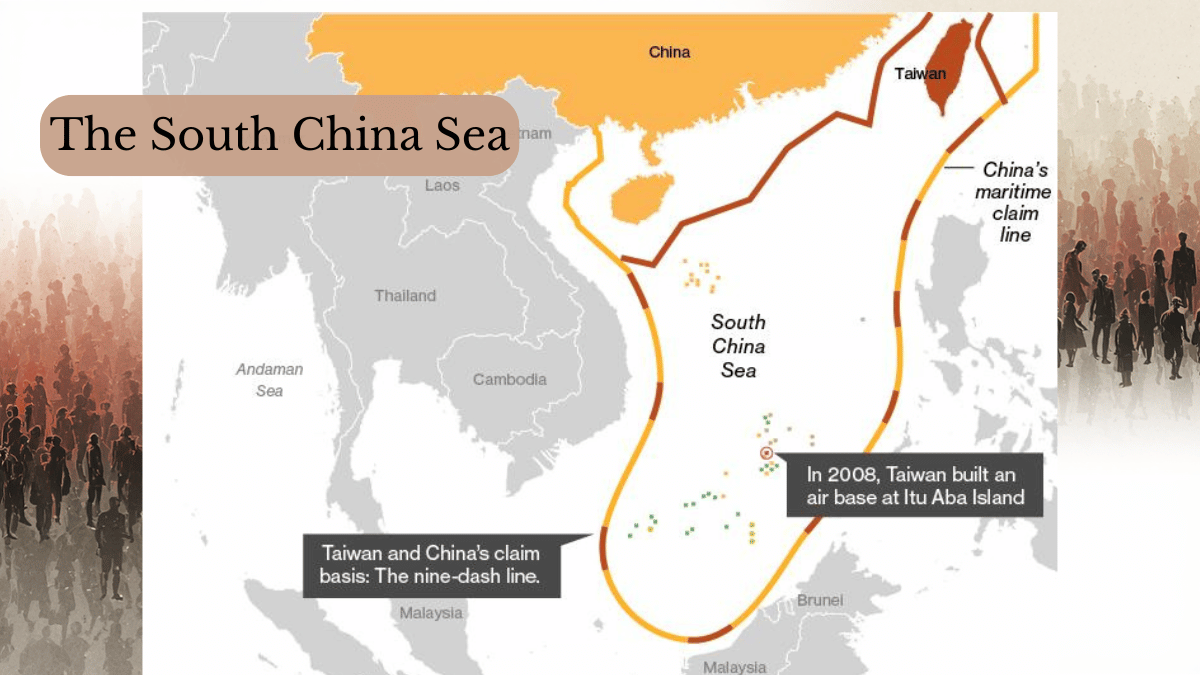
China’s interests in the South China Sea are profoundly commercial and economic, not merely military or nationalist. The sea functions as one of the central arteries of China’s economy and global position. Beijing views control, influence, or at least secure access to the region as vital to national survival and long-term development.
The South China Sea as a Strategic Economic Corridor. Roughly one-third of global maritime trade passes through the South China Sea (SCS), including enormous volumes of container shipping, energy imports, bulk commodities, and manufactured exports. For China specifically, the sea links China’s industrial east coast, Southeast Asian markets, the Indian Ocean, the Middle East, Europe, Africa and the United States. Chinese ports such as Port of Shanghai, Port of Shenzhen, and Port of Guangzhou depend heavily on uninterrupted maritime access through these waters. A disruption in the SCS could severely affect the exports of Chinese manufactured goods, imports of raw materials, and China’s supply chains.
Maritime trade in the South China Sea can be described by any number of measures. Its importance can be measured in a variety of ways: total trade value, shipping volume, energy flows, container traffic, and its role in global supply chains. The most widely cited estimate is that roughly $3–5 trillion in global trade passes through the SCS annually. That represents approximately 25% of global marine trade. Roughly one-third of global maritime crude oil trade passes through these waters. East Asia is the manufacturing center of the global economy and the SCS is central to containerized trade. Major shipping companies route vessels through the SCS because it is the shortest and most efficient path from manufacturing centers to delivery ports abroad.
China’s economy is particularly dependent on these routes because China is the world’s largest exporter, it imports massive energy supplies, and much of its coastal industrial economy faces the South China Sea. Chinese strategic planners worry about blockade risks, foreign naval control, and vulnerability at maritime chokepoints – especially the Malacca Straits, the southwest entrance to the South China Sea.
Energy Security: Oil and LNG Imports. One of China’s greatest vulnerabilities is energy dependence. China imports massive amounts of crude oil, liquefied natural gas (LNG), and other energy products from the Persian Gulf, Africa, and elsewhere in the Indian Ocean region. Much of this energy passes through the Strait of Malacca, then across the South China Sea, and onward to Chinese ports. Chinese strategists often refer to this vulnerability as the “Malacca Dilemma,” the fear that in a crisis, especially involving the United States, these sea lanes could be interdicted or blockaded. This concern drives several Chinese policies including naval modernization, artificial island construction, maritime patrol expansion, diversification of pipelines, and the Belt and Road Initiative.
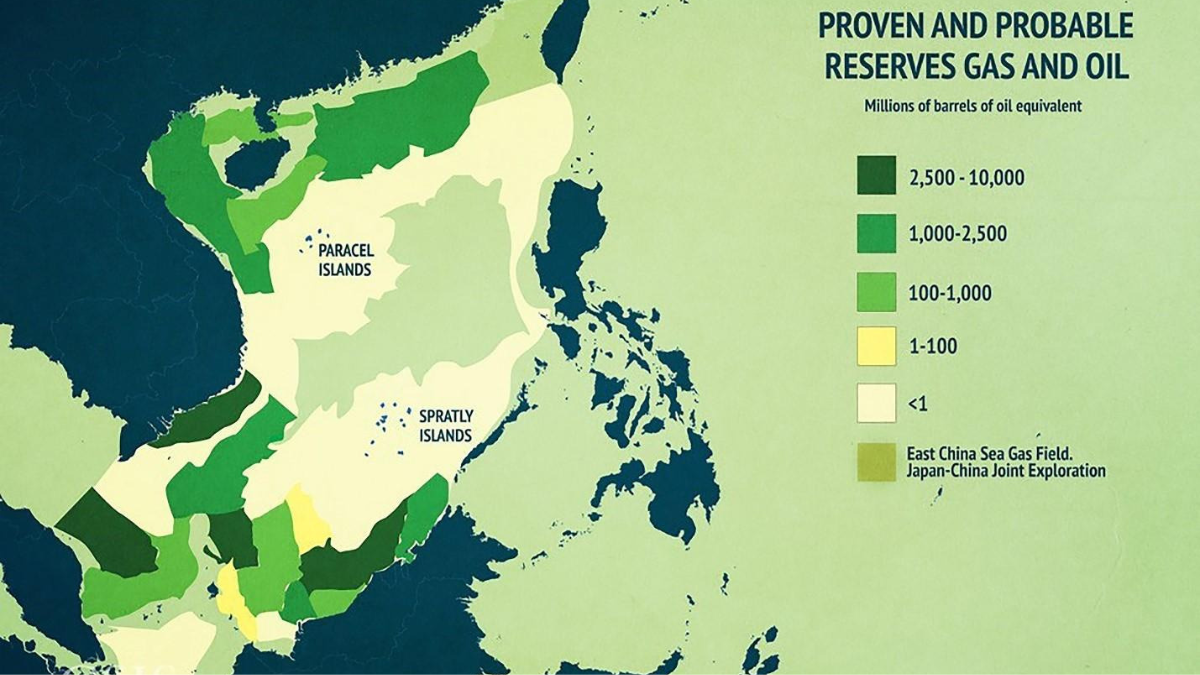
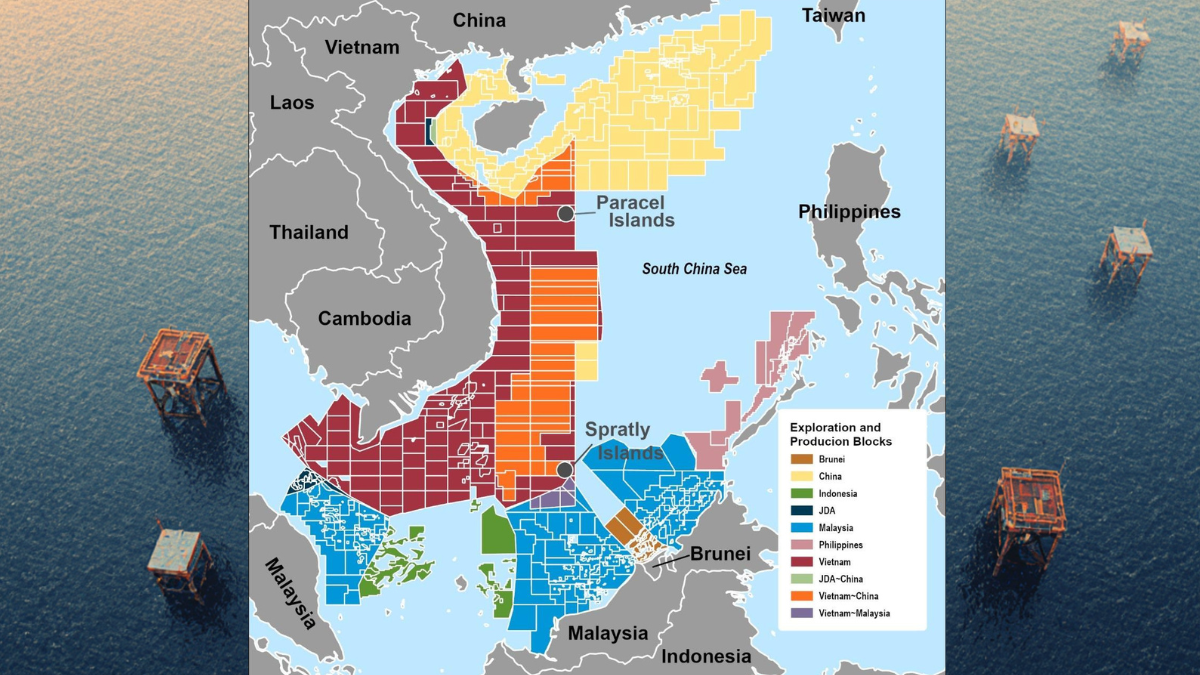
Oil and Gas Resources Within the South China Sea. The South China Sea itself is believed to contain significant oil reserves, very large natural gas reserves, and rich seabed resources. Estimates vary widely because much of the region remains underexplored, but China sees these potential reserves as strategically important. China’s state energy firms, including China National Offshore Oil Corporation (CNOOC), have pursued offshore drilling, seismic surveys, and joint development proposals. Disputes emerge because Vietnam, the Philippines, Malaysia, and Brunei also claim many of the same waters and offshore blocks.
Fisheries and Food Security
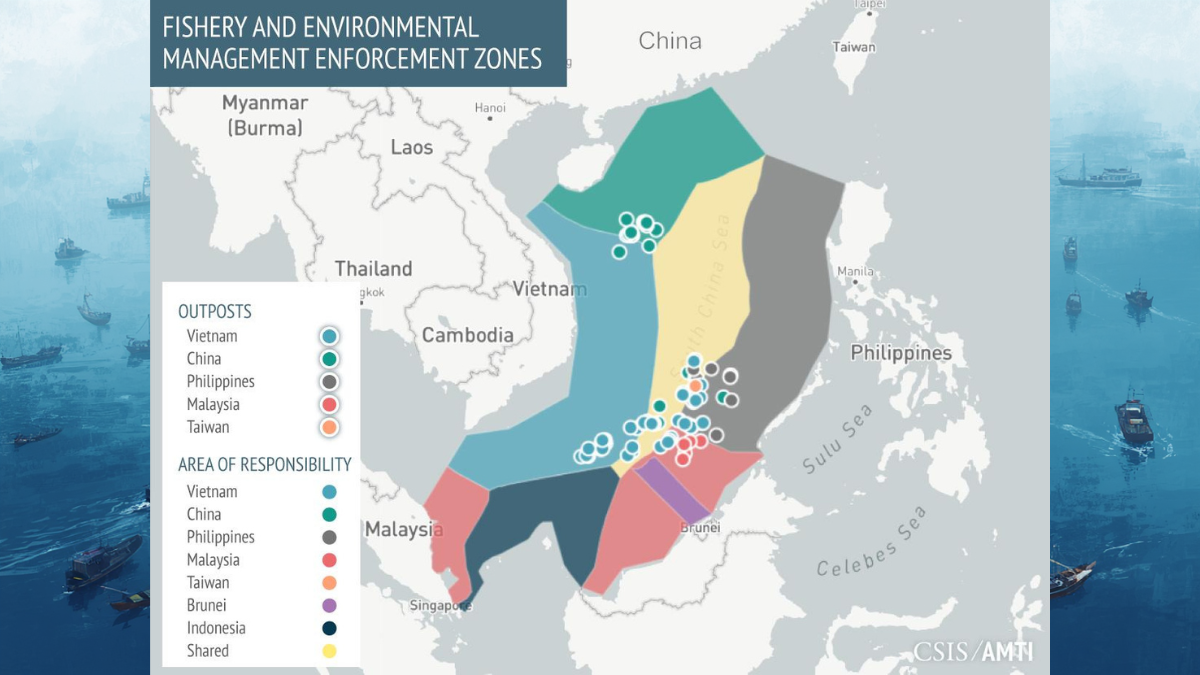
The South China Sea contains some of the world’s richest fishing grounds. Fish are commercially important to China because seafood demand is enormous, coastal populations have long depended on fishing, and food security remains a strategic concern. Chinese fishing fleets operate extensively in disputed waters. Fishing vessels also serve secondary purposes: reinforcing Chinese presence, supporting maritime claims, and sometimes operating alongside the Chinese maritime militia.
Precise estimates of annual fish extraction are difficult because the SCS is heavily overfished, illegal and unreported fishing is widespread, and countries often underreport or distort catch data. Some estimates suggest over half the world’s fishing vessels operate in the broader South China Sea region. But the best academic and fisheries reconstructions provide reasonably credible estimates. Most estimates center on 10 million metric tons per year of fish caught in the SCS. China is estimated to take 35-50% of the total catch which is not surprising since China possesses (by far) the world’s largest fishing fleet, including coastal fleets, distant-water fleets, and maritime militia-associated vessels.
China is the world’s largest seafood consumer and growing middle-class demand has intensified fishing pressure. It must also be remembered that fishing activity is not only economic, but reinforces maritime claims, presence around disputed reefs, and gray-zone operations. As such, the Chinese fishing fleet is highly subsidized because of its importance to China’s economy.
Fish are not a marginal issue in the SCS dispute. For China, fisheries involve food security, employment, maritime sovereignty claims, and regional influence. Some analysts argue that fisheries are one of the most immediate drivers of day-to-day confrontation in disputed waters – more so than oil. This is because studies indicate fish stocks in the SCS have declined by 70–95% since the 1950s, catch rates have fallen dramatically, and fleets increasingly catch smaller and younger fish lower on the food chain. China and bordering nations, all of which historically and culturally have fish as a major source of dietary protein, are chasing an increasingly diminishing commodity.
China has been aggressively intruding into waters and maritime zones that the Philippines claims under international law, particularly within the Philippine Exclusive Economic Zone (EEZ) in the SCS. Much of the friction occurs in waters west of the Philippine island of Palawan, especially around Second Thomas Shoal, Scarborough Shoal, Mischief Reef and Reed Bank. These areas fall within 200 nautical miles of the Philippines and are therefore claimed by Manila as part of its EEZ under the United Nations Convention on the Law of the Sea. Philippine fishermen have repeatedly reported being blocked from traditional fishing grounds, harassment by Chinese coast guard vessels (which are armed with 5-inch guns and automatic weapons), water cannon incidents, confiscation of catches, and dangerous maneuvering at sea. China coast guard and maritime militia vessels are constructed with reinforced bows capable of – not full on ramming – but shall we say quite aggressive nudging.
Maritime militia vessels disguised as fishing boats and PLA Coast Guard vessels are used to assert Chinese claims, maintain constant presence, pressure rival claimants, while avoiding overt naval warfare. The Philippines and its allies characterize many of these tactics as “gray-zone coercion,” aggressive pressure below the threshold of armed conflict.
Trade With Southeast Asia. The South China Sea is also the maritime bridge connecting China to the Association of Southeast Asian Nations (ASEAN) economies. ASEAN is one of China’s largest trading partners accounting for 20% of trade with China. Goods moving through the region include electronics, machinery, semiconductors, consumer goods, agricultural commodities, and industrial inputs. Any instability in these waters threatens Chinese exports, regional manufacturing networks, and supply-chain integration.
Undersea Infrastructure and Communications. Less visible but increasingly important are submarine communication cables, offshore infrastructure, and digital trade routes. The South China Sea contains major undersea fiber-optic cable systems connecting East Asia to the broader world economy. Control or monitoring of maritime zones can therefore have implications beyond shipping to include telecommunications, internet traffic, financial systems, and digital commerce.
The SCS marine floor has the highest concentration of marine fiber optic cables. These cables carry financial transactions, cloud computing traffic, military communications, commercial internet traffic, and industrial data. For China, they support export industries, global manufacturing networks, e-commerce, artificial intelligence infrastructure, and digital connectivity under the Belt and Road Initiative. The SCS infrastructure forms the hub that connects China and East Asia with Singapore, India, the Middle East, Europe, and Africa. It is part of China’s “Digital Silk Road” initiative.
The geography of the SCS makes it difficult to avoid. Nearly all East Asian digital traffic heading westward toward Europe or the Indian Ocean passes through cables in these waters. This creates both opportunity and vulnerability for China. Chinese strategists worry about cable sabotage, surveillance, bottlenecks, and wartime disruption. As a result, China has pursued redundant cable routes, alternate land corridors, and Arctic communications concepts, yet 95% of China’s extra-territorial communication still passes through these cables.
Strategic Economic Buffering. China’s island-building campaign has economic as well as military dimensions. Artificial islands allow China to support coast guard and maritime enforcement activity, monitor shipping, sustain fishing fleets, protect energy exploration, and reinforce administrative control over contested waters. Beijing argues these activities secure lawful commercial interests; critics view them as coercive attempts to dominate international waters.
The Broader Chinese Perspective. From Beijing’s viewpoint, the South China Sea is not a distant frontier. It is viewed as
a near-seas defensive zone,
an economic and food security lifeline,
an energy transit corridor,
and a gateway to China’s continued rise as a global power.
Many Chinese strategists believe that if hostile powers controlled these waters, China’s economy, trade, energy supply, and geopolitical autonomy could all be placed at risk. That perception helps explain why the South China Sea occupies such a central place in Chinese national strategy even beyond the military dimension.
This coming Sunday is Holy Trinity Sunday. The significance of the ascension of the Son of Man is elaborated through an OT example (Num 21:8-9). The key to interpreting this analogy between Moses’ lifting up of the serpent in the wilderness and the ascension of the Son of Man is the verb (hypsoō), meaning both “lift up” and “exalt.” (The Hebrew verb nāsā’ has a similar double meaning; see the pun based on this verb in Gen 40:9-23.) Once again the Fourth Evangelist asks the reader to hold two meanings together simultaneously. As the serpent was lifted up in the wilderness, so the Son of Man must be lifted up on the cross. The double meaning of hypsoō implies, however, that the physical act of lifting up is also a moment of exaltation. That is, it is in the crucifixion that Jesus is exalted. John 3:14 is one of three statements about the “lifting up” of the Son of Man in John (see also 8:28; 12:32-34). These three sayings are the Johannine analogue to the three passion predictions in the synoptic Gospels (Mark 8:31; 9:31; 10:33.34; and parallels).
The overlap of crucifixion and exaltation conveyed by v. 14 is crucial to Johannine understanding of salvation, because the Fourth Evangelist understands Jesus’ crucifixion, resurrection, and ascension as one continuous event. Verse 14 also contains a key to the theological grounding of the Evangelist’s attraction to irony; the cross as humiliation is actually exaltation. This will become especially clear in the crucifixion narrative of John 18-19. The Fourth Gospel is often criticized for having an inadequate theology of the cross, but such criticism misconstrues the Johannine treatment of the crucifixion. As v. 14 makes clear, there is no exaltation apart from the crucifixion for John.
The overlap of crucifixion/exaltation also provides the context for interpreting the role of the ascent/descent language in v. 13 (and 1:51) and the Fourth Evangelist’s use of the title “Son of Man.” The Fourth Evangelist appropriates the traditional apocalyptic figure of the Son of Man (cf. Dan. 7:13) and invests it with his christological perspective. Ascent/descent language thus speaks of Jesus’ relationship to God and to the world. The Son of Man’s ascent to heaven is salvific, because he is the one who has descended from heaven, the very one whom the Prologue celebrates.
John 3:15 makes explicit the salvific dimension of the crucifixion. Jesus’ offer of his life through being lifted up on the cross makes “eternal life” (zōēn aiōnion) possible for those who believe. “Eternal life” is one of the dominant metaphors in the Fourth Gospel to describe the change in human existence wrought by faith in Jesus (e.g., 3:36; 4:14; 5:24; 6:27; 17:4). To have eternal life is to live life no longer defined by blood or by the will of the flesh or by human will, but by God (cf. 1:13). “Eternal” does not mean mere endless duration of human existence, but is a way of describing life as lived in the unending presence of God. To have eternal life is to be given life as a child of God. To speak of the newness available to the believer as “eternal life” shifts eschatological expectations to the present. Eternal life is not something held in abeyance until the believer’s future, but begins in the believer’s present. The focus on the crucifixion in 3:13-15 provides the key to interpreting Jesus’ earlier metaphors of new birth and the kingdom of God. The offer of new life, “to be born anal-hen,” has only one source—Jesus’ offer of his own life. The cross thus makes sense of the double meaning of anōthen: To be born from above is to be born again through the lifting up of Jesus on the cross.
Image credit: Rublev, Trinity icon, 15the century, Trinity Lavra of St. Sergius, Moscow, Public Domain
This coming Sunday is Holy Trinity Sunday. At v. 11, the text shifts from a dialogue to a monologue. The dialogue between Jesus and Nicodemus alternated between Jesus’ offer of new birth (vv. 3, 5-8) and Nicodemus’s resistance (vv. 4, 9). The shift to the monologue allows Jesus’ voice to silence the voice of resistance. Jesus’ discourse runs through v. 21 and divides into two parts. Verses 11-15 interpret Jesus’ offer of new birth through his death, resurrection, and ascension, and vv. 16-21 focus on the theme of judgment.
We know. Jesus begins the discourse by speaking in the first-person plural. English translations of v. 11 mask the Greek word order. The translation “we speak of what we know ” flows in English, but the sentence literally reads, “what we know we say” (oidamen laloumen). This word order is important because it means that the beginning of Jesus’ discourse and Nicodemus’s opening words to Jesus (v. 3) are the same: “we know…. “ It is possible to read Jesus’ words as a continuation of the irony of v. 10; Jesus parodies Nicodemus’s assertion of his knowledge.
The first-person plural of v. 11 has another function. Jesus’ words in v. 11 are all words of witness: we know; we see; we speak; we testify. In its immediate context, Jesus’ “we” speaks for John the Baptist and the first disciples who have already borne witness to what they have seen. Jesus speaks for all those who have testified to this point in the Gospel narrative. In a broader context, however, Jesus’ “we” speaks for the witness of the early church. This “we” stands in contrast to the “we” for whom Nicodemus speaks: the synagogue. The church’s witness is contrasted with the non-responsiveness of the synagogue. Nicodemus and his community are representative of all who do not receive the church’s witness
Earthy and heavenly things. Jesus uses the expressions “earthly things” and “heavenly things” to summarize the witness that has already been given and the witness still to come (v. 12). “Earthly things” (ta epigeia) can be understood as referring to things about human beings, specifically the discussion of new birth in 3:3-8, whereas “heavenly things” (ta epourania) refers to things about God and Jesus to which Jesus has privileged access (1:18; 3:13) and that have not yet been revealed to Nicodemus and his community.
Jesus is the source of “heavenly things”: “No one has gone up to heaven except the one who has come down from heaven, the Son of Man.” This is the second time Jesus has spoken of himself as the “Son of Man” (see also 1:51) and both uses of the term are associated with language of heavenly ascent and descent. The Son of Man’s privileged access to God is expressed in spatial terms: The Son of Man moves between heaven and earth and brings the two together. The emphasis in this verse is on Jesus’ descent. Jesus knows heavenly things because he has descended; this contrasts Jesus with other figures who were believed to have ascended and through their ascents received heavenly knowledge. For example, Moses went up the mountain and then descended with God’s Word. The writings of Philo make clear that some Jews believed that Moses’ ascent gave him special status before God. Verse 13 underscores that Jesus first descended, then ascended.
Image credit: Rublev, Trinity icon, 15the century, Trinity Lavra of St. Sergius, Moscow, Public Domain