The Things We Know….or should…

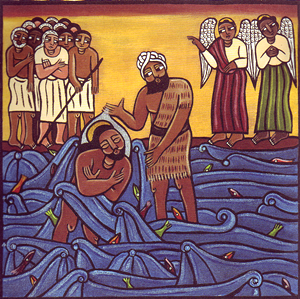
Baptism-JesusYou know your birthday.  You know your significant other’s birthday – or if you don’t you should learn it quickly!  You know your anniversary.  If you’re a priest like myself, you know your date of ordination.  But….do you know the date of your baptism?

It is a question Pope Benedict asked in his first general audience of 2014.  Heck of a question, heh? Here are some of Pope Francis’ insights: Continue reading

Hark the Herald Angels Sing!

354 - 20 December: Hark! The Herald Angel SingsStores, offices, and all kinds of places are filled with the sound of familiar and heartening Christmas carols.  Some local radio stations are all Christmas music all the time with classic and modern renditions of the secular and religious carols and songs – sometimes as recorded by singing chipmunks.  It becomes part of the ambiance of our Advent season; part of what readies us for the celebration of Christmas. Continue reading

The Stories That Will Be Told

Detail: left side

You know many of us here at this morning Mass can answer the question: “Where were you when you heard the news that President Kennedy had been shot.”  We are in the minority. Most folks here in the United States were not yet born on that fateful day 50 years ago.  But we tell the stories of our young war hero president, of his family, of Camelot, and all that made up the Kennedy legend.  And we tell the generations that follow.

Today we tell the story of the martyr St. Cecilia. We do not know much about here other than she lived in the 3rd century and died for the faith. We tell the generations that come after us what we know. We tell them she is the patron saint of musicians. Continue reading

A Warning About Cheap Grace

Bonhoeffer-1932The story of the encounter between Jesus and Zacchaeus is always seen as a moment of grace. Is it possible to be too gracious? Should Jesus have told Zacchaeus to straighten up his act before he invited himself to his house? Couldn’t Jesus’ actions have been interpreted as condoning the tax collector’s sinfulness? Isn’t that the accusation against the Christian Churches of Germany after WWII? Dietrich Bonhoeffer (The Cost of Discipleship) at the advent of WWII wrote famously on “cheap grace.” Continue reading

Faith in Action

UmbrellaSummer sun and an extended drought had left the surrounding fields parched, dusty, and brown. As they tended their wilting crops, the local folks daily searched the sky for any sign of relief. Days turned into arid weeks and still no rain came.

The ministers of the local churches announced that there would be a special service to pray for rain on the following Saturday. They requested that everyone bring an object of faith for inspiration. At the appointed hour, everyone turned out, filling the town square with anxious faces and hopeful hearts. The ministers were touched to see the variety of objects clutched in prayerful hands; prayer books, Bibles, crosses, rosaries, etc.

Just as the hour of prayer was concluding, and as if by some divine cue, a soft rain began to fall. Cheers swept the crowd as they held their treasured objects high in gratitude and praise. From the middle of the crowd, one faith symbol seemed to overshadow all the others; a child had brought an umbrella.  (from Southern author and poet Laverne W. Hall)

Darkness, Candles, and Things Unsaid

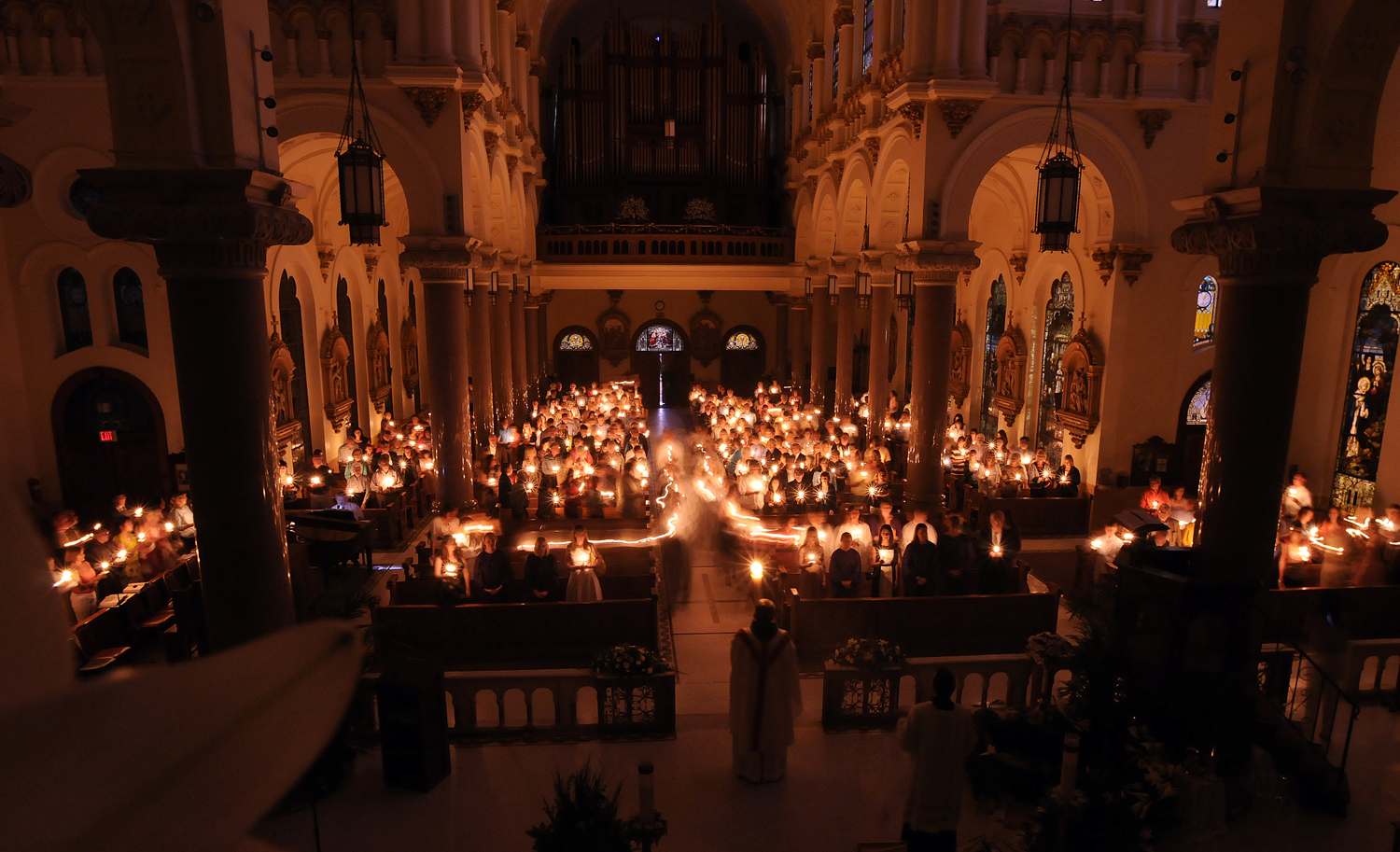
Easter Vigil at Sacred HeartI am always amazed at the sayings that are attributed to St. Francis of Assisi.  Today, I was asked if the following saying was from Francis: “All the darkness in the world cannot extinguish the light of a single candle.”  Nice, but at first blush it does not possess the language or sense of language for which Francis is known. The language is not even particularly medieval, but then maybe this is just a modernized version of the saint’s words.

If you search the internet, you will find this “quote” has pretty wide distribution and uniform attributed to St. Francis.  Most have no citation; but some do.  The only source given was “The Little Flowers of St. Francis.”  You can find the Little Flowers in volume 3 (pp. 566-658) of Francis of Assisi: Early Documents  –  Armstrong, Regis, J.A. Wayne Hellmann, and William Short, eds. (New York: New City Press, 1999–2004).

What you can’t find is the quote, or an account for which the quote could be a reduction. I could be wrong.  If someone has the specific citation (text and chapter) that would be an interesting thing to know.   I know I should just let these things go, but…. let the saint speak for himself … I’m just saying.

On Mission and Crossing Over Boundaries

saint-francis-of-assisi-cimabueAmong founders of religious orders, Francis of Assisi is the first who consciously included mission ad gentes (to the people of the world) as part of the order’s Rule of Life. Francis was clear about the ad gentes nature of mission in the Franciscan tradition: “But I tell you in truth that the Lord chose and sent the brothers for the benefit and salvation of the souls of all people in the whole world and they should be received not only in the land of the believers, but also in that of non-believers.” (Assisi Compilation, 108)

Clearly Francis held to the idea of the universality of mission, yet some people might find Francis’ distinction of the world as the twined categories of believer and non-believer to be somehow less than welcoming or out of sorts with our sensibility of what it means to be Franciscan. Yet note how Chapter 16 of the “Early Rule” (1221 CE) is named by Francis: “Chapter XVI: Those going among the Saracens and other Nonbelievers.” I mention this as a way of pointing you back to the first reflection where it was noted that the way you think about Jesus, church, when and how God’s reign is fully inaugurated, the nature of salvation, how the Church values human beings, and the role and value of culture – all these things affect the way in which one understands and carries out mission. As questions, these six topics remain present, even urgent, in every age because how they are answered is how Christianity finds its concrete identity as it constitutes itself in fidelity to Jesus’ mission. Continue reading

Marks of holiness

Saint Francis of Assisi and scenes of his life...


I have to admit that in counseling conversations, pastoral settings, preaching, and a variety of teaching settings (RCIA, Bible study, etc.) I often return to the topic of the formation of moral conscience. I have even written about it here and here in this blog.


About two years, ago while preaching on the formation of moral conscience, I mentioned health care reform as a topic about which the bishops were teaching at the moment. The topic of health care per se was in the news, but the primary point of my reference was to indicate how often when our bishops speak and teach, we praise them or criticize them based on our already-held opinion of the topic. And I use the word “opinion” pointedly as it is my experience that most people do not form their conscience as described in the Catechism (§1776-1803). Such formation was the real point of the homily – with the challenge being to operate as Christians, not in the realm of opinion, but in the sphere of the formed moral conscience. We are called to do such, but do we do it? Often all I must do is to ask if they have prayed about it or asked the Holy Spirit for wisdom on the topic/decision. Lingering silence is often the answer. Continue reading

Immigration: The Formation of Conscience

he_qi_road_to_emmausThere are strong emotions at the mention of immigration reform.  There is no shortage of opinions in the news, blogs, rallies, calls to legislators, and the like.  As people of faith we are called not to simply have an opinion on the matter, but rather to form our consciences on the matter (Catechism §1776-1803).  The formation of conscience means to take the matter into prayer, to read and reflect on the way Scripture addresses the issue directly or indirectly, to seek the counsel of the Church, and a host of other actions.  There is no shortage of opinions, but I do wonder how many take the time and effort to form our consciences?  The Church is quite strong on this formation, even teaching that, “A human being must always obey the certain judgment of his [formed] conscience.” (§1790)  That is an amazing responsibility that the Church asks of us. Continue reading