This coming Sunday is the Solemnity of the Body and Blood of Christ. In Jn 6:60, some of the disciples of Jesus react negatively saying ‘This saying is hard; who can accept it.’ Are they referring just to the immediately preceding passages (vv. 51-59) or are they referring to all of Jesus’ claim in v.42, ‘I have come down from heaven.’? Jesus’ own words give us the context, “Do you take offense at this? Then what if you were to see the Son of man ascending where he was before?” That a man from Nazareth should claim that he is a life-giving revealer sent down from God, from heaven, is “hard” to take and only faith can overcome the “offense” or stumbling-block of the Incarnation. But if his words are too hard to take, then a worse shock awaits them when they see him raised on the cross and then it will be a real test of their faith to believe in his death and resurrection.
In v.63 Jesus’ words provide another stumbling block – “It is the spirit that gives life, the flesh is of no avail…” Many non-Catholic interpreters believe that this line removes the basis for belief in the Real Presence in the Eucharist. But St John has already provided us the context for interpreting Jesus’ remarks. In Jn 3:6-13, Nicodemus can not understand how a man can be born from above. By way of explanation, Jesus calls upon the ascension into heaven of the Son of Man; for it is the ascended Son of Man who can give the Spirit. So also in Jn 6:63, the Spirit is mentioned immediately after the reference to the ascension of the Son of Man. The contrast between Spirit and flesh in v.63 is the same contrast found in Jn 3:6. Jesus is not speaking of Eucharistic flesh but of flesh as he spoke of it in Jn 3:6. There, the natural principle in man, which can not give eternal life, is useless. The Spirit is the divine principal from above which alone can give life. In v.63 Jesus once more affirms that man cannot gain life on his own. Jesus’ role is to communicate to man the principles of eternal life so that those who believe in Jesus receive the life-giving Spirit.
In a sense the non-Catholic interpreters are correct in what they affirm, but they are wrong in what they deny. The Eucharist is of no avail to the non-believer who has not been blessed by the Spirit to believe the mystery of the Eucharist. It is only through faith in the resurrected Jesus that the Holy Eucharist has meaning.
A Final Thought – There are many commentaries that insist on a metaphorical interpretation of “eat” and “drink” and are thus unable/unwilling to move beyond “eat” and “drink” as metaphors for belief. There are some commentators who insist there is no metaphor, that the entirety of Jesus’ discourse is sacramental/Eucharistic. As Fr. Raymond Brown and Fr. Francis Moloney point out, the truly Catholic position is “both-and.” What begins in John 6:22-50 as metaphor for belief, is ultimately answered in John 6:51-58 as Eucharist.
The role of naval vessels, aircraft, missiles, drones, and ground forces are likely more familiar to the average citizen than the role, use, and operation of submarines. While I enjoyed the Hunt for Red October, I wondered if the screen writers wanted the submarines to perform an Immelmann Loop or some other amazing maneuver from the world of aerobatics. If jet aircraft are the Lamborghinis, submarines are the Dodge Ramblers of the order of battle. Your options are left, right, up, down, forward, and occasionally reverse. And doing all this blindfolded. Sound, sound detection, and silence are critical success factors.
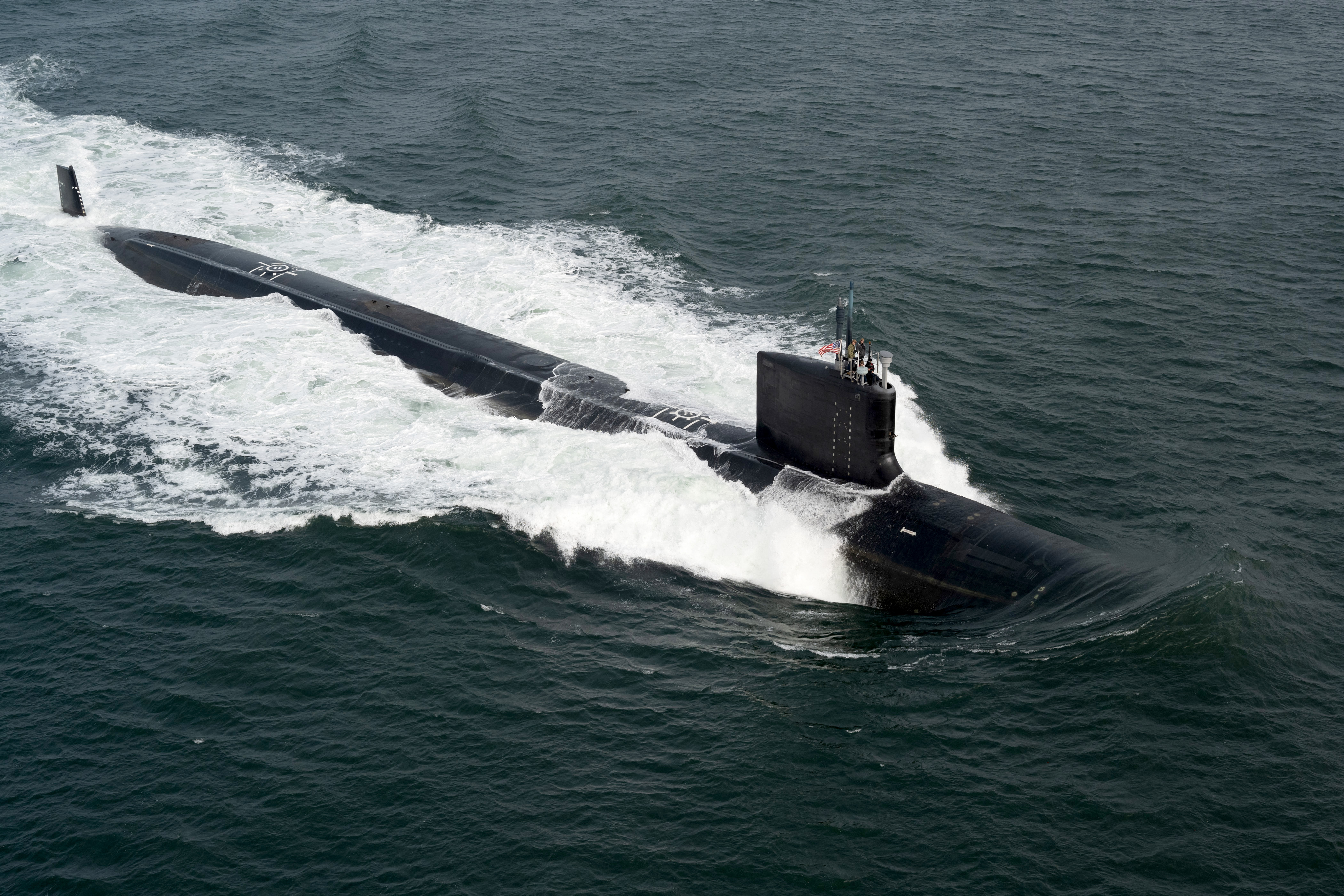
The U.S. submarine fleet is all nuclear powered which gives each submarine the ability to operate for extended periods of time during which fuel/fuel oil is not the limiting factor for operations. There are 14 Ohio Class ballistic missile boats (submarines are referred to as boats, not ships); 4 Ohio class boats were converted to Tomahawk cruise missiles. Each boat is capable of carrying up to 154 Tomahawk cruise missiles. The fast-attack (SSN) fleet consists of 28 older Los Angeles class boats, 25 newer Virginia class boats, and 3 from the Seawolf class. The Virginia and Seawolf boats are similar in capabilities. If you are interested in submarines and their operations in the 21st century, take a moment to watch this video on the Virginia Class submarine.
Virginia Class Submarines. The PRC’s China Maritime Studies Institute released their assessment of the Virginia Class submarine and its capabilities and threats. The title of the assessment was: The Elusive “Deep-Sea Beast”: Analysis of the Performance of the Main Equipment of the U.S. Navy Virginia-Class Nuclear Attack Submarine. The Virgnia Class has their attention because these boats are designed for classic submarine offensive operations, but also anti-submarine missions, special forces operations, intelligence gathering, surveillance and reconnaissance missions, and more.
The boat has advanced active and passive sonar systems, internal and external design features which are next generation noise suppression including the propulsion system which no longer utilizes the traditional massive propeller. All of these advanced systems are supported by advanced real-time processing solutions integrated into their specific mission. There are more than 400 sensors targeting internal ship noise and vibration that compromise the overall noise profile emanating from the boat – the profile that could be detected by other submerged units. The suite of active and passive sonar is greatly enhanced with acoustic signal processing to identify underwater sounds from biologics to marine life to other underwater vehicles – manned or unmanned.
What does all of that mean? The Virginia class boats are capable of operations in the South China Sea if needed.
Sea Mines
Because of the current situation in the Straits of Hormuz, the general public is aware that sea mines remain a potent threat in denial of access operations. China might be expected to mine lanes of expected naval operation, waters around contested shoals and islands, and similar operations. China has no shortage of vessels from which to seed the waters. The U.S.’s most stealth means of laying mines is the submarine force. The US retains the capability to lay mines from surface vessels and aircraft. During WW II, the extensive mining of Japanese straits, ports, and waterways was accomplished by low flying B-29 bombers. It should be noted surface and air mine laying operations assume domination of the attending air space.
Denial of access operations would be a way for China to keep foreign vessels out. But at the same time, it is a way for other nations to keep China “in” and deny the flow of merchant shipping which is the life blood of the Chinese economy. Such an action is probably a last step before the outbreak of hostilities. When the U.S. and allies embargoed oil shipments to Japan, it was the first domino to fall leading to Pearl Harbor.
A modern sea mine is a self-contained explosive device designed to destroy ships, submarines and other types of vessels. Mines deny enemy ships and submarines access to specific ocean areas or channelize the enemy into operating in certain particular areas. As such, mines provide low-cost battlespace shaping and force protection capabilities for the U.S. Navy. And you do not have to bump into one in order to detonate the mine. Mines can operate on proximity triggers (magnetic, acoustic, pressure and vibrational) that are supported by microprocessors, e.g. to listen for the distinct and specific sound of a vessel’s propulsion, and machinery through the water.
U.S. submarines are capable of laying specialized autonomous naval mines. The Mark 67 SLMM is a covert, submarine-launched mobile mine designed for shallow waters, while the Mark 60 CAPTOR encapsulates a torpedo. The Mark 60 waits on the ocean floor and uses its processing circuits to detect enemy submarines. Rather than exploding, the mine launches the torpedo. There are other mines in the inventory, but they operate similarly.
Unmanned Underwater Vehicles (UUVs)
But the truly next-level capability is with unmanned underwater vehicles (UUVs). The extent of which these are currently deployed and their planned future – e.g., the DARPA Manta Ray Project – are the subject of next level undersea warfare. The UUVs will extend the base submarine’s sonar and weapons suite to areas either inaccessible (depth, danger, or incident avoidance, etc.) or prudently avoided. From the base submarine, there is a complete integration of sensor and communication systems, target motion analysis, tactical situational awareness, command and control decision tools, and launch control of all submarine payloads, including torpedoes, missiles, unmanned vehicles, and countermeasures.
Today is the Feast of St. Boniface, the Benedictine monk noted for his missionary efforts in the Netherlands (Frisia) and Germania in the 8th century. Born in or near Exeter, England, around 675 AD, and named Winfrid, he was of a respected and prosperous family. Against his father’s wishes he devoted himself at an early age to monastic life. He received further theological training in the Benedictine monastery near Winchester. As a monk, he taught in the abbey school until the age of 30 when he was ordained. It was expected that he would become the next abbot, but upon the death of his abbot, Boniface declined and instead volunteered for a mission to the people of Frisia. The first year was a bust, complicated by ongoing warfare. Continue reading →
This coming Sunday is the Solemnity of the Body and Blood of Christ. Where the principal focus of the previous section is the bread of life as the divine revelation given to men by and in Jesus, Jn 6:51 moves the focus to a clearly Eucharistic theme – ‘I am the living bread come down from heaven; whoever eats this bread will live forever; and the bread that I will give is my flesh for the life of the world.‘ While some argue the words are metaphor, the Jews clearly understand. Jesus is referring to eating of his flesh.
He recounts this action verb several other times between vv. 51-58, while adding the drinking of his blood to the command. This is no metaphor for accepting his revelation, already adequately expressed. “To eat someone’s flesh” appears in the Bible as a metaphor for hostile action (Ps 27:2, Zech 11:9). In fact, in the Aramaic tradition, the “eater of flesh” is the title of the devil. The drinking of blood was looked upon as a horrendous thing forbidden by God’s Law (Gen 9:4, Lev 3:17, Dt 12:23, and Acts 15:20). Its symbolic meaning was that of brutal slaughter (Jer 45:10). In Ezekiel’s vision of apocalyptic carnage (Ez 39:17), he invites the scavenging birds to come to the feast: ‘You shall have flesh to eat and blood to drink.’ Thus if Jesus’ words in v.53 (Jesus said to them, “Amen, amen, I say to you, unless you eat the flesh of the Son of Man and drink his blood, you do not have life within you.) are to have positive, favorable meaning, they refer to the Eucharist.
In v.51, we have a parallel with v.35, which is the beginning of the revelation form of the Bread of Life Discourse, except that in v.51 Jesus speaks of the “living bread”, a term more suitable for the Eucharist. In this same verse we see the connection of the living bread-the flesh-come down from heaven. Recalling Jn 1:14 where the entrance of the Word among us was spoken of in terms of becoming flesh; and it is this same flesh that is to be given to man as living bread. In the same passage John invokes the Incarnation and then closes with the death of Jesus, a Eucharistic theme. Where in v.32 it is the Father who gives the heavenly bread (revelation), in v.51 where the bread becomes identified with the flesh of Jesus, he must give it himself. Jesus must lay down his life of his own accord and that voluntary death makes Eucharistic participation in his flesh possible. At the beginning of the Gospel we hear that Jesus is the Lamb of God who takes away the world’s sins (Jn 1:29); now in context of a discourse set at Passover time we hear that Jesus becomes the Paschal lamb and gives his flesh for the life of the world.
In v.52 we see a misunderstanding that parallels vv. 41-42. Strangely, Jesus does not take any pains to explain away the Jewish repugnance at the cannibalistic thought of eating his flesh; rather in v.53 he emphasizes the reality of “feeding” on his flesh and adds the even more repugnant note of drinking his blood. Versus 55-56 promises the gift of life to one who feeds on this Eucharist, but the Eucharistic promise follows the main body of the Discourse (vv 35-50) which insists on the necessity of belief in Jesus. The juxtaposition of the two forms of the discourse teaches that the gift of life comes through belief in Jesus. The Eucharistic life-giving is not through the “feeding”. Jn 6:57 says ‘..the one who feeds on me will have life because of me [Jesus]’.
The two themes of the Discourse, faith and Eucharist, cannot be separated for neither faith nor the Eucharist are directly the focus of attention, but rather both are unified in the person of Jesus who offers a living relationship through faith and Eucharist. The sacramental experience does not replace faith in Jesus, but expresses and confirms it. For John Eucharistic faith is to believe that the same, risen, Incarnate Jesus continues to give himself to believers in a personal communion and to exercise his life-giving mission. Whoever participates in the exercise of faith and Eucharist ‘remains in me and I in him’.
While the synoptic gospel writers record the institution of the Eucharist, the theological gospel writer is the one who explains what the Eucharist does for the Christian – the personal communion with Jesus and thus with the Father.
If the People’s Republic of China did not directly invade Taiwan, there are flash points that could still bring China and the United States to the brink of armed conflict. Such events would probably emerge from a combination of:
maritime confrontations,
escalation from gray-zone coercion,
accidents or miscalculation,
alliance obligations,
and disputes over freedom of navigation and regional dominance.
Most analysts believe a future crisis is more likely to begin through escalation of a limited confrontation than through a deliberate declaration of war.
South China Sea Confrontation: Philippines
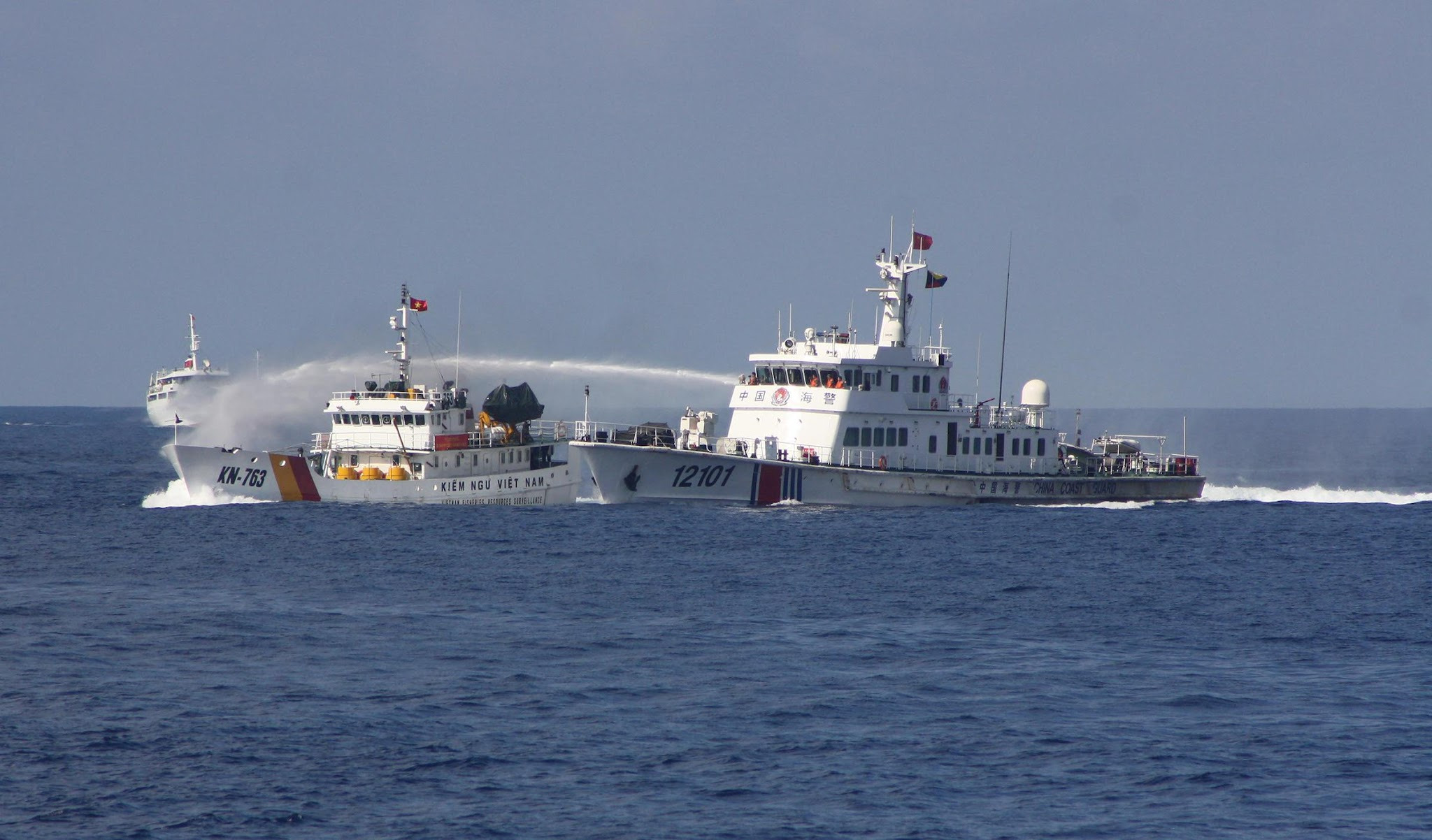
These are the most likely near-term flash points. As described in previous posts China is hyper-aggressive about asserting its claims about sovereignty over a large portion of the South China Sea. The aggressiveness is evident in naval patrols, Coast Guard patrol, maritime enforcement by the People’s Armed Forces Maritime Militia (PAFMM), as well as armed fishing boats, trawlers, and fishing fleet “mother ships.”
While much attention is paid to the Taiwan Straits, the single most plausible flash point outside Taiwan is the South China Sea involving the Philippines. The danger centers around: Chinese Coast Guard pressure, maritime militia operations, Philippine resupply missions to its outposts, and U.S. treaty commitments. The most volatile areas include Second Thomas Shoal, Scarborough Shoal, and Mischief Reef.
Second Thomas Shoal was occupied by the Philippines when in 1999 they grounded the BRP Sierra Madre on the Shoal. Manila intentionally beached there in 1999 to establish a permanent presence. China aggressively contests Philippine control by maintaining constant coast guard and maritime militia patrols, obstructing Philippine resupply missions, using water cannons, maneuvering dangerously near Philippine vessels, and attempting to isolate the outpost. This is China’s “grey zone playbook.” There is risk of vessel damage, loss of life, and escalation of weapons exchanges. Because the United States and the Philippines are bound by a Mutual Defense Treaty, Washington could face pressure to intervene in some fashion.
Scarborough Shoal is controlled by the Chinese but the shoal has not yet been militarized. Unlike Mischief Reef or Fiery Cross Reef, China has not yet expanded by Shoal by constructing a major artificial island or large permanent military base. Analysts widely believe Beijing has refrained from major land reclamation there partly because of its proximity to the Philippines and large-scale militarization could provoke strong U.S. and regional reactions. Still, China effectively controls the area operationally.
Mischief Reef is the clearest example of full Chinese occupation and militarization. The 2016 Hague arbitration ruling determined that Mischief Reef lies within the Philippine EEZ, and China’s construction activities violated Philippine sovereign rights under UNCLOS. Nonetheless, China has transformed it into a massive artificial island during the island-building campaign after 2013. China constructed a large airfield, extensive port facilities, radar installations, hangars, missile-capable infrastructure, barracks, and hardened military facilities. Mischief Reef now functions as a major forward operating base.
East China Sea Confrontation: Japan
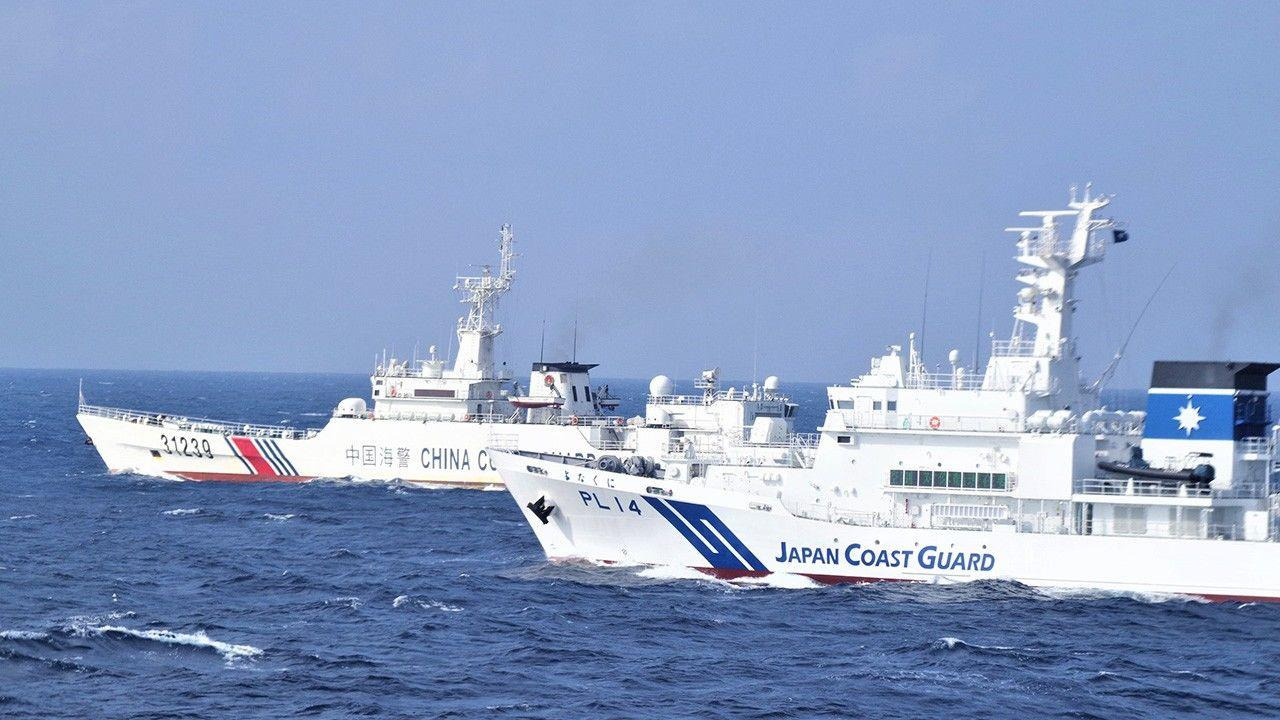
Another major flash point is the dispute between China and Japan over the Senkaku Islands (called the Diaoyu Islands by China) in the East China Sea (north of Taiwan). Japan administers the islands, but China claims them.
China operates out of the “grey zone playbook” but with more caution as Japan has a more robust military and ability to respond. Japan is also a treaty ally of the United States under the Treaty of Mutual Cooperation and Security.
Taiwan Straits
Between the East and South China Seas is the Strait of Taiwan – which interestingly is the name used by the PRC. However, the political significance comes not from the name, but from how the PRC characterizes the legal status of the waters. China increasingly argues that the Taiwan Strait is not entirely “international waters,” but rather includes Chinese internal waters, territorial seas, contiguous zones, and exclusive economic zones. Beijing objects particularly to statements that the strait is wholly an “international waterway.” The United States and many maritime powers counter that: large portions of the strait constitute international waters under the United Nations Convention on the Law of the Sea, and therefore support freedom of navigation and military transit.
One of the great unknowns is a scenario that unfolds if China attempts to restrict maritime passage through the Strait – unknown to the “person on the street” – but no doubt the topic of think tanks and military planners. China accepts part of the Strait as an international waterway in peaceful times, but are there scenarios when China closes the recognized international waterway, temporarily, for the safety of international maritime passage? One such scenario might be, not an invasion of Taiwan, but a blockade of the island nation. By definition, a blockade is an act of war, but as the United States played out the scenario in 1960 regarding Cuba it was classified as “a strict quarantine” with ships subject to onboard inspections.
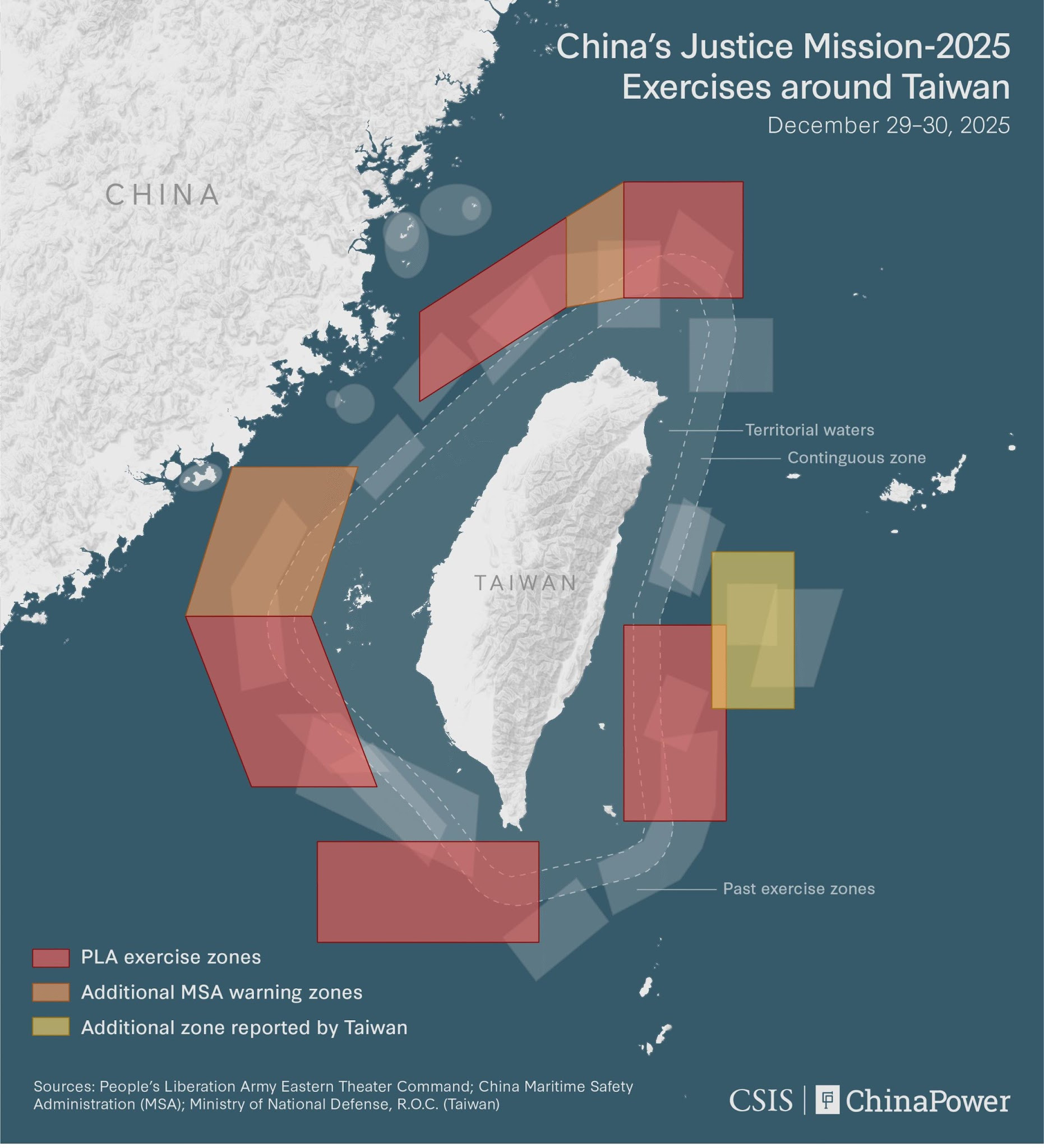
We don’t have to imagine what a blockade/quarantine of Taiwan would look like. China demonstrated it in late 2025 in “Justice Mission – 2025”
Justice Mission – 2025
This two-day exercise was a joint military exercise by China conducted around Taiwan in December 2025. It was one of the largest and most operationally sophisticated Taiwan-focused exercises China had conducted up to that point, and it significantly expanded the PLA’s emphasis on blockade operations, encirclement, anti-intervention deterrence, and joint multi-domain warfare. This language was important because it signaled that the PLA was practicing not merely a symbolic demonstration, but elements of maritime quarantine, strategic isolation of Taiwan, and deterrence of U.S. and allied intervention.
China was not shy about its intention, publicly stating that the exercise focused on “sea and air combat readiness patrols,” “seizing comprehensive superiority,” “blockading key ports and areas,” and “three-dimensional outer-line deterrence.” [Global Taiwan Institute] The exercise was preceded by public campaigns against Taiwan and Japan. The Chinese Foreign Ministry stated that Japan had “crossed a red line” in its position regarding Taiwan. The normally cautious and indirect language traditionally employed in Asia-Pacific diplomatic discourse was abandoned. The timing and circumstances surrounding these events suggest that the PRC leadership made a conscious decision to press a harder line against Japan: both to gauge the reaction of Japan’s new government, and as a warning to other regional states that might consider offering further security support for Taiwan in the face of Chinese pressure.
One of the most important interpretations of Justice Mission-2025 is that it reinforced growing evidence that China may see blockade, quarantine, and coercive isolation as plausible alternatives or precursors to a direct amphibious invasion. The exercise emphasized control of ports, airspace disruption, long-range rocket strikes, coast guard integration, and maritime encirclement – all the elements of a sustained blockade. Analysts see this stratagem as less risky than inclusive military operations and yet can exert significant economic and political pressure on Taiwan.
Many observers viewed it less as a rehearsal for a single “D-Day”-style invasion and more as practice for sustained coercive campaigns, maritime isolation, and gradual escalation designed to pressure Taiwan while complicating U.S. intervention decisions.
Air or Naval Collision Escalation. A major crisis could emerge accidentally as U.S. and Chinese forces operate in close proximity in the South China Sea, East China Sea, Taiwan Strait, and western Pacific. Dangerous encounters occur regularly involving fighter aircraft, surveillance planes, destroyers, and coast guard ships. Over the last 20 years there have been near-collisions in the air and afloat. Air incidents can be as simple as a plane one side considers a surveillance aircraft encroaching on what one party considered an exclusion zone and so send armed interceptors to investigate…and occasionally lock-on targeting radar. Or something as simple as unwanted “formation flying” as a means of intimidation. Should one of these incidents turn fatal (collision or shootdown), nationalist outrage could lead to “sabre rattling” of military mobilization and reciprocal escalation before diplomacy stabilizes the crisis.
Cyber or Space Escalation. Less visible but increasingly serious are cyberattacks, satellite interference, and attacks on communications infrastructure. A crisis involving undersea cables, GPS disruption, financial systems, or military satellites could escalate quickly if interpreted as prelude to wider conflict.
Most of Taiwan’s international digital connectivity travels through a relatively limited number of submarine cable landing points. This creates a potential vulnerability in a crisis as cables could be damaged faster than they can be repaired, especially if repair ships are blocked from operating.
The simplest and most deniable model involves fishing vessels, anchors, dredging activity, or commercial ships. A state actor could exploit this ambiguity by directing civilian or quasi-civilian vessels toward sensitive cable areas, causing “accidental” disruptions difficult to attribute conclusively. This model is especially relevant because China possesses enormous fishing and maritime militia fleets and gray-zone ambiguity is central to Chinese maritime strategy. Taiwan has already experienced several suspicious cable outages involving nearby islands in recent years. Major powers possess at least some capability for deliberate deep-sea cable interference via submarines, unmanned underwater vehicles, specialized seabed systems, or covert engineering ships.
Another scenario involves simultaneous cuts to multiple cables. Rather than completely severing Taiwan from the world, the objective could be degrading bandwidth so as to slow military coordination and a range of financial market disruptions. A coordinated campaign could target cable chokepoints and terminal landing stations. Analysts frequently discuss cable disruption as part of a broader Chinese coercive strategy short of outright invasion.
The Broader Strategic Reality. The most dangerous scenarios are probably not deliberate declarations of war or carefully planned invasions. Rather, they are incremental coercion, gray-zone confrontations, alliance entanglement, and accidental escalation. Both China and the United States likely understand that a major war between them would carry catastrophic economic and military consequences. Yet both are also increasingly operating in overlapping maritime and strategic spaces where nationalism, deterrence, alliance commitments, and military signaling create persistent risk of crisis escalation.
84 years ago today, the naval forces of Imperial Japan and the United States engaged in the epic confrontation known as the Battle of Midway. In my earlier Asia-Pacific War series I did not cover the Battle of Midway, only mentioning it in passing. Today seems like a good day to offer some insights about the battle and its enduring legacy.
Some historians call the Battle of Midway the turning point of the war. Later historians take a more nuanced view and note that Midway was unquestionably one of history’s decisive naval battles. Midway shifted the strategic initiative to the United States but Japan remained a formidable military power. The end of the war was in no way inevitable, but perhaps the tide was beginning to turn. At least Japan’s tactical onslaught had been stopped…for the moment. The Battle of Midway was a critical event seven months into the war.
Pearl Harbor
“Yesterday, December 7, 1941 a date which will live in infamy, the United States of America was suddenly and deliberately attacked by naval and air forces of the Empire of Japan.” Such were the words of President Franklin D. Roosevelt before a joint session of Congress as he asked for a declaration of war against the nation of Japan. Roosevelt is referring to the attack on Pearl Harbor which resulted in 2,403 lives lost and 1,178 wounded. Twenty-one naval ships were sunk upright in shallow water or severely damaged, including the battleships USS Arizona and USS Oklahoma. 188 airplanes were destroyed and another 159 damaged. By any measure it was an audacious and successful attack whose goal was to “knock out” the U.S. Pacific Fleet as Japan unleashed her armed forces against nations in the western Pacific. Later, Admiral Nimitz, Commander of the U.S. Pacific Fleet remarked it was lucky we did not meet the Japanese fleet in the open ocean. He believed the results would have been much the same, but all the ships would have sunk in deep waters and the loss of life would have been much greater. The Japanese fleet was that dominant and prepared.
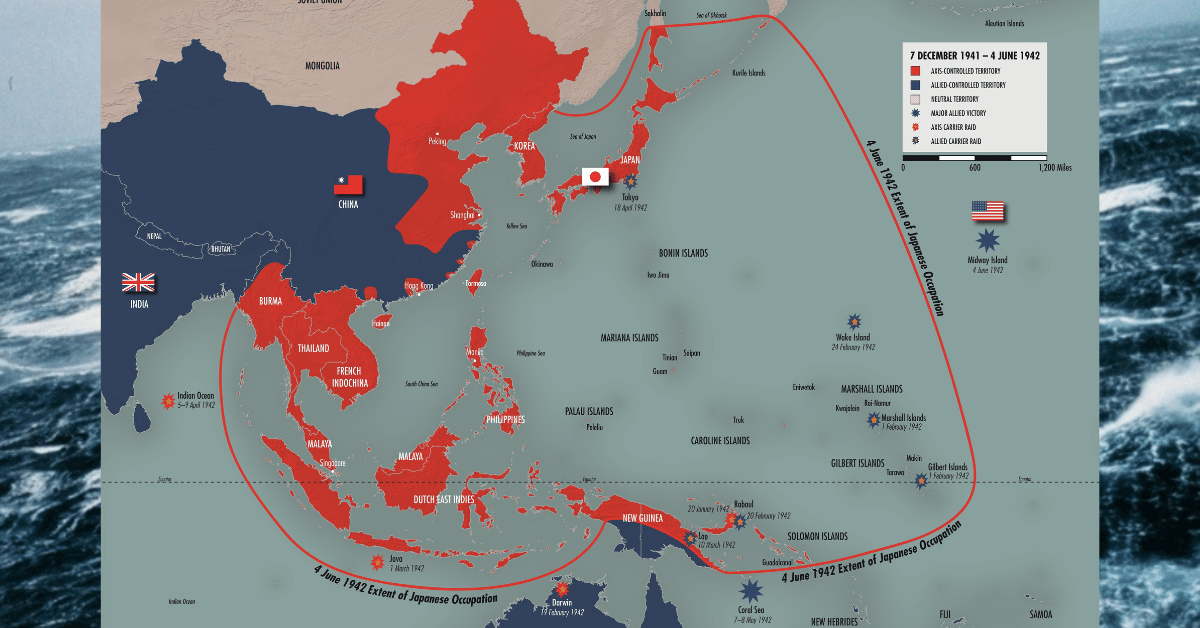
Pearl Harbor and the airfield of Oahu were but a small part of a larger plan. Simultaneously, Japanese forces launched coordinated offensives across Asia and the Pacific, rapidly overrunning Hong Kong, much of the Philippines, Malaya, and the Dutch East Indies. In February 1942, the supposedly impregnable British stronghold of Singapore fell, resulting in one of the largest surrenders in British military history. Japanese forces also captured key territories including Guam, Wake Island, Burma, and numerous islands throughout the western Pacific, securing access to vital resources such as oil, rubber, and minerals. By the spring of 1942, Japan had established a vast defensive perimeter stretching from the Aleutians in the north to New Guinea and the Solomon Islands in the south, and from Burma in the west to the Central Pacific. Japan stood at the height of its military power, having conquered an empire of roughly 200 million people and secured most of its initial strategic objectives. The U.S. and allies were on the defensive, struggling to contain the rapid Japanese advance.
Striking back as best we can
Nevertheless, the U.S. undertook a number of offensive actions that served both military and psychological purposes. Although none threatened Japan’s strategic position directly, they demonstrated that the U.S. Navy retained some offensive capability and helped build experience for later operations. The first significant American offensive actions were a series of carrier raids. American carriers struck Japanese-held islands in the Marshall and Gilbert Islands in February 1942. Task forces built around the carriers USS Enterprise (CV-6) and USS Yorktown (CV-5) attacked airfields, shipping, and installations at Kwajalein, Wotje, Jaluit, and other Japanese bases. Additional raids followed against Wake Island and Marcus Island. While the physical damage was limited, these operations forced Japan to divert resources to defend its perimeter and gave U.S. carrier crews valuable combat experience.
In April 1942 sixteen Army Air Forces B-25 bombers, launched from the carrier USS Hornet (CV-8) struck Tokyo and several other Japanese cities. It is remembered as the Doolittle Raid named after the US Army Air Corp Lieutenant Colonel who led the raid. The raid caused relatively minor physical damage, but its psychological impact was enormous. It boosted American morale after months of defeats and shocked Japanese leaders by demonstrating that the Home Islands were vulnerable to attack. The raid also contributed to Japanese decisions to engage the U.S. fleet in a decisive battle that would allow Japan to eliminate the remaining American aircraft carriers. It needed another bold plan from Admiral Yamamoto.
In May 1942, the United States fought its first major carrier battle in the Battle of the Coral Sea. Japan sought to invade and take over Port Moresby, the capital of Papua New Guinea and located just across the Coral Sea from Australia. This would allow the Japanese to threaten the vitally important sea lanes between Australia and the United States. The American carrier forces aggressively engaged the Japanese fleet. It was not the decisive victory that Japan sought. It was, at best, a draw.
The battle resulted in the sinking of the carrier Shōhō and the damaging of the fleet carrier Shōkaku, two of the six aircraft carriers involved in the attack on Pearl Harbor. However, stopping the Port Moresby invasion came at a cost. The USS Lexington (CV-2) was sunk and USS Yorktown (CV-5) was seriously damaged and left the Southwest Pacific to return to Pearl Harbor for repairs, arriving on May 27th. The full scope of repair was estimated to take months, but the repairs needed to return Yorktown to flight operations were completed in just 72 hours. The Yorktown departed Pearl Harbor on May 30, 1942, to take part in the Battle of Midway.
Plans and Plots
The battle plan for attacking Pearl Harbor was relatively straight forward. But the course of the war revealed Japan was given to creating overly complex plans – and the plan for capturing Midway Island was one of those plans. There was a strike group of four carriers, an invasion force, a task force of battleships and cruisers, and a group that was dispatched to the Aleutian Islands (whether as a diversion or a complimentary strike is left to the historians, but in any case, too far away to lend assistance to Midway operations). The plan was to capture Midway and then wait for the U.S. carriers to sally forth to recapture the island, located at the end of the Hawaiian island chain. That would be the decisive battle Japan hoped for. With their carrier fleet destroyed, surely the U.S. would sue for peace in the Pacific.
There are two classic movies made about the Battle of Midway (1979 and 2019 – the latter being far more accurate than the earlier version). The plots of both movies are about the same: the U.S. are underdogs on the defensive, but we have code breakers reading Japanese naval messages, so we know the Japanese Navy plans to invade Midway, and though outnumbered we surprise attack them and win the day. June 4, 1942 became the turning point of the war. As mentioned, if you want to watch a movie, try the 2019 version. Woody Harrelson does a good job in the role of Admiral Nimitz. If you want to “nerd out” on real history, the gold standard is the book “Shattered Sword” by Jonathan Parshall and Tony Tilly. Many of the stories that were part of popular memory were revised or challenged by historians like Parshall and Tilly who gained access to translations of Japanese records, operational logs (especially the air operations log), postwar analyses by Japanese historians, and especially the Senshi Sōsho, compiled by the Japanese Center for Military History at the National Institute for Defense Studies. The series spans 102 volumes.
The results of these later historians would not change the overall plot of the Midway movies, but would certainly eliminate the myths and misunderstandings.
Battle Intelligence
One of the myths about Midway is that we were reading their naval messages. Prior to Midway, the intelligence units in Australian (FRUMEL) and Pearl Harbor (HYPO) had made some progress on Japanese Naval Code JN-25B and were able, together with traffic analysis, to make some progress on reading messages in part, but not wholly. Several days before Midway they changed to JN-25C. Because the Japanese distributed the new codebooks slowly, messages were often sent in both the old and new codes during the transition, allied intelligence were able to get “an inkling” that a large operation was in the works.
A simple way to explain the intelligence breakthrough before the Battle of Midway is that the Americans did not fully “break” the Japanese naval code in the way movies often suggest. They could read some portions of Japanese messages and understood parts of the code system, but much of the information came from careful observation of communications patterns rather than from reading every message in plain language.
Equally important was what is often called traffic analysis. Even when messages could not be fully read, intelligence officers could learn a great deal by studying who was sending messages, how often they were sent, where they originated, and which units appeared to be communicating with one another. It is similar to noticing that a usually quiet office suddenly has dozens of phone calls between certain departments. You may not know what is being said, but you can tell that something important is being planned. By combining partial codebreaking, traffic analysis, and other intelligence sources, HYPO concluded that a major operation against Midway was imminent and roughly when it would occur. It is an interesting note that HYPO’s “boss” in Washington DC did not agree.
What the movies did get correctly was that station HYPO in Hawaii, noticed that Japanese messages repeatedly referred to a location designated “AF.” They strongly suspected that AF meant Midway Atoll, but they needed proof to convince Washington and Nimitz. To confirm their theory, they arranged for Midway to send an unencrypted radio message stating that its freshwater distillation plant had broken down and that the island was short of water. Shortly afterward, Japanese communications reported that “AF” was experiencing a water shortage. This confirmed that AF was indeed Midway.
The real intelligence achievement was not a dramatic moment when the entire Japanese naval code was cracked open. Rather, it was a patient process of assembling many small clues from partially deciphered messages, from communication patterns, and from educated deduction. By early June 1942, Admiral Chester W. Nimitz knew enough to place his carriers northeast of Midway and wait in ambush for the approaching Japanese fleet. That advance warning was one of the most important factors in the American victory at the Battle of Midway.
But to be clear, Nimitz did not know how many Japanese carriers would be there. His decision to engage the Japanese around Midway was a calculated risk. But in the end U.S. naval forces ambushed the Japanese fleet northwest of Midway Atoll and sank four frontline Japanese aircraft carriers: Akagi, Kaga, Sōryū, and Hiryū. This meant the loss of hundreds of aircraft and many of Japan’s most experienced naval aviators. The United States lost the carrier USS Yorktown (CV-5) and the destroyer USS Hammann (DD-412), but preserved its remaining carrier force. Midway did not end the war, but it halted Japanese expansion in the Pacific, shifted the strategic initiative to the United States, and inflicted losses that Japan could never fully replace, setting the stage for the Allied offensive that began later that year at Guadalcanal Campaign.
The Battle of Midway Revisited
This post will not replay or even attempt to outline the sequence of events that lead to this first major allied victory in the Pacific, but on this day 84 years later, it is perhaps good to revisit some of the narratives that have dominated popular understanding of this battle.
Hopeless Underdog?As noted above, later historians working with newly available sources were able to address some of the legends and conclusions about the battle, for example, the “Hopeless Underdog” narrative. Early American histories (such as Walter Lord’s Incredible Victory) painted the battle as a classic David-versus-Goliath encounter, suggesting the U.S. was hopelessly outnumbered by the entire Imperial Japanese Navy. In reality, while the Japanese had a larger total fleet, the vast majority of their battleships and support ships were hundreds of miles away and never saw combat thanks to Japan’s overly complex battle planning. At the actual point of contact on June 4, 1942, the U.S. and Japanese carrier forces were remarkably evenly matched in terms of naval assets. That being said the Japanese had more combat experience given 5 years of war in China and the battles to this point against the Allies.
The Five Minute Miracle.Perhaps the most enduring narrative is the “Five-Minute Miracle.” The primary source of the narrative is the 1951 book Midway: The Battle That Doomed Japan by Mitsuo Fuchida and Masatake Okumiya. First published in English by the U.S. Naval Institute (1955), Fuchida’s account heavily shaped Western historical understanding of the battle until Shattered Sword.
In his book, Fuchida, who was aboard the Japanese flagship Akagi during the battle, claimed that at 10:20 a.m. on June 4, 1942, the Japanese aircraft carriers were just five minutes away from launching a massive counter-strike against the American fleet. According to his narrative, the American dive-bombers arrived at the absolute last possible second to achieve a miraculous victory. This specific narrative was later popularized in mainstream Western histories, such as: Incredible Victory (1967) by Walter Lord and Miracle at Midway (1982) by Gordon Prange. Parshall and Tully completely disproved Fuchida’s timeline using actual Japanese operational logs, carrier doctrine, and survivor testimonies.
Shattered Sword revealed that the flight decks were clear. The Japanese strike force was actually in significant disarray. The Japanese strike planes were not lined up on the flight decks ready to launch in five minutes; they were still down in the hangar decks being rearmed. In addition, the Japanese carriers were actively launching and recovering Combat Air Patrol (CAP) Zero fighters to defend against continuous American attacks, making it structurally impossible to spot a massive counter-strike force on the flight decks at that time. They were not even close to having their bombers ready, spotted, and armed to attack the U.S. fleet.
Fuchida’s fabrications were not believed to be random errors. Instead, they were driven by a complex mix of personal ambition, a desire to protect his friends, and an effort to salvage the reputation of the Imperial Japanese Navy aviators. After the war the narrative proved to be a commercial success, securing his reputation as a key, and for a long time, unchallenged, historical figure. He was a consultant on the 1979 movie version.
The Flight to Nowhere. This refers to a disastrous, highly controversial navigational error/decision on the morning of June 4, 1942, when the USS Hornet’s entire strike group, except for one squadron, flew in the completely wrong direction, missed the Japanese fleet entirely, and most planes ran out of fuel over the open ocean although some landed on Midway. Early reconnaissance flights had located the main Japanese carrier force to the southwest of the American task force (at a bearing of roughly 240 degrees). However, Hornet’s Captain Marc Mitscher and Air Group Commander Stanhope C. Ring ordered Hornet Air Group 8 to fly on a due-west heading of 265 degrees. The Task Force Commander, Admiral Jack Fletcher, had ordered all strike groups to head 240 degrees. Historians believe Mitscher directed the new course and took this gamble because he suspected there was a second, unspotted group of Japanese carriers operating further to the north and west. It must be remembered that intelligence did not know if four, five, or six carries were part of the Japanese order of battle. Some historians wonder if Mitscher, the naval aviator, believed he simply knew better than Fletcher, a traditional surface officer.
As the Air Group flew west into the empty ocean, the commander of Hornet’s Torpedo Squadron 8 (VT-8), Lieutenant Commander John C. Waldron came to believe the course was wrong. He argued with Commander Ring over the radio, and in the end disobeyed a direct order, broke away turning his squadron southwest toward the real target. As a result, Torpedo Squadron 8 attacked the Japanese fleet alone.
Torpedo Squadron 8. Without a doubt, the aviators of Torpedo Squadron 8 from the USS Hornet heroically attacked knowing their method of approach would be subject to anti-aircraft fire and attack from Japanese Zero fighters. All 15 of their obsolete Douglas TBD Devastator torpedo bombers were shot down with only a single pilot, Ens. George Gay, surviving this flight. That part is historically accurate. But what is not is that their attack drew all the Japanese CAP down to sea level, thereby clearing the skies and allowing U.S. dive bombers to strike unopposed. This heroic timeline doesn’t hold up to tactical reality. Torpedo Squadron 8’s attack occurred about an hour before the decisive dive-bombing strike. By the time the dive bombers arrived, the Zeros had regained altitude and were actually in the middle of engaging American torpedo planes from the Enterprise and Yorktown.
After Action Report. While not a myth born from combat, one of the most significant historical fabrications involved Captain Marc Mitscher (Captain of the USS Hornet) writing a falsified after-action report (AAR). Contrary to naval procedure, Air Group Commander Stanhope C. Ring did not file an AAR, or it was destroyed. The only AAR was from Capt. Mitscher. He reported that the Air Group flew 240 degrees and found nothing apart from Waldron’s fated squadron. Was this to cover up his massive tactical blunder? Was it to protect the legacy of John Waldron, who had disobeyed a direct order in combat?
Waldron was a hero and America needed heroes. He received the Navy Cross posthumously for his extraordinary heroism and leadership during the Battle of Midway. The USS Waldron (DD-699), a Sumner-class destroyer, was named in his honor and commissioned in 1944, serving through World War II, the Korean War, and the Vietnam War. As well, a naval airfield in Corpus Christi Naval Airstation was named after him.
Cdr. Ring was shielded in official reports, as the Navy had no desire for a public scandal. But he was an exemplary officer and went on to a distinguished naval career. He retired in 1955 as a Vice Admiral (3 stars) and passed away in 1963. For decades, Ring never publicly defended himself or explained his actions at Midway. However, 36 years after his death his daughter discovered a 22-page handwritten letter inside his old sea chest. Written in 1946, the letter was Ring’s private attempt to set the record straight. In it, he admitted that his decision to not follow the fleet’s directive was a major error, writing that his estimate of the situation “proved faulty.” He did not direct any blame at Capt. Mitscher.
Capt. Mitscher, later Admiral, was perhaps the finest aircraft carrier skipper of the war and was the tactical commander of Task Force 58, the massive, “Fast Carrier Task Force.” Under his leadership, the force spearheaded the Pacific offensive, securing historic victories in major engagements including the Battle of the Philippine Sea, Leyte Gulf, and the invasions of Iwo Jima and Okinawa. The intense stress and exhaustion of four years of continuous wartime command took a heavy toll on his health. On February 3, 1947, at the age of 60, Admiral Mitscher suffered a fatal heart attack while on active duty in Norfolk, Virginia, having risen to become a 4-star admiral.
Admiral Yamamoto as a “Naval Genius” Both American and Japanese historians initially celebrated Admiral Isoroku Yamamoto (the architect of the Pearl Harbor attack) as a brilliant military genius. History revealed that Yamamoto’s Midway operation strategy was actually deeply flawed. His plan was overly complex, and had no room for delay or unforeseen events such as 3 American aircraft carriers waiting for them. In a war game session using Yamamoto’s battle plan, one junior officer (playing the opposition, that is the America battle group) started the scenario with American carriers located NE of Midway almost exactly the American-designated “Point Luck.” The result of the session proved to be prescient and predicted the loss of three Japanese carriers because the invasion force, the battle groups, and Aleutian forces were too far away to offer any support – all due to the complexity of the plan. Yamamoto’s complex plan overly dispersed Japanese forces, mandated radio silence, and crucially misunderstood American capabilities or willingness to mount an offensive effort. Pearl Harbor was “genius”; Midway was not.
The Battle of Midway – the turning point?
Midway was unquestionably one of history’s decisive naval battles. Yet postwar narratives sometimes implied that Japan’s defeat became inevitable on June 4, 1942 because of the loss of four aircraft carriers. Historians have long debated whether the true turning point of the Pacific War was the Battle of Midway or the Guadalcanal Campaign. The answer depends on what one means by “turning point.”
If a turning point is the moment when the strategic initiative begins to shift, then Midway has the stronger claim. Before Midway, Japan had won virtually every major campaign it undertook. After Midway, Japan could no longer conduct large-scale offensive operations with the same confidence or strength. The loss of four fleet carriers and many experienced aviators permanently weakened the striking power of the Imperial Japanese Navy. Most importantly, the Japanese plan to destroy the American carrier force failed, while the United States retained enough naval strength to remain in the fight. Midway stopped Japanese expansion and prevented Japan from dictating the pace of the war.
If a turning point is defined as the moment when Japan irretrievably lost the ability to win the war, then Guadalcanal offers an even stronger argument. The six-month struggle consumed irreplaceable Japanese pilots, sailors, soldiers, transports, and supplies. Japan entered the campaign hoping to regain the initiative and secure its defensive perimeter. Instead, it suffered a series of attritional defeats on land, at sea, and in the air. By the time Japanese forces evacuated Guadalcanal in February 1943, they had lost the offensive capability necessary to challenge the growing industrial and military power of the United States. From that point forward, Japan was largely reacting to Allied moves rather than shaping events itself.
Midway prevented Japan from winning; Guadalcanal demonstrated that Japan could not recover and that the Allies could sustain a major offensive campaign. Had the United States failed at Guadalcanal, the consequences could have been severe despite the victory at Midway. Guadalcanal tested whether the strategic advantage gained at Midway could be converted into sustained offensive success. When Japan lost Guadalcanal, it lost not only territory and forces but also the realistic prospect of regaining the initiative. In that sense, Midway was the battle that stopped Japan’s advance, while Guadalcanal was the campaign that confirmed the war’s ultimate direction.
I think that it is better said that together they form the turning point of the Pacific War.
51 I am the living bread that came down from heaven; whoever eats this bread will live forever; and the bread that I will give is my flesh for the life of the world.” 52 The Jews quarreled among themselves, saying, “How can this man give us (his) flesh to eat?” 53 Jesus said to them, “Amen, amen, I say to you, unless you eat the flesh of the Son of Man and drink his blood, you do not have life within you. 54 Whoever eats my flesh and drinks my blood has eternal life, and I will raise him on the last day. 55 For my flesh is true food, and my blood is true drink. 56 Whoever eats my flesh and drinks my blood remains in me and I in him. 57 Just as the living Father sent me and I have life because of the Father, so also the one who feeds on me will have life because of me. 58 This is the bread that came down from heaven. Unlike your ancestors who ate and still died, whoever eats this bread will live forever.”
But let’s place this in a larger perspective from the whole of the Discourse: He gave; bread from heaven; to eat. Let’s observe this happen.
He gave (vv. 26–34). In this first section, the emphasis lies on the giving. Jesus will give (vv. 27, 34), not as Moses gave (v. 32) a perishable manna food of mortality, but as the Father, source of eternal life, gives (v. 32). Thus far, Jesus appears as the giver of bread and therefore as the new and superior Moses.
bread from heaven (vv. 35–47). The insistence now shifts to the bread from heaven that Jesus not only gives but actually is (vv. 35, 38, 41, 42). It is important to note here that the operative verb is “believe.” Jesus as bread from heaven is accepted and consumed through the belief required in verses 35, 36, 40, 47. What this means is that this is a faith nourishment. Jesus is bread from heaven, feeding all believers, in the same sense that Old Testament wisdom nourished all who accepted it (Prov 9:1–5).
to eat (vv. 48–59). In this final section, the vocabulary changes radically. The significant words are “flesh,” “blood,” “eat, ” “drink.” Note the constant repetition of “eat” (phagein) in vv.49, 50, 51, 52, 53, 54, 58. “Feed on” (trōgein – an even more physical verb in the Greek than “eat”) occurs in v.57. These verbs become overwhelmingly insistent, as does the constant reference to flesh and blood, food and drink. The meaning of the discourse has changed. Where in the preceding section Jesus nourished through wisdom-revelation those who believed, the verb “believe” has now completely disappeared and is replaced by “eat,” “feed on.” This is language which clearly speaks of sacramental nourishment, of the food and drink that one eats and feeds upon, of the Eucharistic nourishment provided by the flesh and blood of the Son of Man (v. 53). The “Son of Man” phraseology tells us that this is not the physical flesh and blood of the earthly Jesus and that we are asked to eat and drink but the spiritual, Spirit-filled flesh and blood of the heavenly Son of Man. Verse 58 ties the discourse together by referring back to the central phrase of verse 31.
What this discourse has done, therefore, is to deliver a rich and multi-faceted exposition of the Jesus-as-Bread-of-Life theme.
Jesus is first of all the giver of the bread, a new Moses.
He is also the bread of wisdom and revelation who nourishes all who come to him in faith.
He is, finally, the Eucharistic source of eternal life for all who eat and drink the flesh and blood of the heavenly and glorified Son of Man.
Because John uses this Eucharistic material in this Bread of Life homily, it will not be too surprising — yet surprising enough — that the Eucharist will not be mentioned at the Last Supper. Its material has been transferred to this incident. John has also succeeded, with this transfer, to unite in this one chapter the essentials of Christian Eucharist, the word and the bread — the revealing word of vv.35–47 and the sacramental bread of vv.48–59.
Jesus gives his flesh to eat. The question that emerges from the dispute among “the Jews” is a rejection of Jesus’ outrageous suggestion: “How (ōs) can this man give us his flesh to eat?” (v. 52). But it allows Jesus to conclude his discourse on his perfection of the Mosaic gift of bread from heaven through his gift of himself as the true bread from heaven. Unable to go beyond the physical, “the Jews” by their question misunderstand Jesus’ promise. Jesus insists on a gift of flesh and blood for life by stating negatively (v.53) and positively (v.54) that whoever eats the flesh and drinks the blood of Jesus, the Son of Man, has eternal life now and will be raised up on the last day. The midrashic play on the verb “to eat” provided by the Exodus passage in v. 31 has reached its high point. “Flesh” and “blood” emphasize that it is the incarnate life and very real death of the Son that are life giving food. Only the physical body of a human being produces flesh and blood. The argument of vv. 25-51 continues into vv. 52-59, especially in Jesus’ words that point to the resolution of a series of promises (cf. vv. 12-13, 27, 35, 51c). Jesus will provide a food for the life of the world, and that food is his flesh and blood.
As the ancestors of Israel were nourished by the gift of the Torah, Jesus will nourish the whole world with the gift of himself.
The people of Israel were nourished by eating the manna, perennially recalled in the nourishment provided for them by their total receptivity to and absorption of the Law.
Now “the Jews” are told of the absolute need to eat the flesh and drink the blood of the Son of Man. Unless they eat the flesh and drink the blood (ean me phagete . . kai piete) of the Son of Man they have no life (v. 53); whoever eats the flesh and drinks the blood (ho treigōn . kai pinon) of Jesus has eternal life (v. 54).
The shift from the more respectable verb “to eat” (phagein) to another verb that indicates the physical crunching with the teeth (trōgein) accentuates that Jesus refers to a real experience of eating. Hints of the Eucharist continue to insinuate themselves into the words of Jesus. Flesh is to be broken and blood is to be spilled. Violence has been in the air since Jesus’ behavior on the Sabbath led “the Jews” to initiate a process that would lead to his death (5:16-18).
In today’s gospel, the Sadducees are testing Jesus by presenting a reductio ad absurdum argument based on levirate marriage. A woman is successively married to seven brothers. They ask: “At the resurrection when they arise whose wife will she be” – which is interesting since the Sadducees don’t believe in the Resurrection. Jesus responds with “When they rise from the dead, they neither marry nor are given in marriage, but they are like the angels in heaven.”
Most Christians recognize that it was not really a question and since levirate marriage is not practiced in modern life, that problem is no problem at all… but there is modern fallout with a question often framed as: “If there is no marriage in heaven, does that mean I am not married, won’t love my spouse, may not even know my spouse… what about my family?”
The Sadducees’ question assumes that the resurrection is simply a continuation of earthly life under the same social arrangements. Our modern concern is whether any aspect of these important earthly social arrangements persists into the life to come. But notice Jesus does not say that people cease to know one another or to love one another. He does not say that earthly relationships become meaningless or that spouses become strangers. However, He does seem to say that marriage as an institution in the way that we know it does not continue in the resurrection.
In Scripture, marriage has several purposes: mutual love and companionship, the procreation and raising of children, as a sign of God’s covenant with humanity, and as a sacramental image of Christ and the Church. Theologians offer that marriage is like a sacrament pointing beyond itself. Just as we do not need a road sign after arriving at the destination, the sacramental sign gives way to the reality toward which it points. Mutual love is perfected, life is eternal, death is no more, and the covenant is fulfilled, In the resurrection, the purposes of marriage have reached their fulfillment.
The key point is that in eternal life relationships are transformed by perfect union with God. John Chrysostom argued that relationships are purified and elevated in the resurrection. The love spouses shared is not lost but perfected. One could easily extend Chrysostom’s argument to include family ties. Augustine of Hippo taught that personal identity remains and what passes away is not love but the juridical bond of marriage. Thomas Aquinas taught that the sacrament of marriage belongs to this life. Its function ceases in heaven because its purpose has been fulfilled. Yet the love formed through marriage remains.
So will I see my spouse in heaven? From a Catholic perspective, the answer is emphatically yes, assuming both are united with God. The deeper question is: What kind of relationship will that be? The Church’s tradition consistently says that you will not love your spouse less; you will love your spouse more perfectly than ever before. All the selfishness, misunderstandings, possessiveness, fears, wounds, and limitations that affected earthly love will be gone. The love remains.
Heaven does not erase human love; it brings it to its fullest perfection.
As the posts in this series to this point have indicated, China views the South China Sea (SCS) as well within its territorial waters and not international waters (The 9-Dash Line,). The degree to which they enforce that claim depends on who and what is transiting the waters. During the week of May 24, 2026 the PLAN aggressively denied a Dutch warship entrance into the SCS while commercial traffic proceeded uninterrupted. The Chinese ability to enforce the claim is substantial and has been steadily enhanced in the passing years as this post will show. China’s ability to enforce its claims consists of:
A fleet of naval combatants ranging from aircraft carriers to frigates with a combined lethality of strike aircraft, vertical launch missiles, and naval rifles (5-inch and higher). As well their submarine force is quite capable.
Chinese air force assets from the mainland with sufficient range to cover the entire region.
Buildup of islands and shoals into military installations all of which are believed to have vertical launch missiles and some able to support air operations (“unsinkable” aircraft carriers)
An extensive fleet of Coast Guard and maritime enforcement vessels, most armed.
All of the above bring to bear radar and other surveillance capability that results in an air and surface space that is hyper-monitored
Evidence that China has developed the Command, Control and Communications (C3) capability to integrate all into a well coordinated response.
Some Details. With the above being the executive summary, here are some of the details. A previous post, The 9-Dash Line, outlined the claims and counter-claims on islands and shoals in the CSC which are being methodically militarized.
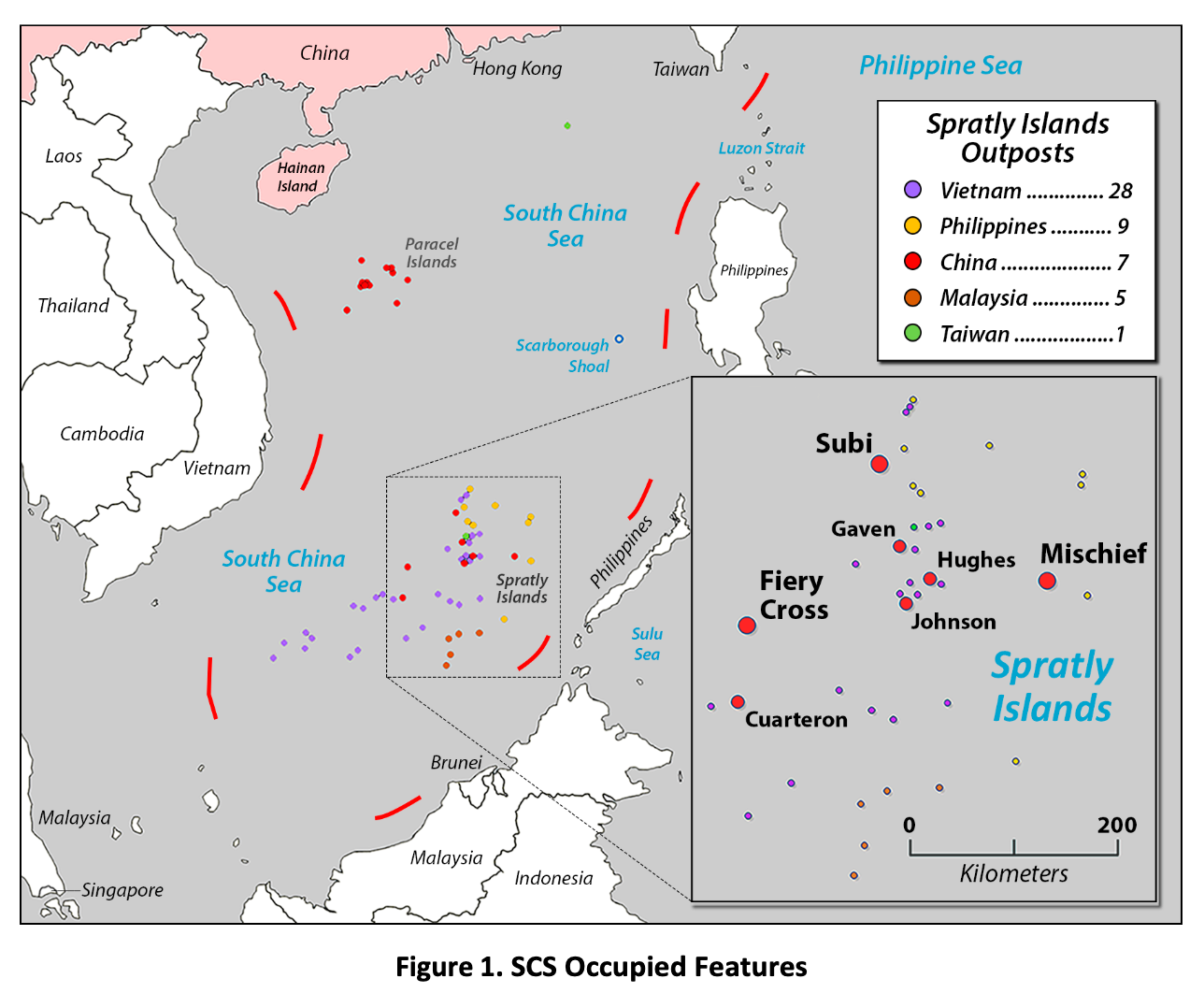
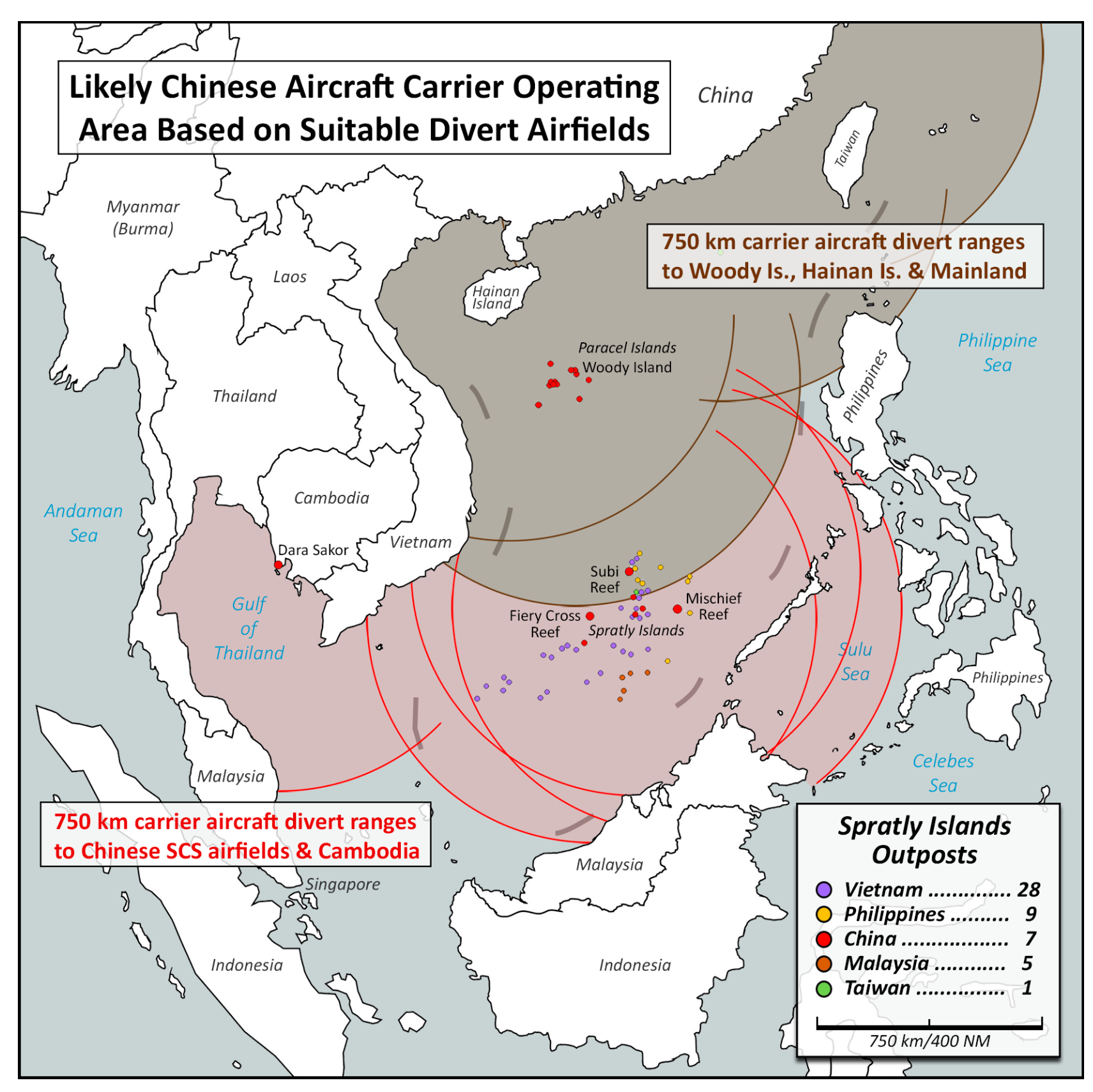
As mentioned in previous posts, China is not the only nation adding military capability to the SCS arena as seen in the above map.
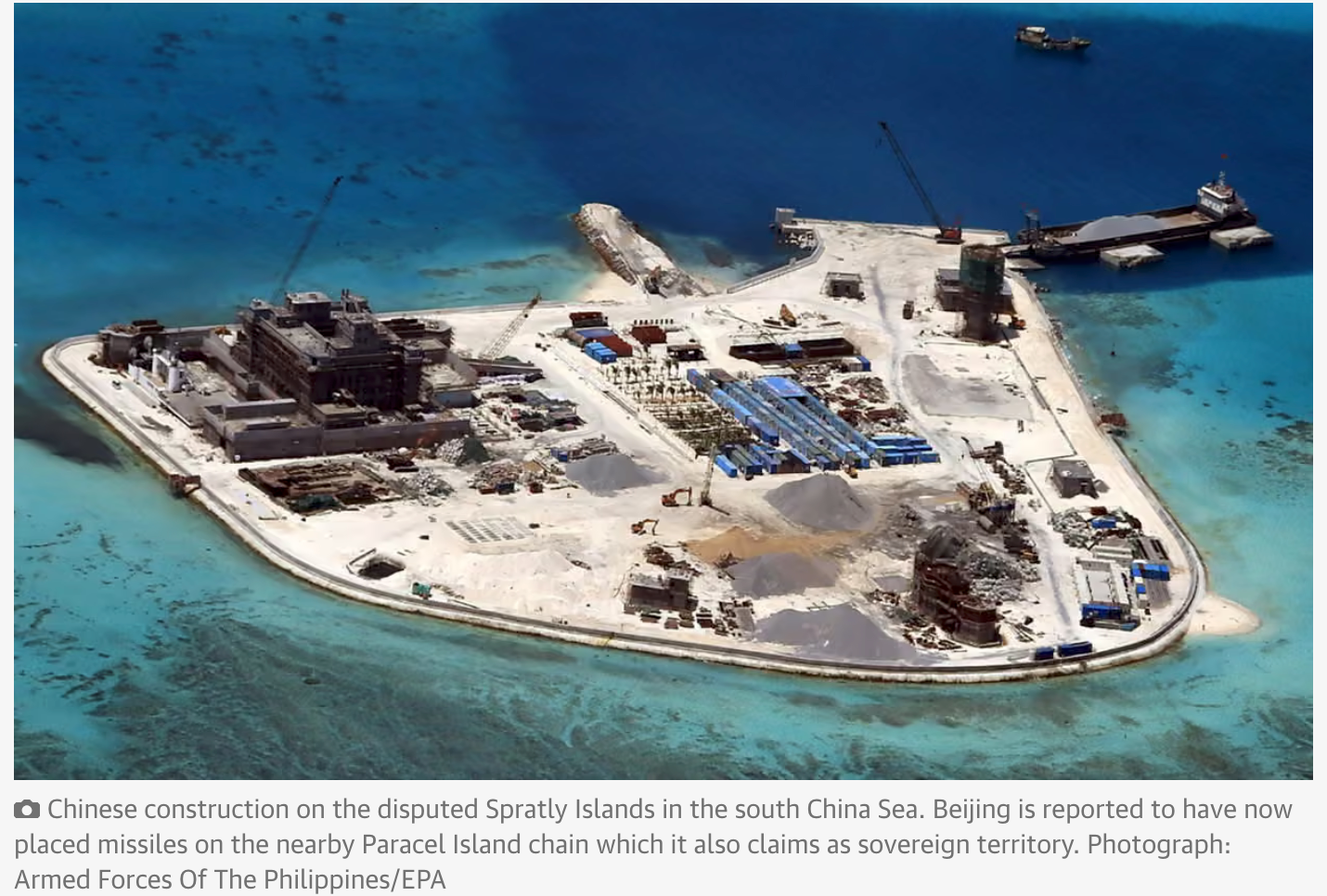
Spratly Islands: China has built up seven “islands”, with the most heavily developed being Subi Reef, Mischief Reef, and Fiery Cross Reef. These three feature significant airfields, missile shelters, and radar arrays – including YJ-62 and YJ-12B anti-ship cruise missiles
Paracel Islands: China controls about 20 outposts here, including Woody Island, which serves as a regional administrative and military hub. Since 2016, China has sent advanced HQ-9 surface-to-air missiles to the Paracel Islands. Woody Island frequently hosts H-6K nuclear-capable bombers, which are capable of launching missiles with range extending to Australia.
Scarborough Shoal: While no permanent structures have been built yet, China maintains a constant coast guard presence here to control the feature, according to the Center for Strategic and International Studies. Others are getting in on the trend of dredging and building island bases, especially Vietnam.
Military emplacements at Mischief Reef include advanced radar systems, missile storage facilities, and hangars for fighter planes. (Supplied: CSIS Asia Maritime Transparency Initiative/Maxar)
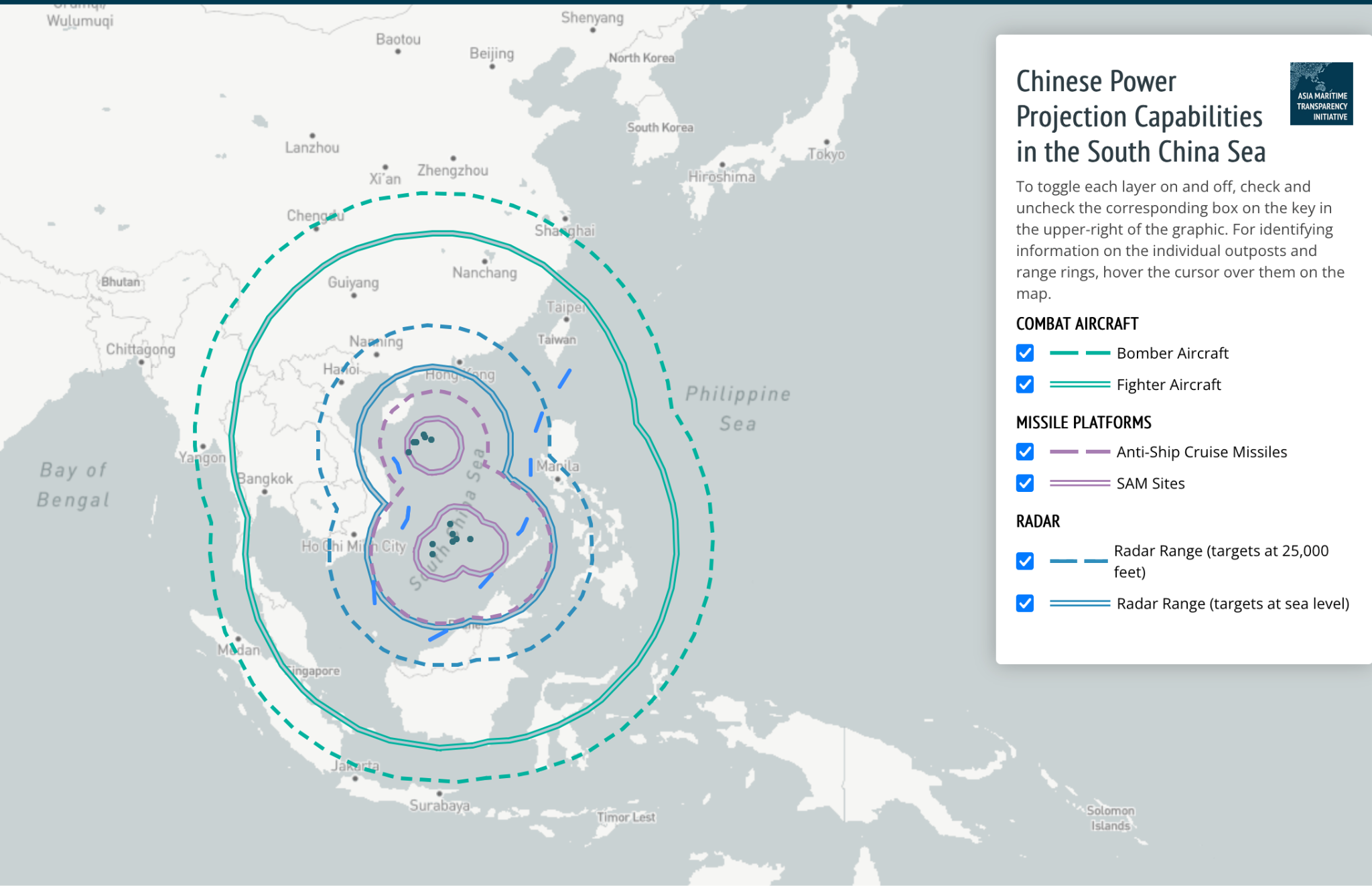
These installations, particularly on the “Big Three” reefs in the Spratlys (Fiery Cross, Subi, Mischief), allow China to project power deeper into Southeast Asia threatening maritime and air traffic. These deployments are part of an anti-access/area denial (A2/AD) strategy to contest US military presence in the region. The following image shows the ability of China to “project power” over the SCS area.
Even in the absence of a large-scale deployment of PLA weapons, the island-reefs have already been weaponized with significant information capabilities—command, control, communications, computers, intelligence, surveillance, and reconnaissance (C4ISR). When and if there is a large-scale deployment of weapons to the Chinese outposts, necessary conditions will have been established in the information domain. The island-reefs are equipped to provide the PLA with superior battlespace awareness and a decided information advantage in any future military conflict in the SCS.
Offensive and defensive strike capabilities on the island-reefs may best be described as “modular.” Infrastructure on the PLA outposts was built to accommodate close-in-weapons systems (CIWS), surface-to-air missiles (SAMs), surface-to-surface missiles (SSMs), large aircraft, fighter-sized aircraft, and helicopters. A vast majority of PLA weapons systems are road-mobile or relocatable. The major island-reefs—Fiery Cross, Subi, and Mischief Reefs—are large enough to accommodate virtually any mobile weapons system or aircraft in the PLA inventory. Delivered by ship or aircraft, future deployments of offensive or defensive lethal capabilities to the SCS island-reefs could occur with little or no warning.
China is currently engaged in a concerted effort to increase the PLAN’s capabilities in the undersea environment and perform acoustic reconnaissance from fixed arrays, ASW aircraft, and surface ships. However, even if the PLA Navy (PLAN) can detect an enemy submarine at long range, underwater weapons, such as torpedoes or depth charges, have very short ranges. Generally, once detected through acoustic or non-acoustic means, a submarine must still be localized by another submarine, a ship, or an ASW aircraft before that platform can prosecute the target with short-range underwater weapons.
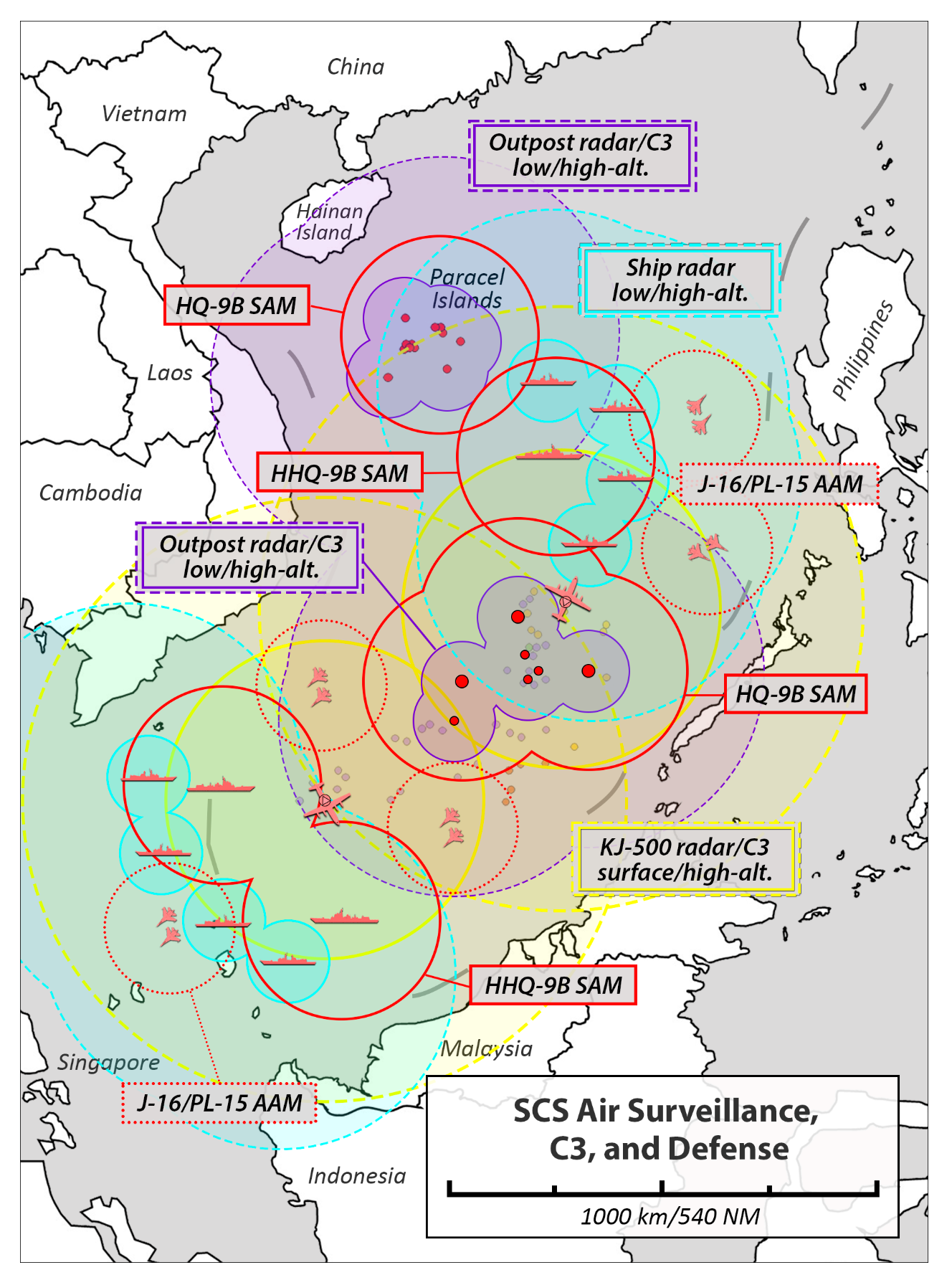
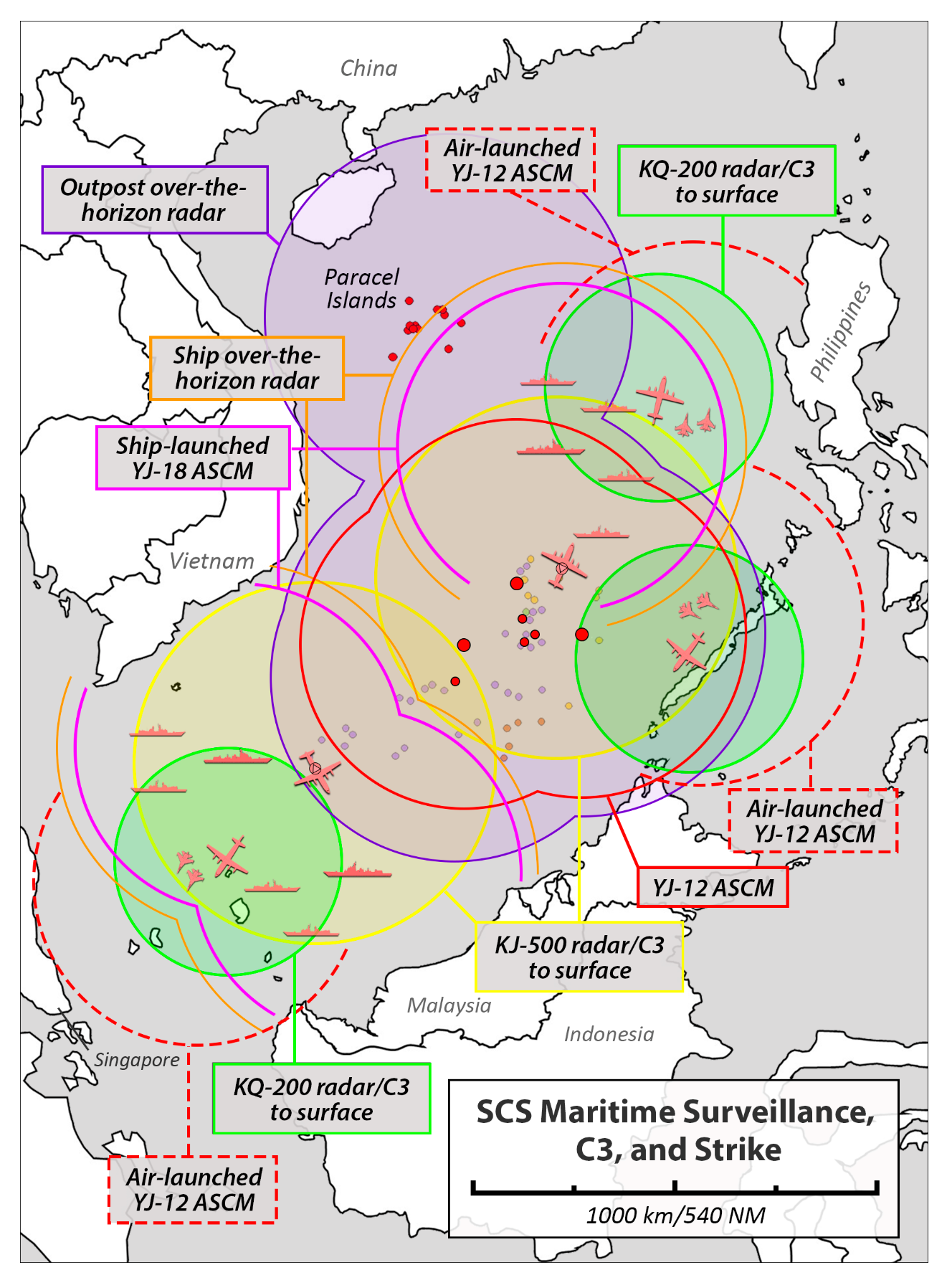
If a picture is worth a thousand words, the following images will give you an idea of the “threat environment” in the SCS:
Combat air coverage capability,
Depth of surveillance capability, and
Maritime strike capability.
The South China Sea is an “inland sea” over which China can exercise extensive anti-access/area denial (A2/AD) strategy to contest any foreign military presence in the region.
Today the Church Universal celebrates the feast of St. Charles Lwanga and the Ugandan martyrs. Likely you do not know much about him and the 21 people that were martyred along with him. Today’s celebration of St. Charles Lwanga and Ugandan martyrs is a major feast and holiday in East Africa. And a reminder to us that this truly is a church universal – katholica.
Lwanga was born in 1860 in Uganda. It was a time of Christian Missionary activity in a country that was still ruled by a tribal kings. Lwanga was born in the Kingdom of Buganda, the central and southern part of modern Uganda, and served as chief of the royal pages and later major-domo in the court of King Mwanga II of Buganda.
Christians were tolerated by the King Mutesa I, but his successor, Mwanga, launched a campaign against them. Mwanga was 18 years old at the time of his ascension to the throne. He believed that the Christian worldview undermined his authority. While the records are not clear, a major reason for his view was that the Christian court pages would not willing engage Mwanga in ritual sex. Mwanga first massacred the Anglican missionary bishop James Hannington and his colleagues in October 1885. Joseph Mukasa, an important member of the royal household and a Catholic, reproached the king for the massacre, and, on November 15 of that year. Mukasa was beheaded.
On May 25, 1886, the king called a court assembly in which he interrogated all present to see if any would renounce Christianity. Led by Lwanga, the royal pages declared their fidelity to their Catholic faith, upon which the king condemned them to death. Charles Lwanga was burned at the stake on June 3, 1886. He and the other 21 Catholic martyrs were canonized by Pope Paul VI in October 1964.