 Matthew 5:13-16
11 Blessed are you when they insult you and persecute you and utter every kind of evil against you [falsely] because of me. 12 Rejoice and be glad, for your reward will be great in heaven. Thus they persecuted the prophets who were before you.
13 “You are the salt of the earth. But if salt loses its taste, with what can it be seasoned? It is no longer good for anything but to be thrown out and trampled underfoot. 14 You are the light of the world. A city set on a mountain cannot be hidden. 15 Nor do they light a lamp and then put it under a bushel basket; it is set on a lampstand, where it gives light to all in the house. 16 Just so, your light must shine before others, that they may see your good deeds and glorify your heavenly Father.
Commentary. Verses 11-12 (not part of the Sunday gospel) are often called the 9th beatitude because of the opening phrase. But where vv.3-10 describe the good life, these verses bring it into contrast and begin to describe the cost (v.11) and remind the listener that you are simply joining a long tradition. The prophets who earlier proclaimed the kingdom and its demands were also persecuted.
Just as the prophets stood out and apart from “business as usual,” so too will the disciples who has committed themselves to Jesus. Here and in the next few verses the “you” that appears is always plural. The concern here is that the Christian community stand out, appear different, and become an alternative to the larger society. In Matthew’s account, the famous tune, “This Little Light of Mine” would read “This Little Light of Ours.” The community of disciples are called to be collective light and salt.
The salt/light metaphors (and possibly ‘city on the hill’) are only effective signs of the Kingdom to the extent with which the community is willing to use them, to bring them to bear. Salt, no matter how pure and tasty, left in the cellar is not much use. A light locked away inside, will not illuminate anything in the world. In part, a goal of discipleship is to be noticed, to stand out, to be more than a curiosity, to be significant; in other words, to be distinctive and to be involved. The dangers of being a community too comfortable, too scared, or too closed off is seen in the Book of Revelation’s letter to the community of Laodicea: “To the angel of the church in Laodicea, write this: ‘The Amen, the faithful and true witness, the source of God’s creation, says this: “I know your works; I know that you are neither cold nor hot. I wish you were either cold or hot. So, because you are lukewarm, neither hot nor cold, I will spit you out of my mouth.”’” (Rev 3:14-16)
Salt of the Earth. Salt (cf. Mark 9:50; Luke 14:35) had several uses in the ancient world. In the OT, salt was added to sacrifices (Lev 2:13), connected with purity (Ex 30:35; 2 Kgs 2:19–22), symbolic of covenant loyalty (Num 18:19; Ezra 4:14), and used as a seasoning for food (Job 6:6). In the Mishnah salt is associated with wisdom (m. Sotah 9:15).
Salt serves mainly to give flavor, and to prevent corruption. Disciples, if they are true to their calling, make the earth a purer and a more palatable place. But they can do so only as long as they preserve their distinctive character: unsalty salt has no more value. Strictly, pure salt cannot lose its salinity; but the impure ‘salt’ dug from the shores of the Dead Sea could gradually become unsalty as the actual sodium chloride dissolved. In any case, Jesus was not teaching chemistry, but using a proverbial image (it recurs in Bekhoroth 8b). The Rabbis commonly used salt as an image for wisdom (cf. Col. 4:6), which may explain why the Greek word represented by lost its taste actually means ‘become foolish’. (Aramaic tāpēl, which conveys both meanings, was no doubt the word used by Jesus.) A foolish disciple has no influence on the world.
Light of the World. Light, like salt, affects its environment by being distinctive. The disciple who is visibly different from other men will have an effect on them. But the aim of his good works is not to parade his own virtue, but to direct attention to the God who inspired them. By so doing the disciple will give light to all (cf. Phil. 2:15). Jesus is preeminently the light of the world (John 8:12), as Isaiah had prophesied of the Servant (Isa. 42:6; 49:6), but this role passed to his disciples (cf. Acts 13:47). The city set on a mountain reinforces the importance of being conspicuously different. A bushel (grain measure of about 9 liters) put over an oil lamp would probably put it out, but the emphasis of the passage is on non-concealment (cf. Mark 4:21; Luke 8:16, ‘under a bed’). A secret disciple is no more use in the world than one who has lost his distinctiveness (v. 13). Your Father who is in heaven is a favorite expression in Matthew (cf. 5:45; 6:1, 9; 7:11; etc.), and reflects a major emphasis in Jesus’ teaching. In earlier Jewish thought God was generally the Father of Israel rather than of individuals..
Notes
5:13 loses its taste: mōranthē (from the verb mōraínō) to make foolish
5:14 You are the light of the world. Light is a much more prominent and univocal image in the Bible than salt. Matthew 4:16 (citing Isa 9:2) has already associated light with Jesus and the Kingdom ministry in dark Galilee. Isaiah 42:6 speaks of Israel’s role in the world as a “light to the Gentiles” (cf. Isa 49:6; 51:4–5; Dan 12:3; Rom 2:19).
Sources
- G. K. Beale and D. A. Carson, Commentary on the New Testament Use of the Old Testament (Grand Rapids, MI; Nottingham, UK: Baker Academic; Apollos, 2007) 20
- Eugene Boring, The Gospel of Matthew in The New Interpreter’s Bible, Vol. VIII (Nashville, TN: Abingdon Press, 1994) 171-81
- Warren Carter, Matthew and the Margins: A Sociopolitical and Religious Reading (Maryknoll, NY: Orbis Book, 2000) 130-43
- R.T. France, The Gospel of Matthew in the New International Commentary on the New Testament (Grand Rapids, MI: William B. Eerdman’s Publishing, 2007) 153-72
- R.T. France, Matthew: An Introduction and Commentary in the Tyndale New Testament Commentaries, Vol. 1, ed. Leon Morris (Downers Grove, IL: InterVarsity Press, 1989) 116-18
- Daniel J. Harrington, The Gospel of Matthew, vol. 1 of Sacra Pagina, ed. Daniel J. Harrington (Collegeville, MN: Liturgical Press, 1991) 76-85
- Daniel J. Harrington, “Matthew” in The Collegeville Bible Commentary, eds. Diane Bergant and Robert J. Karris (Collegeville, Minn.: Liturgical Press, 1989) 869-70
- Craig S. Keener, The Gospel of Matthew: A Socio-Rhetorical Commentary (Grand Rapids, MI: William B. Eerdman’s Publishing, 2009) 160-75
- Bruce J. Malina and Richard L. Rohrbaugh, Social-Science Commentary on the Synoptic Gospels (Minneapolis, MN: Augsburg Fortress, 2002) 39-51
- John P. Meier, Matthew, New Testament Message 3 (Collegeville, MN: Liturgical Press, 1990) 37-45
- John J. Pilch, The Cultural World of Jesus: Sunday by Sunday, Cycle A (Collegeville, MN: Liturgical Press, 1996) 28-30
- Mark Allan Powell, God With Us: A Pastoral Theology of Matthew’s Gospel (Minneapolis, MN: Augsburg Fortress, 1995) 122-38
- Brian Stoffregen, “Brian P. Stoffregen Exegetical Notes” at www.crossmarks.com
- D. Turner and D.L. Bock, Matthew and Mark in the Cornerstone Biblical Commentary, vol. 11 (Carol Stream, IL: Tyndale House Publishers, 2005) 75-82
Dictionaries
Theological Dictionary of the New Testament, ed. Gerhard Kittel, Geoffrey W. Bromiley and Gerhard Friedrich, electronic ed. (Grand Rapids, MI: Eerdmans, 1964)
G. Bertram, mōraínō, 4:832–47
H.W. Beyer, eulogéō, 2:754-65
F. Hauck, makários, 4:367-70
Scripture
New American Bible Revised Edition (March 9, 2011)


 Here in the 6th Sunday of Ordinary Time, our gospel reading continues the “Sermon on the Mount” begun on the 4th Sunday. As mentioned elsewhere, the “Sermon” is the first of the Matthean discourses and perhaps the best known. Warren Carter (Matthew and the Margins) has these introductory comments about the entire sermon: Continue reading

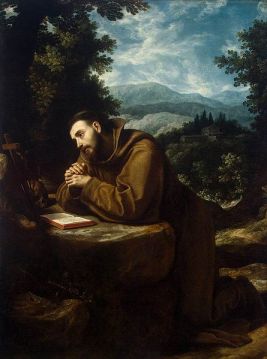 In the short span of 12 years (1209-1221), the Franciscans had grown from a small, Assisi-based fraternity consisting of Francis and four other brothers, to a large, “multi-national,” religious order with an approved Rule of Life, a Cardinal Protector (who would soon become Pope), and more than 5,000 brothers. There was nothing in Francis’ life that prepared him for leadership of such a far-flung fraternity, which was already spanning the European continent and parts of the Middle East and North Africa. He had been a spoiled dilatant, a would-be knight, a wounded warrior, a solitary figure, living a quasi-hermetical life, and now he was the “leader” of a growing, international community of brothers. In the beginning, things just seemed to unfold, signs appeared along the way, and Francis followed the path in faith. And people followed Francis. Now most Franciscans had never met Francis and Francis’ model of leadership by example, which worked in 1209, but was not the one needed in 1221. And so he stepped down as leader, leaving the Order in the care of the Church – at least as far as discipline and administration. Yet it was also clear that he hoped to preserve a superior authority, of a spiritual type, demonstrated in the way in which he lived the Rule of Life.


